






 Portuguese
  Spanish
  2 min of reading
  1 comment


Revolutionary Recycling: Coconut Shell Pallets Saving 200 Million Trees Per Year. Discover This Sustainable Technology
With coconut shells, biodegradable pallets can be manufactured, and they are free from pesticides and toxins. With these pallets and the proper recycling, it would be possible to save up to 200 million trees per year.
Known as cocopallets, they are fire-resistant and durable pallets made from coconut husk. This part of the coconut has always been used to create various objects; in fact, there are cups, rugs, and ropes made from this material. It is a concept developed in partnership between Wageningen University and CocoPallet, which also promotes recycling. An Indonesian primitive technique refined by these Dutch institutions.
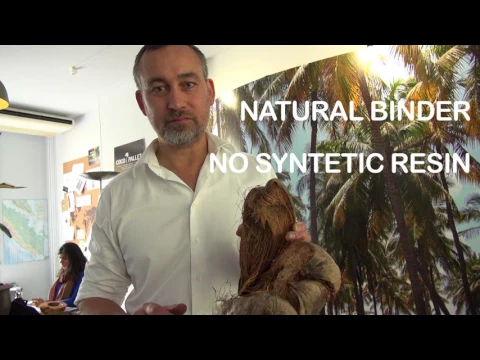

Manufacturing and Recycling Process
Thanks to the use of a macromolecule called lignin as a natural binder, there is no need to use synthetic resins. In fact, these resins are commonly used in wooden pallets. Additionally, this is a biodegradable pallet, free from additives and pesticides. Even when manufactured for export, it can be recycled and crushed for use as natural organic fertilizer, promoting recycling.
-
Embrapa takes cashew, peanuts, and sesame to the world’s largest seed bank in Norway, where Brazil has already stored more than 8,000 samples since 2012 against pests and climate change.

-
Finnish company creates recycled plastic and biomass blocks that fit together without cement, are 10 times lighter than common blocks, and have already been used to build schools in earthquake-affected areas.
-
A US startup wants to build a 10 km space cannon to launch multi-ton payloads into orbit at Mach 23, replacing part of the rockets with a colossal structure that looks like a science fiction weapon.

-
Extreme droughts and floods have doubled on the planet since 1901, according to a study of 1,300 river basins that reveals increasing pressure on agriculture, rivers, soils, ecosystems, and water supply.


CocoPallet
According to CocoPallet, 1.7 billion pallets are currently produced annually. As a consequence, around 200 million trees are unnecessarily used. With this solution, it would be possible to save this amount of trees per year. “We buy the coconut husk from farmers, creating extra income at the base of the pyramid. Farmers stop burning coconut husks, which also reduces environmental pollution.”
“Our CocoPallets can replace wooden pallets, thus requiring fewer trees for this purpose. In addition to all the advantages explained earlier, coconut pallets are durable and take up less space than traditional ones. It is a more compact type of pallet; 20 cocopallets stacked measure 0.75 m in height. On the other hand, 20 wooden pallets stacked measure 2.70 m.”
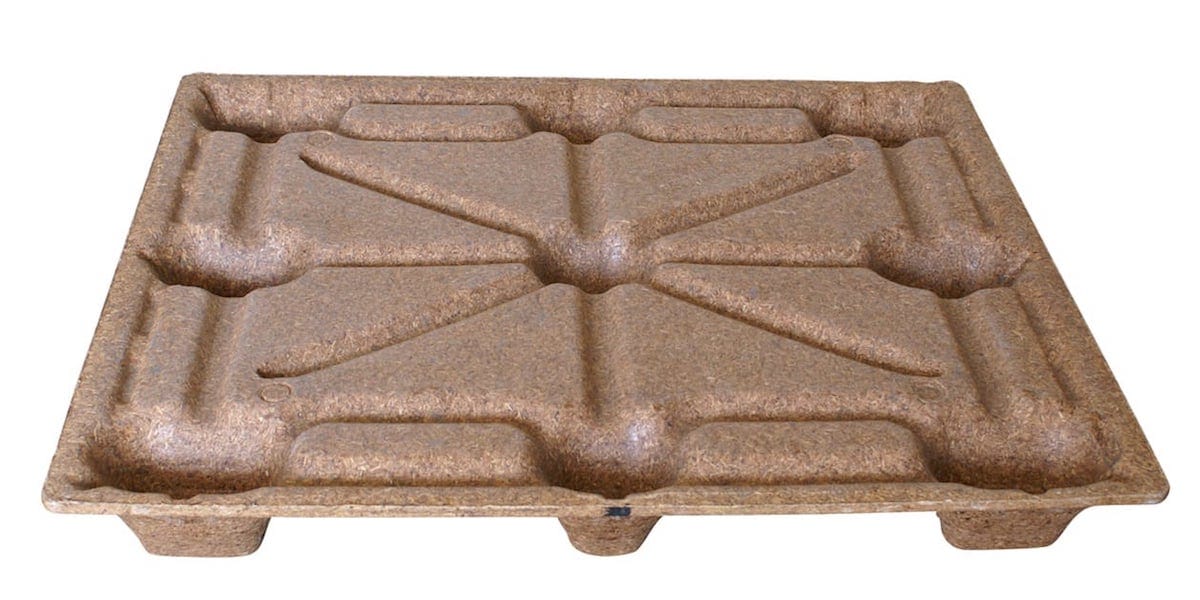
We can also highlight that this company uses biomimicry in its projects, which is the science that studies nature as a source of inspiration for innovative new technologies, solving human problems that nature has already solved. The central idea is that nature has already solved many of the problems we are struggling with. Animals, plants, and microbes are the smartest engineers in the development of structures, surfaces, and processes, integrating recycling concepts.
More information: www.cocopallet.com






Maravilhosa ideia