Portuguese
  Spanish


Longshot Space project proposes using compressed gas and a gigantic terrestrial structure to accelerate payloads towards space, in an approach that revisits old ideas of aerospace engineering with new prototypes.
The American startup Longshot Space is developing a kinetic launch system that aims to accelerate payloads on the ground before sending them to low Earth orbit.
The proposal, presented by founder and CEO Mike Grace in interviews with specialized outlets, envisions a structure about 10 km long capable of launching objects at speeds close to Mach 23, in an attempt to reduce some of the dependence on conventional rockets.
The project is still in the development phase and has not placed payloads in orbit.
-
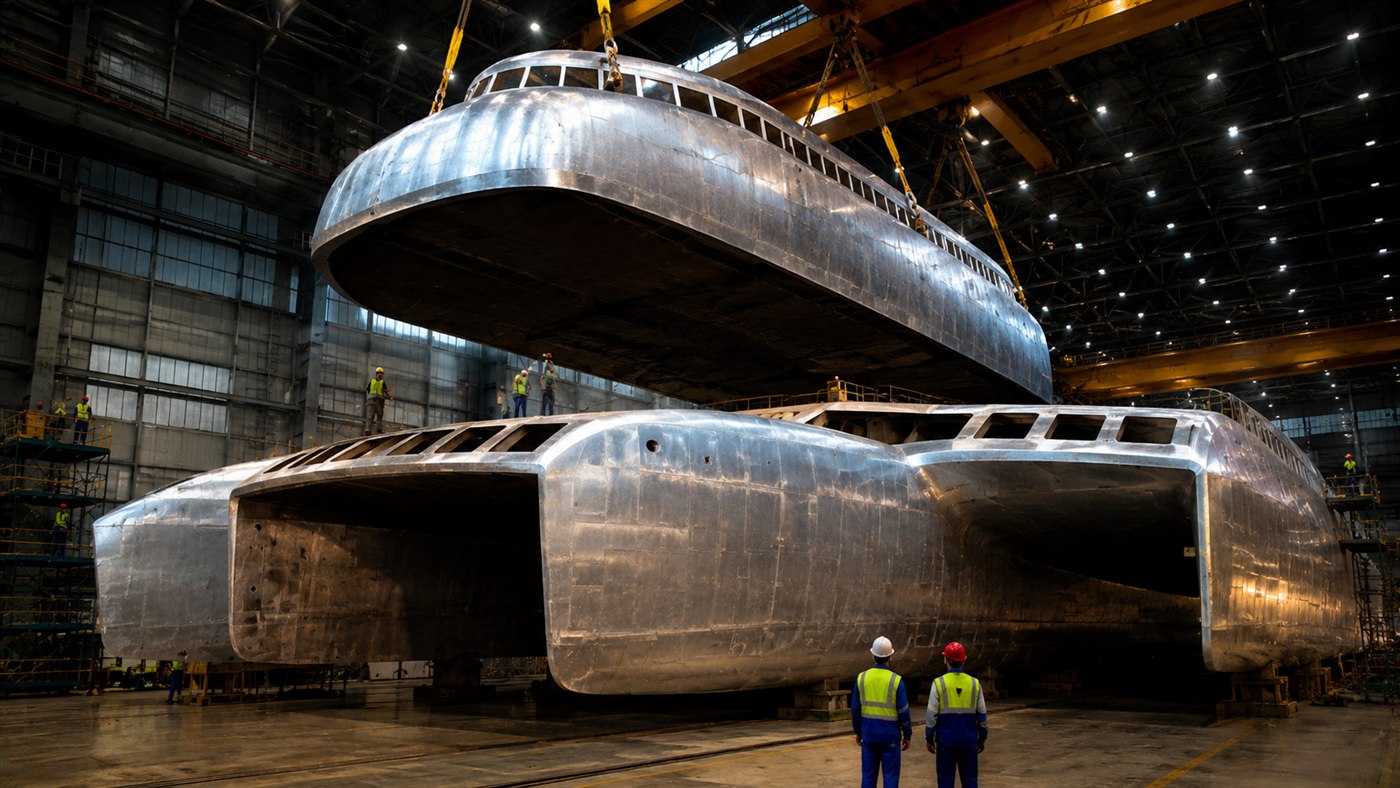
Australian Megafactory Austal Constructs 380-Foot, $74 Million High-Speed Ferry for Canary Islands Capable of Carrying 1,100 Passengers and 278 Cars at 38 Knots

-
Scientists Develop Battery Using Mineral Found in Bones and Chalk, Surviving 1,000 Charges While Retaining 75% Capacity, Paving the Way for a Lithium-Free Future

-
Super-Earth Twice the Size of Our Planet Discovered Nearby, Offering Clues About Life Beyond the Solar System
-
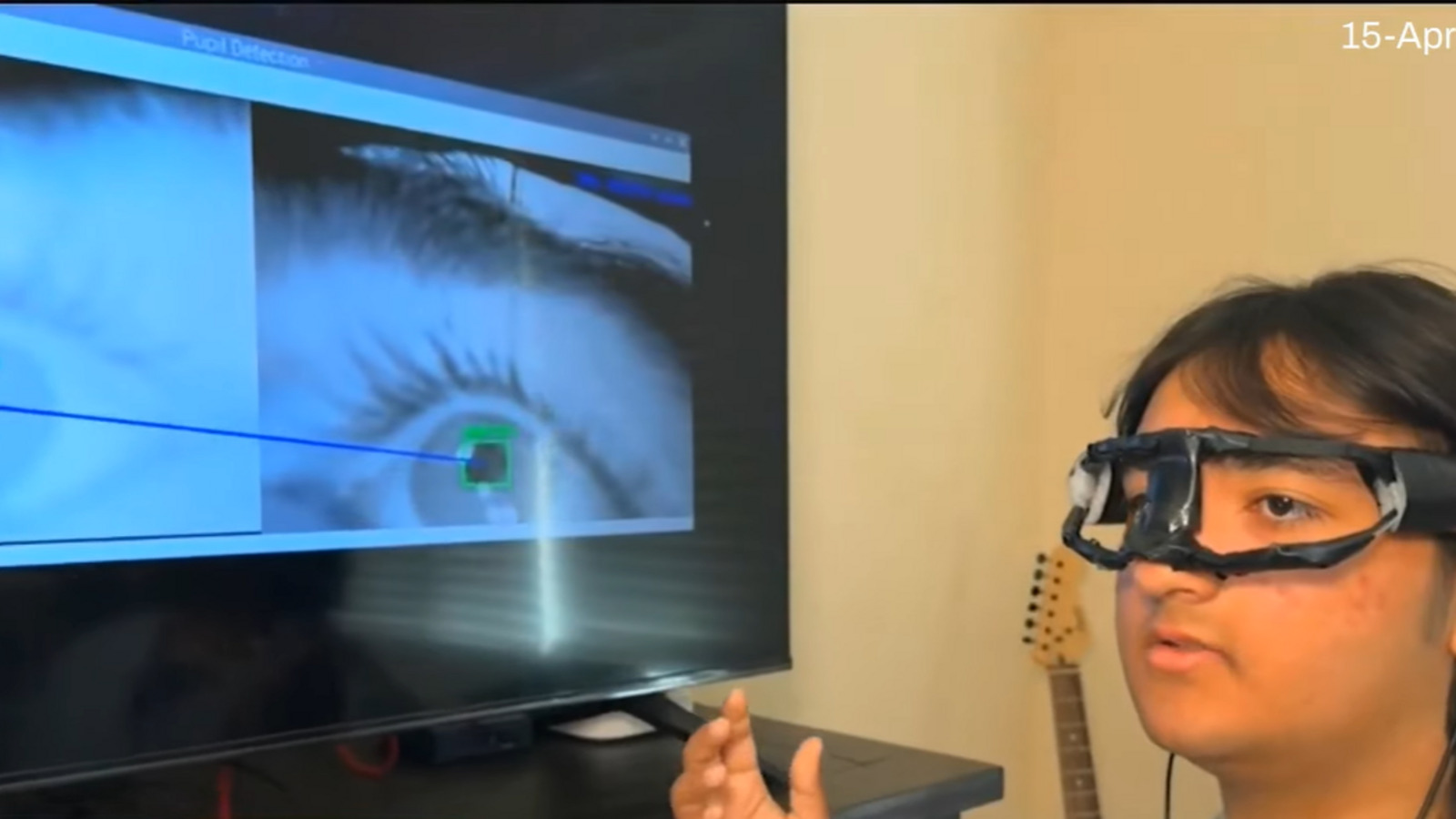
Teen Invents Promising AI Device to Detect Eye Misalignment Using 3D-Printed Visor and Small Cameras for $300



According to records from the American SBIR program, aimed at supporting innovative small businesses, Longshot has already tested a multiple gas injection system and accelerated a 500-gram projectile to Mach 2.5 in a 75-foot structure, about 23 meters.
Specialized reports also mention subsequent tests on larger prototypes, with speeds above Mach 4.
The technology seeks to transfer to a fixed infrastructure part of the energy that today needs to be produced by rockets during launch.
Instead of carrying all the fuel and propulsion systems from the platform, the payload would receive a boost inside a long tube, through compressed gas released in sequence.
After leaving the structure, the object would still need to follow an appropriate trajectory to remain in orbit.
The concept does not eliminate all the challenges of space launch.
To reach low Earth orbit, it is not enough to achieve high altitude.
The payload needs to gain sufficient horizontal velocity to avoid falling back to the planet.
This point differentiates an orbital trajectory from a suborbital shot, which can surpass the conventional boundary of space but does not remain around the Earth.
How Longshot’s space cannon would work
The system described by Longshot does not operate like a common cannon, driven by a single explosion.
The proposal uses a series of pressurized gas tanks distributed along the tube.
As the vehicle advances, rupture disks release gas jets at calculated moments to push the payload repeatedly.
This architecture is called by the company acceleration by multiple injections.
According to the SBIR record, dividing the thrust into multiple events allows projectiles to be accelerated to hypersonic speeds with less force on the payload than those generated by a conventional shot concentrated in a single stage.
In the description made by Mike Grace to New Atlas, the vehicle would have a rear part designed to receive the pressure from the lateral gas jets.
Each release would add speed to the assembly within the tube until the payload reached the predicted speed to exit the structure.
The company is still working with reduced-scale prototypes.
According to Payload, Longshot presented a 70-foot prototype, about 21 meters, capable of accelerating payloads to just over Mach 4, and planned to advance to larger structures, including 180-foot and 1,800-foot versions for hypersonic tests.
Why Mach 23 is a challenge for space payloads
Mach 23 corresponds to a hypersonic speed far above the speed of sound.
In atmospheric conditions, this regime creates intense heating from compression and friction with the air, which requires adequate thermal protection.
For electronic equipment, the problem is not limited to temperature: acceleration, vibration, and structural loads also need to be endured.
Longshot states that it intends to launch payloads designed for this environment, not passengers.
Even in scenarios with very long structures, the acceleration forces would remain above the tolerable limit for humans.
Therefore, the most cited initial application involves resistant objects, test components, materials, supplies, or satellites specifically designed to withstand the launch.
In interviews, Grace argues that larger payloads can improve the mass-to-exposed-area ratio, which would proportionally reduce the amount of material lost to heating during atmospheric crossing.
This assessment, however, still depends on demonstrations at a scale compatible with orbital launch.
The proposal also presupposes some type of complementary stage after exiting the tube.
To circularize orbit, correct trajectory, or adjust altitude, a payload launched by terrestrial acceleration might need its own propulsion.
This point maintains part of the complexity associated with conventional space systems.
The idea of cannon launch comes from the 19th century
The attempt to use cannons or terrestrial accelerators to reach space did not originate with Longshot.
The idea has appeared in literature since the 19th century, when Jules Verne published “From the Earth to the Moon” in 1865.
In the novel, a capsule is launched by a huge cannon, in a fictional representation of space travel before the existence of orbital rockets.
In the 20th century, real projects tested similar limits with scientific and military objectives.
One of the most well-known cases was the HARP Project, an acronym for High Altitude Research Project, conducted in the 1960s with the participation of Canadian engineer Gerald Bull.
The program used modified naval gun tubes to launch projectiles to great altitudes.
The HARP shots managed to surpass the altitude generally associated with the beginning of space but did not reach orbit.
The main limitation was in horizontal velocity.
Without sufficient lateral velocity, the object ascends, loses energy, and returns to Earth, instead of continuing in an orbital trajectory.
Longshot resumes this line of research with another technical arrangement.
Instead of using conventional explosives in a single shot, it bets on compressed gas and progressive acceleration.
The company also aligns with previous proposals for light gas guns and accelerators for hypersonic tests.
Hypersonic tests and current stage of the project
The publicly proven part of the project is in the prototypes and research contracts.
Longshot’s portfolio in the SBIR states that the company has developed a supersonic multi-injection gun and associates the technology with applications in hypersonic tests, missile defense, and space launch.
These applications help explain why the company may have utility before demonstrating an orbital launch.
Hypersonic tests are used to evaluate materials, sensors, vehicles, and components subjected to extreme speeds.
A reusable terrestrial structure could offer a different way to produce this test environment, provided it achieves repeatability, safety, and compatible cost.
Reaching orbit, however, requires a larger scale.
To transform the concept into a launch system, Longshot would need to validate the acceleration of payloads of relevant mass, thermal protection after exiting the tube, trajectory precision, and integration with control systems and complementary propulsion.
There are also external issues to the engineering of the shot.
A structure kilometers long would require an appropriate location, licensing, risk analysis, area control, environmental assessment, and safety procedures.
These factors do not yet have sufficient public detailing to confirm when or where an orbital system could be installed.
Technology could complement traditional rockets
The proposal from Longshot is not presented as a complete replacement for rockets.
Due to the nature of the method, sensitive payloads or manned missions do not fit the system’s profile.
Conventional satellites, large fragile structures, and equipment that cannot tolerate extreme acceleration would continue to rely on more traditional launch architectures.
The most plausible niche, according to the applications described by the company and specialized reports, involves robust payloads, materials, standardized components, and tests in a hypersonic environment.
In a scenario of technological maturity, the system could also launch objects designed from the start to withstand intense acceleration.
Another technical possibility is the combined use with small propulsion stages.
In this model, the ground accelerator would provide part of the initial energy, while the payload would use its own propulsion to complete orbital adjustments.
This arrangement preserves elements of rockets but shifts a portion of the thrust to the ground.
Interest in the project arises at a time of expansion in the space economy, with increased demand for satellites, hypersonic tests, and orbital infrastructure.
Even so, the gap between ground prototypes and commercial launches remains significant.
The public documentation available itself points to the technology as a stage of research and development, not as an operational system for space access.
The central question, therefore, is not just whether a 10 km tube can accelerate a payload to Mach 23.
The decisive point is whether this payload would exit the structure in conditions to survive the atmosphere, complete orbital insertion, and fulfill a useful mission in space.