





 Portuguese
  English
  Spanish
  4 min of reading
  0 comments


Engineers Developed a Revolutionary Technology for Construction: 3D-Printed Glass Bricks That Can Be Reused and Have Strength Similar to Concrete
Imagine a future where building materials can be assembled and disassembled as easily as LEGO bricks. At the end of a building’s life cycle, instead of demolishing and discarding materials, they could be repurposed to erect a new structure, promoting sustainability.
This innovative idea is part of what is called circular construction, which aims to minimize the production of new materials and reduce greenhouse gas emissions associated with construction.
Inspired by this vision, MIT engineers are developing recycled glass bricks printed in 3D. Using advanced technology provided by Evenline, a spin-off of MIT, the team created multilayered and super-strong bricks designed to interlock similarly to LEGO blocks. These bricks have the potential to transform the construction sector, making buildings more sustainable and reusable.
-
Wax notebook falls into latrine 800 years ago, survives intact in Germany and reveals Latin notes that may expose the routine of a high-status medieval merchant.

-
After more than 11 years orbiting Mars, NASA declared the MAVEN probe lost, which disappeared after passing behind the Red Planet in December, began to spin abnormally, depleted its batteries, and never responded to controllers on Earth again.

-
China creates a capsule with artificial intelligence that scans the stomach in just 8 minutes and can reduce costs by up to R$ 1,400, paving the way for a new era of gastrointestinal diagnostics without tubes, sedation, and discomfort for patients.

-
Scientists simulate nuclear fireball in the laboratory and discover a surprise in the radioactive fallout by observing how cesium, uranium, and cerium change when they remain at high temperatures for a longer time.


Recyclable Glass: The Material of the Future
Glass is a highly recyclable material, and this property is the foundation of the new reconfigurable masonry. According to Kaitlyn Becker, an assistant professor of mechanical engineering at MIT, glass bricks can be disassembled and reassembled into new structures at the end of a building’s life cycle.
If necessary, the glass can even be melted down again and transformed into a new shape, giving rise to a new function within the construction cycle.
Becker believes that this continuous recycling process will enable the creation of sustainable and durable building materials that can be used across generations of buildings without the constant need to manufacture new components.
Strength and Versatility of Glass Bricks
Although it is an uncommon material in construction structures, glass has proven to be promising. Michael Stern, an MIT alumnus and founder of Evenline, comments that glass as a structural material is an innovative concept that is breaking paradigms.
In mechanical tests, 3D-printed glass bricks withstood pressures comparable to concrete blocks, proving their viability as a strong and durable material.
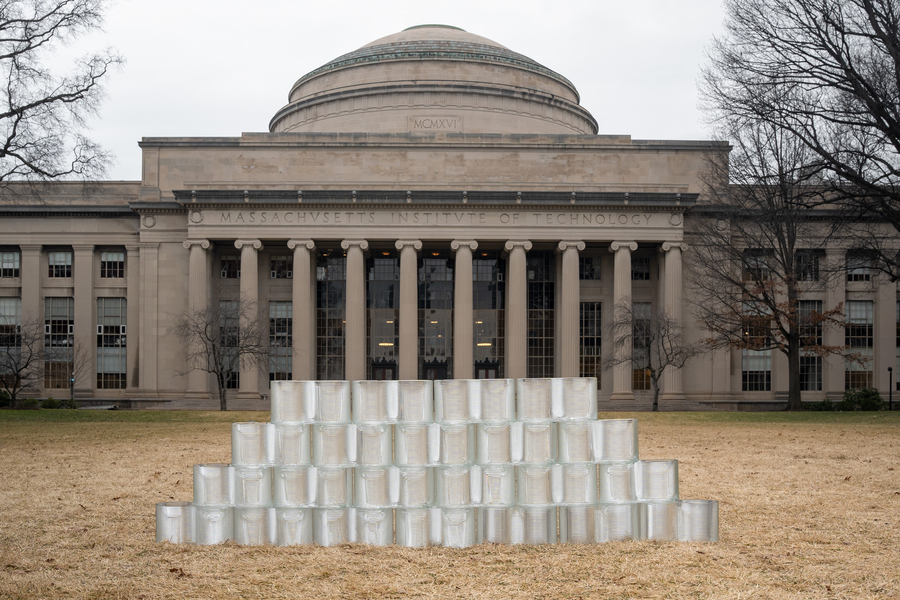
The MIT team has already built a wall of interconnected glass bricks as a demonstration of the structural potential of technology. These bricks can be reused multiple times, avoiding waste and promoting a sustainable cycle in the construction industry.
The Process of Creating Glass Bricks
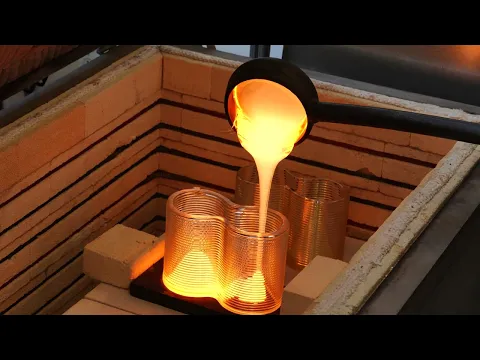

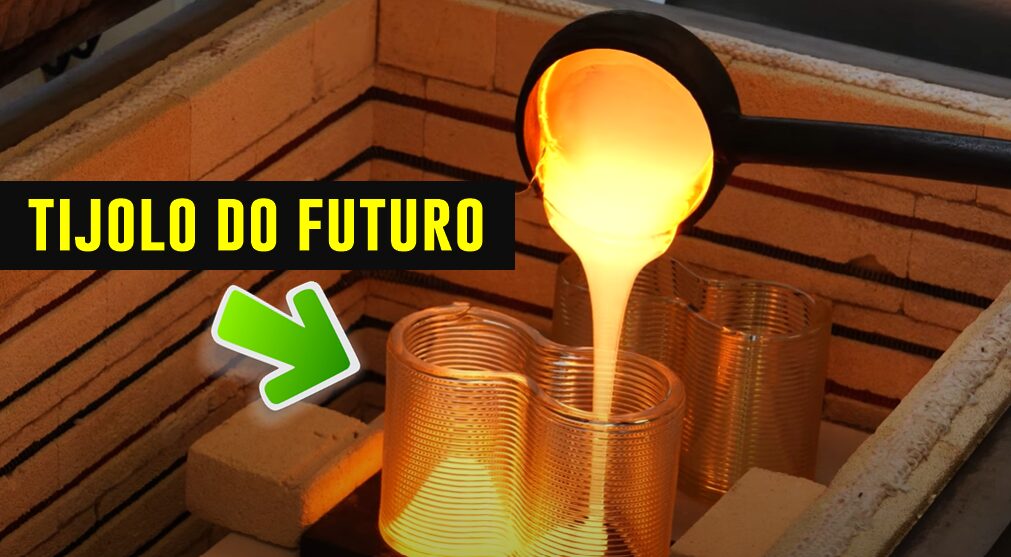
The development of the glass bricks began at the MIT Glass Lab, where Becker and Stern learned to manipulate glass. Stern, fascinated by the material’s possibilities, designed a 3D printer capable of turning melted recycled glass into high-quality bricks.
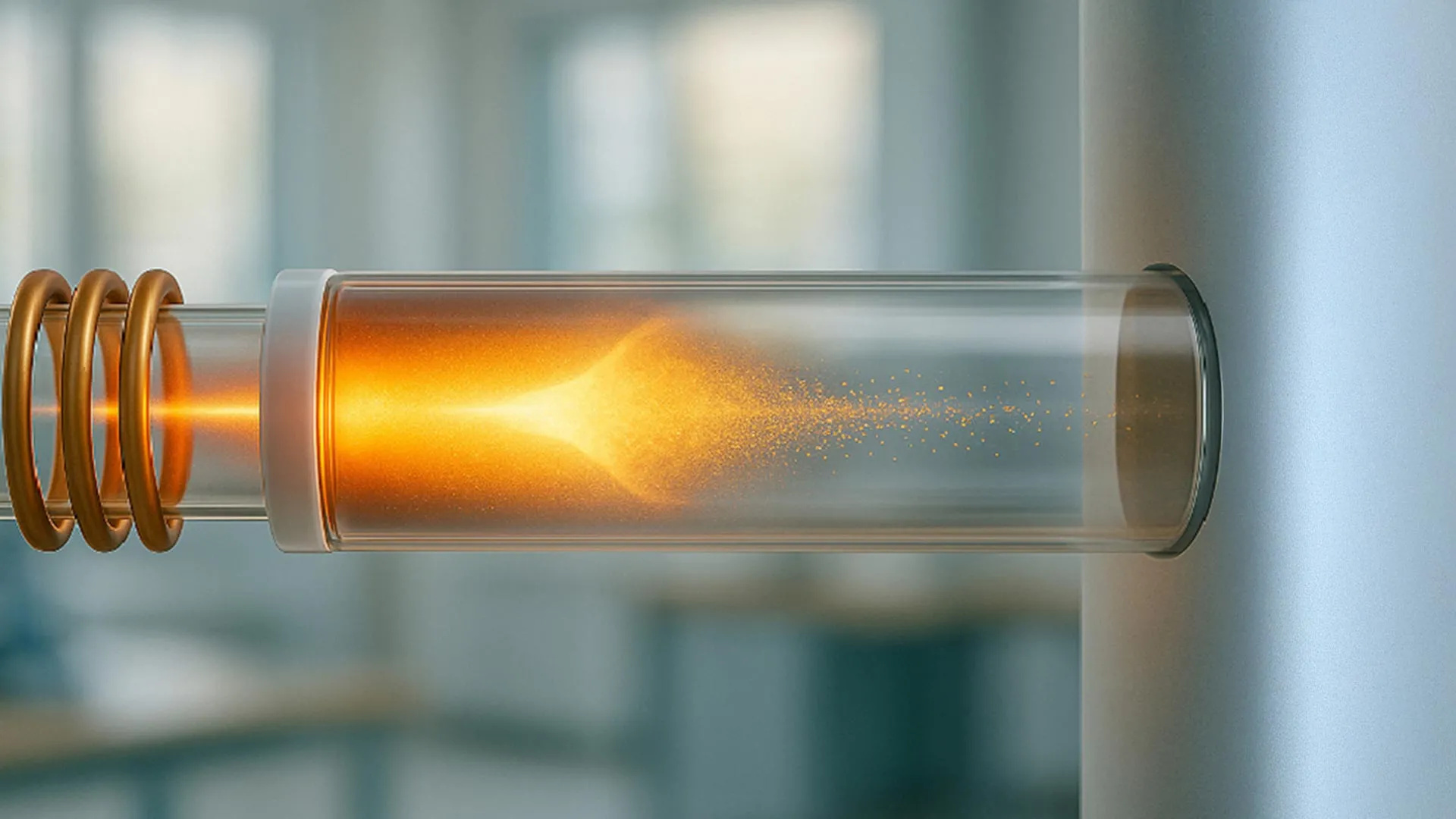
For the recent study, the team used the G3DP3, the latest version of Evenline’s glass printer. The machine melts crushed glass bottles, transforming them into a molten form that can be printed layer by layer. The resulting bricks have a unique eight-shaped design that facilitates the interlocking of pieces and the construction of stable, curved structures.
Additionally, each brick includes pins that allow interlocking with other bricks, just like LEGO blocks. An intermediate material, positioned between the glass surfaces, prevents scratches and cracks during assembly but can be removed to allow for recycling of the bricks.
Testing and Project Expansion
To test the strength of the bricks, the engineers subjected the prototypes to an industrial hydraulic press. The results indicated that the strongest bricks were able to withstand pressures equivalent to those of concrete blocks.
Furthermore, the team found that the interlocking feature of the bricks, made from a different material, helped increase the strength of the structures.
Although glass is a complex material to work with, success in the tests encouraged the team to expand the project. They are currently building larger glass structures, such as curved walls, to demonstrate the potential of the technology.
The ultimate goal is to create buildings entirely made of 3D-printed glass bricks that can be disassembled and reused multiple times over time.
A Sustainable Future in Construction
With more research underway, the MIT team is developing ways to broaden the use of glass bricks in large-scale architectural projects. The idea is that, in the future, these bricks can be used in temporary structures, such as pavilions, which can be disassembled and reassembled into new formats.
This way, glass bricks could go through various “lives,” contributing to a more sustainable future in construction.
The innovative work of MIT engineers represents a significant step toward circular construction, where materials are repurposed rather than discarded.
With technologies like 3D printing of glass, the construction sector can significantly reduce its carbon footprint and offer flexible, eco-friendly, and durable architectural solutions.




Be the first to react!