






 Portuguese
  Spanish
  3 min of reading
  0 comments


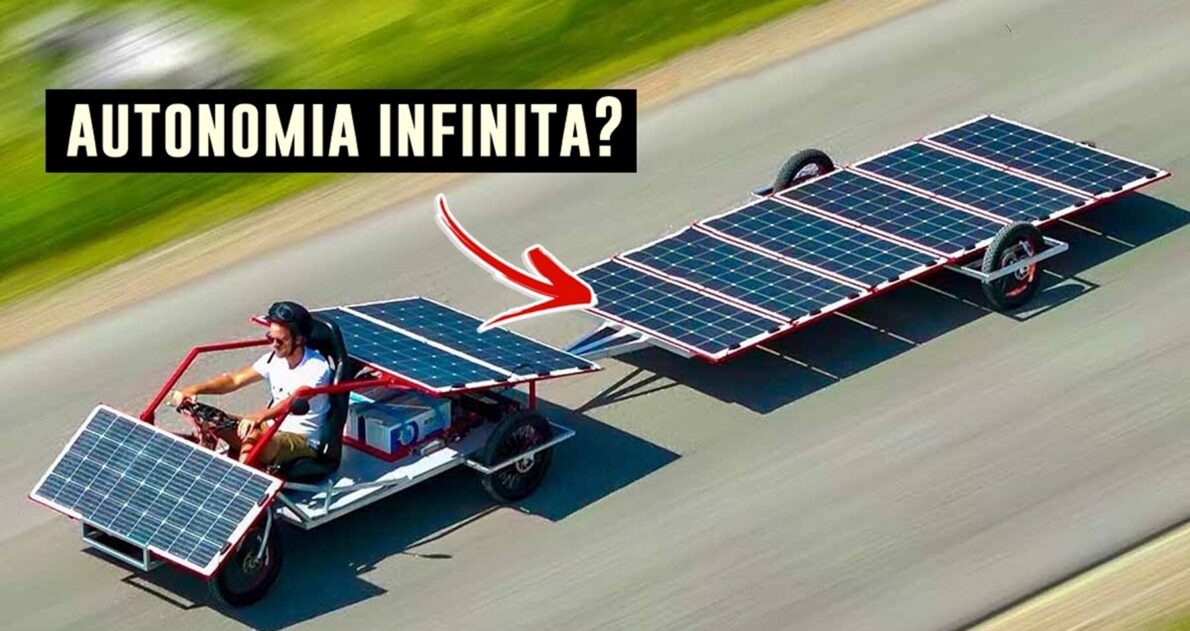
Incredible Invention: YouTuber Develops Electric Vehicle Covered by 9 Solar Panels, Ensuring a Practically Infinite Range and Changing the Game of Sustainable Mobility. Discover How It Works!
Solar energy, despite its various applications, is still underutilized in the automotive sector. However, an inventor named Drew, from the channel Drew Builds Stuff, is challenging this scenario with the creation of a solar-powered electric vehicle that can recharge automatically and achieve a range that approaches infinity. Video of the vehicle available right below.
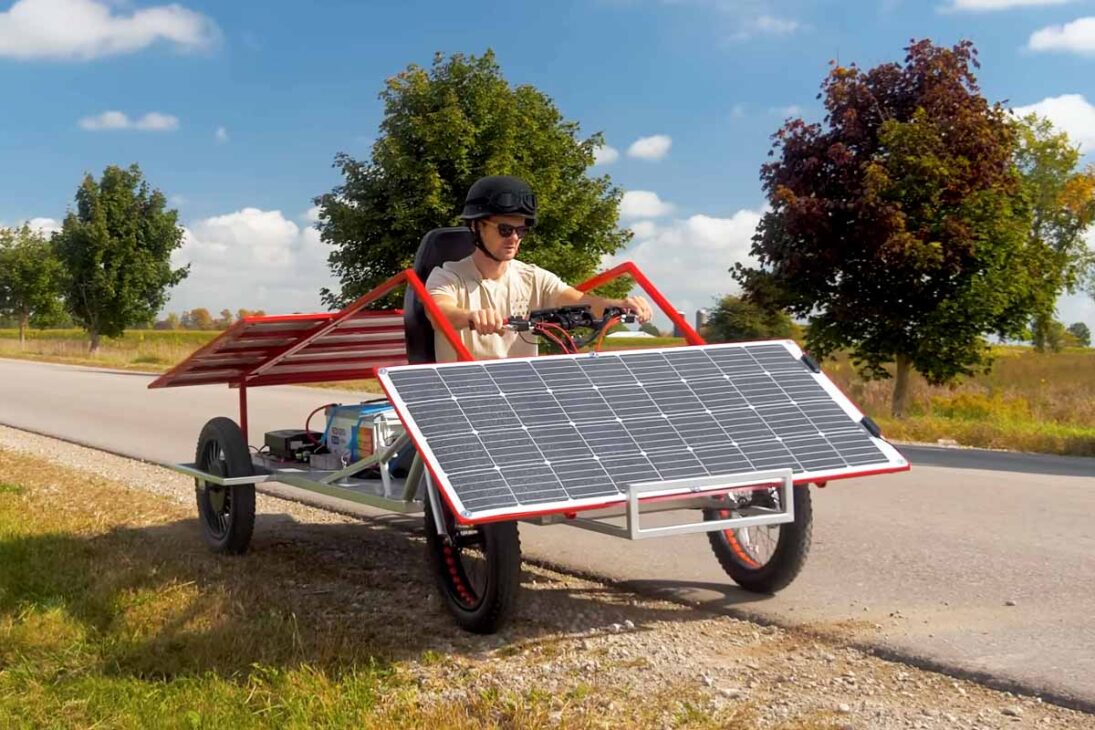
Drew, known for his creative inventions on YouTube, developed an electric vehicle that uses solar panels to continuously recharge its batteries. He combined recycled elements and simple technology to bring theproject to life, which utilizes two electric motors sourced from bicycles, reused disc brakes, two Red Odo LiFePO4 24V 100Ah batteries, and three photovoltaic modules.
The design of the electric vehicle, with a structure of metal tubes and a futuristic appearance, resembles a 21st-century tank.
-
Unprecedented achievement in India: a colossal 650-ton, nearly 3,000 hp excavator is transformed into 100% electric, marking a new phase in heavy mining.

-
Frightened by the speed of Chinese manufacturers, Renault decided to mimic the pace, made the new electric Twingo in just 21 months, wants to repeat the feat with 36 models by 2030, and along the way, will cut up to 2,400 engineering positions.

-
Chinese battery from Dongfeng promises to exceed 1,000 km without relying on liquid electrolyte, and the detail behind the technology could change the electric car competition.

-
The end of the automotive combustion era has already begun, but many in Brazil have not yet realized the magnitude of the shift towards Chinese electric cars.

The solar panels, with a total power of 175 W, are installed on a foldable section, allowing their position to be adjusted according to the sun’s location. This flexibility ensures better utilization of sunlight throughout the day.
The Electric Vehicle Had an Impressive Performance
Drew conducted a test to check the vehicle’s capacity. Initially, he used a single solar panel on the hood but realized that the vehicle’s consumption, approximately 1,200 watts, required an expansion of the power source.
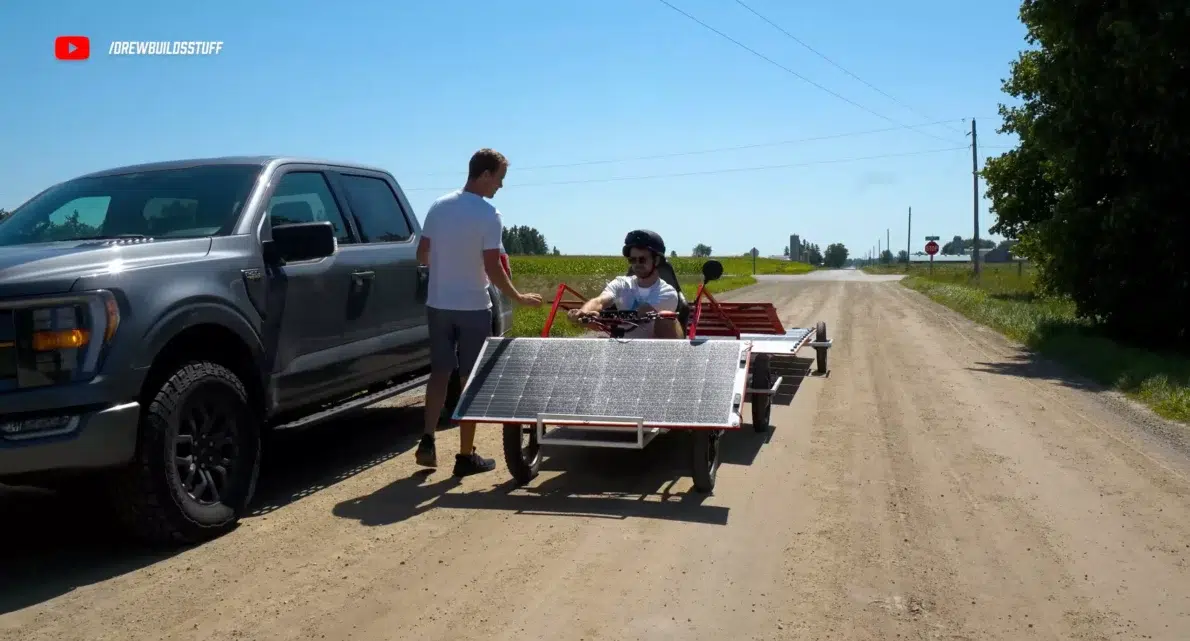
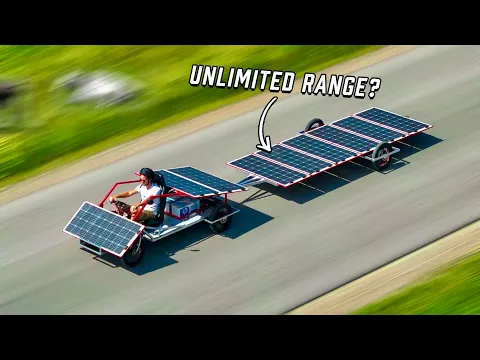
To overcome this obstacle, he built a trailer equipped with flexible solar panels, weighing about 3 kg each, significantly increasing the efficiency of the charging.
During a day of intense sunlight, the electric vehicle consistently generated 1,350 watts of energy, remaining self-sustainable until the clouds covered the sky. When sunlight began to diminish, power production dropped to 350 watts, and by sunset, the battery was completely discharged.
Even with these limitations, Drew managed to cover approximately 250 kilometers, far exceeding the average range of a conventional battery, which would be 55 to 70 km.
He believes that, under ideal conditions with constant sunlight, it would be possible to achieve up to 480 kilometers or more, paving the way for theoretical infinite range.
Limitations Encountered in the Project
Although Drew’s results are impressive, he recognizes the challenges of this type of vehicle. To achieve maximum range, he had to minimize the car’s weight by eliminating elements that would increase energy consumption, such as air conditioning, structural reinforcements for crumple zones, and batteries that would support high speeds on highways.
Another crucial factor for the vehicle’s performance is the variation in weather conditions. The vehicle’s range directly depends on the amount of sunlight available, which varies according to geographical location and climate. In countries with little sunlight, such as those with harsh winter conditions or long periods of rain, the feasibility of a solar vehicle becomes limited.
The Future of Solar Energy in Vehicles
Although infinite range is still a purely theoretical concept, Drew firmly believes in the potential of sunlight as a practical energy source for cars in the future. The project, despite its limitations, serves as a proof of concept, demonstrating that it is possible, at least in part, to use solar energy to create more self-sustaining vehicles.
His work reflects an optimistic vision of the future of electric mobility, which can increasingly benefit from renewable energy sources. However, there is still a long way to go before this technology becomes viable on a large scale.
If you are interested in Drew’s invention, the complete video is available on his YouTube channel, where he details the construction process of the vehicle and the tests conducted. It’s worth checking out to better understand how solar energy can, eventually, revolutionize the automotive sector.







Be the first to react!