






 Portuguese
  Spanish
  3 min of reading
  0 comments


AEON Robot, Created by Hexagon with NVIDIA Technology, Promises to Transform Factories with AI in Real Time and Advanced Simulation.
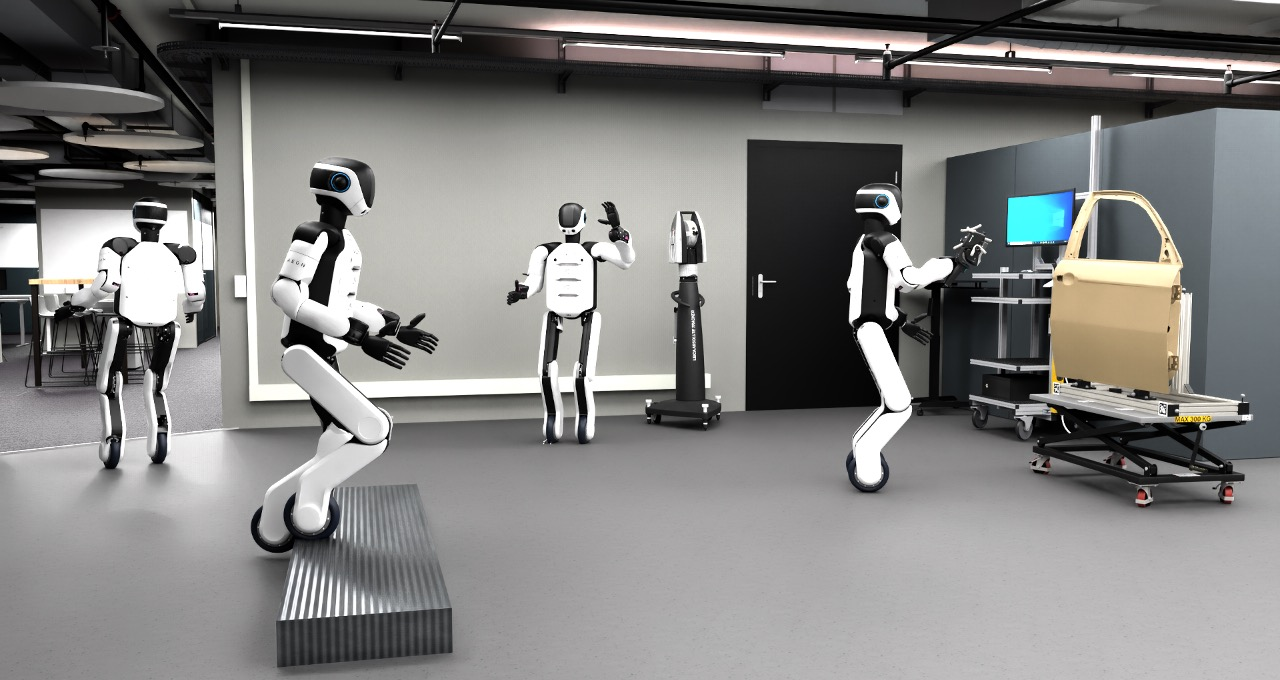
The advancement of modern industry demands precision, agility, and automation. Addressing this reality, Hexagon unveiled the humanoid Robot AEON during its annual Hexagon LIVE Global conference.
The innovation marks an important step in the use of robotics in industrial environments, combining artificial intelligence, advanced sensors, and digital simulation.
Assistant for Multiple Industries
The humanoid robot AEON was developed to operate in various sectors, such as manufacturing, transportation, aerospace, and logistics.
-
Helicopter Drops 180 Tons of Sand and Gravel on Swedish River to Revive Ecosystem Damaged by Decades of Exploitation

-
Brazilian Company Launches Retro Smartphone with 48 MP Camera, T9 Keyboard, and Privacy Features for Social Media-Free Use

-
Self-Taught Chinese Farmer Builds 5-Ton Submarine from Scrap, Launches It in Anhui River
-
Invisible Induction Technology Enables Wireless Power for Blenders, Coffee Makers, and Air Fryers, Reducing Countertop Cables





According to Hexagon, the robot is capable of handling tasks such as manipulating and inspecting parts, scanning assets, and providing operational support.
The main focus is to reduce human errors in activities that involve precision, especially when it comes to delicate components or unpredictable work environments.
According to Arnaud Robert, president of Hexagon’s robotics division, the company sought to develop an intelligent and autonomous robot that addressed the real challenges shared by industry leaders.
The AEON’s structure combines advanced mechatronics, multimodal sensors, and real-time artificial intelligence.
Training in a Virtual Environment
To accelerate its preparation, Hexagon utilized NVIDIA’s Isaac platform to train AEON almost entirely in simulation.
Through Isaac Sim and Isaac Lab, the robot learned locomotion, navigation, and handling without entering a real factory.
This process allowed AEON to master essential movements in just two to three weeks, while traditional methods would take months to achieve the same result.
NVIDIA’s Cutting-Edge Infrastructure
The robot’s performance is supported by a complete technology framework from NVIDIA. Currently, AEON operates with Jetson Orin computers for real-time decision-making. It will soon be upgraded to the IGX Thor platform, focusing on collaborative safety.
Deepu Talla, vice president of NVIDIA, believes that the era of general-purpose robotics is solidifying thanks to advancements in physical AI and simulation.
For him, AEON represents a significant leap in addressing major industrial challenges.
Additionally, the robot uses the Isaac GR00T model and NVIDIA’s Mimic tools to learn from human demonstrations and generate synthetic movements. This allows AEON to expand its repertoire of tasks quickly.
Integration with Cloud and Digital Reality
Another highlight of AEON is its ability to autonomously scan everything from small items to complete assembly lines. The collected data is sent to Hexagon’s Reality Cloud Studio via the HxDR system.
This enables teams to collaborate using 3D models within NVIDIA Omniverse.
This functionality brings industrial processes closer to creating digital twins, which, according to Lucas Heinzle, vice president of Hexagon Robotics, makes workflows simpler and more collaborative.
The company announced that AEON is expected to start being tested in factories and logistics centers in the coming months.
The expectation is that it will help establish a new era of scalable automation, based on simulation and prepared for the challenges of today’s industry.





Be the first to react!