






 Portuguese
  Spanish





Highway 401, With 18 Lanes, Suffers From Daily Traffic Jams. The Government Proposes Underground Tunnels As A Solution, But The Opposition Criticizes The High Cost Of The Project. Will This Major Project Solve The Chaotic Traffic Or Is It Just Another Promise?
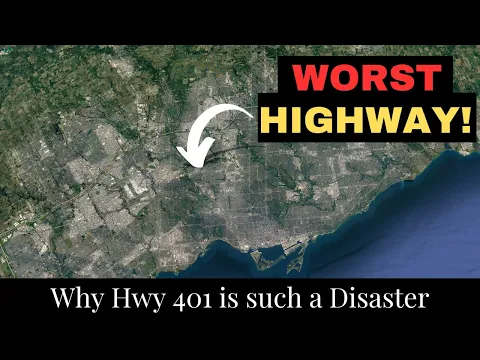
It’s hard to imagine, but there is a highway with 18 lanes in operation. You might be thinking that with so many lanes, traffic flows perfectly, right?
However, the reality is quite different. Every day, this highway faces endless, kilometer-long traffic jams.
Despite its impressive dimensions, the famous Highway 401 in Canada has become synonymous with traffic chaos.
-
2027 Toyota Corolla Cross Unveiled: New Design, Enhanced Fuel Efficiency, Reduced Maintenance Costs, Advanced Technology, Connected Services, and Up to 10-Year Warranty

-
Fiat Cronos Precision 2018: Affordable Sedan with Spacious Trunk and Reliable Maintenance
-
Volkswagen to Cut Production by 1 Million Cars by 2030, Reducing Jobs and Platforms, Focusing on More Profitable Models

-
Toyota Launches First 100% Electric Car in Brazil: bZ4X with 343 HP, All-Wheel Drive, 361 km Range, Priced at $419,990 BRL, Limited to 99 Units




But the government already has a solution: to build more roads… this time underground.
The Highway 401, or Macdonald-Cartier Expressway, is located in Ontario and is the busiest highway in North America.
It stretches an incredible 828 kilometers and connects major cities like Toronto, Windsor, and Ottawa, the capital of the country.
Despite its wide lanes, the highway faces constant bottlenecks. The reason? The increasing number of vehicles and the strategic importance of its sections for trade and transportation between Canada and the United States.
According to authorities, this highway has a capacity for nearly half a million vehicles per day at some points, even surpassing the famous Santa Monica Freeway in Los Angeles.

A Giant That Can’t Handle The Traffic
The 401 highway is a giant essential for trade and the daily lives of thousands of drivers.
It connects fundamental cities in Canada and facilitates the movement of an impressive number of vehicles every day.
In Toronto, for instance, it reaches 18 lanes in some sections. However, even with all this infrastructure, the situation does not improve: daily traffic jams remain a reality.
Despite expansions and increased speed limits in the Greater Toronto Area, the situation remains critical.
According to official sources, the work done over the years has not been enough to eliminate the traffic jams, which have become part of Canadians’ routines.
But the government has a new card up its sleeve: underground tunnels.
The Solution: An Underground Highway?
Doug Ford, the current Premier of Ontario, has proposed something bold to tackle the chaotic traffic: the construction of tunnels under Highway 401.
The idea is to create an underground route that would serve both private vehicle traffic and public transportation. According to Ford, this new route would be the definitive solution to daily traffic jams.
“This tunnel and this highway will reduce bottlenecks, support economic growth, and help people move faster,” Ford stated at a recent event.
He also emphasized that a feasibility study is underway to determine the cost and scope of the project.
The tunnel could extend up to 55 kilometers, connecting important areas of Ontario, such as Mississauga and Scarborough, without tolls.
The Opposition’s Resistance
However, not everyone is convinced that this is the best solution.
The political opposition has already labeled the project a “fairy tale tunnel,” criticizing the estimated cost, which could reach billions of dollars.
They recalled the ‘Big Dig’ case, a tunnel in Boston that took 25 years to finish, overran deadlines and budgets, and became the most expensive roadway project in United States history.
Despite the criticisms, Ford remains optimistic. “We are tunnel experts,” he said, asserting that the issues faced in the Boston project would not be repeated in Canada.
Moreover, the Premier accuses the opposition of being against all large-scale infrastructure projects, something he considers essential for Ontario’s future.
The Vicious Cycle Of Mega-Construction
The construction of new highways and lane expansions is not a new theme in the world.
According to an analysis published by the Los Angeles Times, these gigantic projects often become a vicious cycle: more highways lead to more cars, which generates more traffic jams, and, consequently, leads to the demand for more highways.
This scenario is common in various cities around the world, and it seems that Highway 401, despite its 18 lanes, has also entered this cycle.
Construction companies and unions push for projects, while politicians seek quick solutions for traffic, creating an infinite cycle of road expansion that, so far, has not managed to solve the problem.

The Future Of Highway 401
It is still unknown whether the underground tunnel project will be truly feasible or if it will end up as just another political promise.
Highway 401, with its impressive 18 lanes, remains a symbol of modern roadway chaos.
The success of the project could open doors to new infrastructure solutions, but it could also be another example that sometimes, building more roads is not the best answer.
What do you think, do you believe that building more roads and tunnels is really the solution to the traffic problem? Or does it just increase the cycle of congestion and endless construction?







