






 Portuguese
  Spanish
  3 min of reading
  0 comments


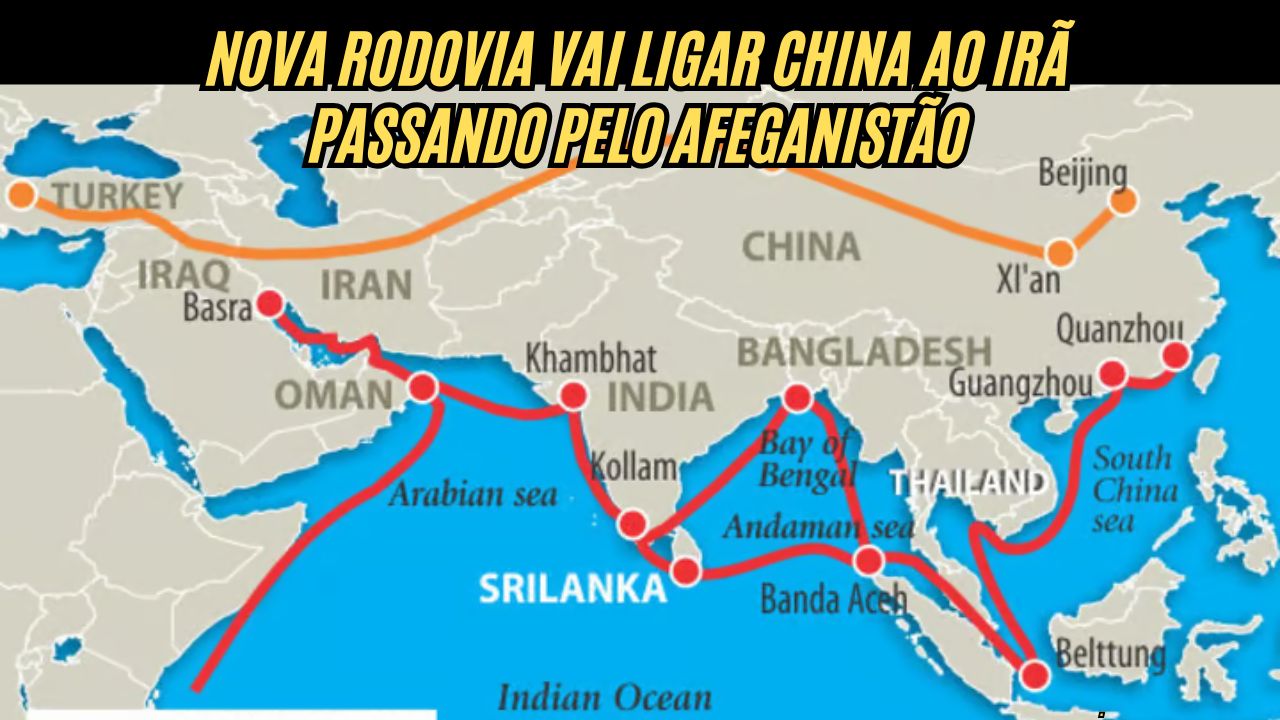
Ambitious Project of the Belt and Road Initiative Connects China to the Middle East, Revolutionizing Trade Routes.
The transcontinental highway of China is poised to redefine global trade. This mega-project, which will traverse the challenging terrain of Afghanistan and extend to Iran, is part of the Belt and Road Initiative (BRI) and promises to transform the economies of key countries by revitalizing historic trade routes.
A Pillar of the Belt and Road Initiative

Since its launch in 2013, the Belt and Road Initiative has invested trillions of dollars in infrastructure projects to connect Asia, Europe, and Africa. The transcontinental highway of China, a centerpiece of this initiative, links China directly to the Middle East, reducing transportation costs and delivery times, while strengthening its economic and geopolitical influence.
More than just a road, the project symbolizes the construction of economic bridges, providing China with direct access to Middle Eastern markets and beyond. For Beijing, this infrastructure is a lever to secure a central position in global trade.
-
Without a mansion, without high investment, and without a traditional classroom, a teacher living in a 22 m² house taught students to build a 9 m² studio apartment with the equivalent of R$10,000.

-
Largest bridge in São Paulo reaches 75% completion and is expected to strengthen strategic connection in the interior of São Paulo.

-
Without her own home and pressured by rent, a 25-year-old bought a small 15-meter boat, gradually renovated the interior by herself, transformed the interior with paint, new flooring, a larger bathroom, and started living on the canals, paying much less per month.
-
Tired of seeing families sleeping on the street, São Paulo delivered 18 m² furnished microhouses and took 888 people off the streets: Vila Reencontro became the model social housing for the homeless population.


Strategy and Resources
The transcontinental highway of China is not only an economic advancement but also a crucial geopolitical tool. It strengthens ties with Afghanistan and Iran, countries rich in natural resources such as lithium, oil, and gas. These inputs are essential for the Chinese industry, aligning the project with the country’s strategic objectives.
Additionally, China’s presence in the region consolidates its influence in territory historically contested by Western powers.
Overcoming Challenges in Afghanistan
The construction faces obstacles such as mountainous geography and security challenges in Afghanistan. However, significant progress is being made, such as the completion of a road in the Wakhan Corridor, connecting the country to China.
Despite the progress, regional security and high engineering costs remain barriers that require coordination among China, Afghanistan, and Iran.
Iran: Key Player for Success
Iran plays an essential role in the project, serving as the gateway to the Middle East. For the country, China’s transcontinental highway brings opportunities for investment, economic integration, and greater competitiveness in international markets. In return, Iran strengthens its position as a regional power, expanding its economic influence.
Challenges and Vision for the Future
Although promising, China’s transcontinental highway faces risks such as political instability, environmental issues, and the need for engagement with local communities. Overcoming these challenges will be vital for the project to reach its full potential.
This new Silk Road promises not only to connect nations but also to revitalize economies, promote cultural exchanges, and foster peace. As construction progresses, China’s transcontinental highway solidifies as a symbol of innovation and global collaboration, shaping the future of international trade.








Be the first to react!