Portuguese
  Spanish


Rising Costs and Logistical Challenges on the Maritime Route
The recent escalation of tensions in the Red Sea, driven by advances made by Houthi militants, is triggering a series of repercussions in global maritime logistics, with direct consequences for Brazil. The need to divert traditional maritime routes, especially those that pass through the vital Suez Canal, is resulting in longer travel times and, consequently, increased freight costs. This situation, stemming from the actions of the Yemen-based group supporting Hamas, is imposing significant changes on maritime transport operations.
The Suez Canal, a crucial artery connecting North Africa to the Middle East and Asia, accounts for about 12% of global trade. The alternative route, which circumnavigates Africa, can extend journeys by up to 15 days, leading to an increase in operational costs. Jorge Freitas, Corporate Director of FLC at Craft, highlights that this increase in transit time generates a rise in the cost of in-transit inventory, deeply impacting the entire global supply chain.
Direct Impact on Brazilian and Global Trade
Daily, about 50 ships transit the Suez Canal. With the recent changes, it is estimated that between 1 and 1.7 million TEUs (twenty-foot equivalent units) are now diverting their routes via Africa. To mitigate the impacts of this logistical alteration, shipowners may be forced to increase the number of vessels operating on the route, directly reflecting on freight costs, which have already seen a significant increase.
-
Petrobras Secures $2.2 Billion Contract to Build and Operate Four Support Vessels for Brazil’s Offshore Oil Fields

-
Why can the crane operator only obey the correct signalman on the construction site: among dozens of workers, a hand raised by the wrong person can confuse the maneuver and turn a load of tons into an immediate risk.

-
What changes with the new public transportation rules that can reduce pressure on fares and pave the way for zero fare in Brazil?
-
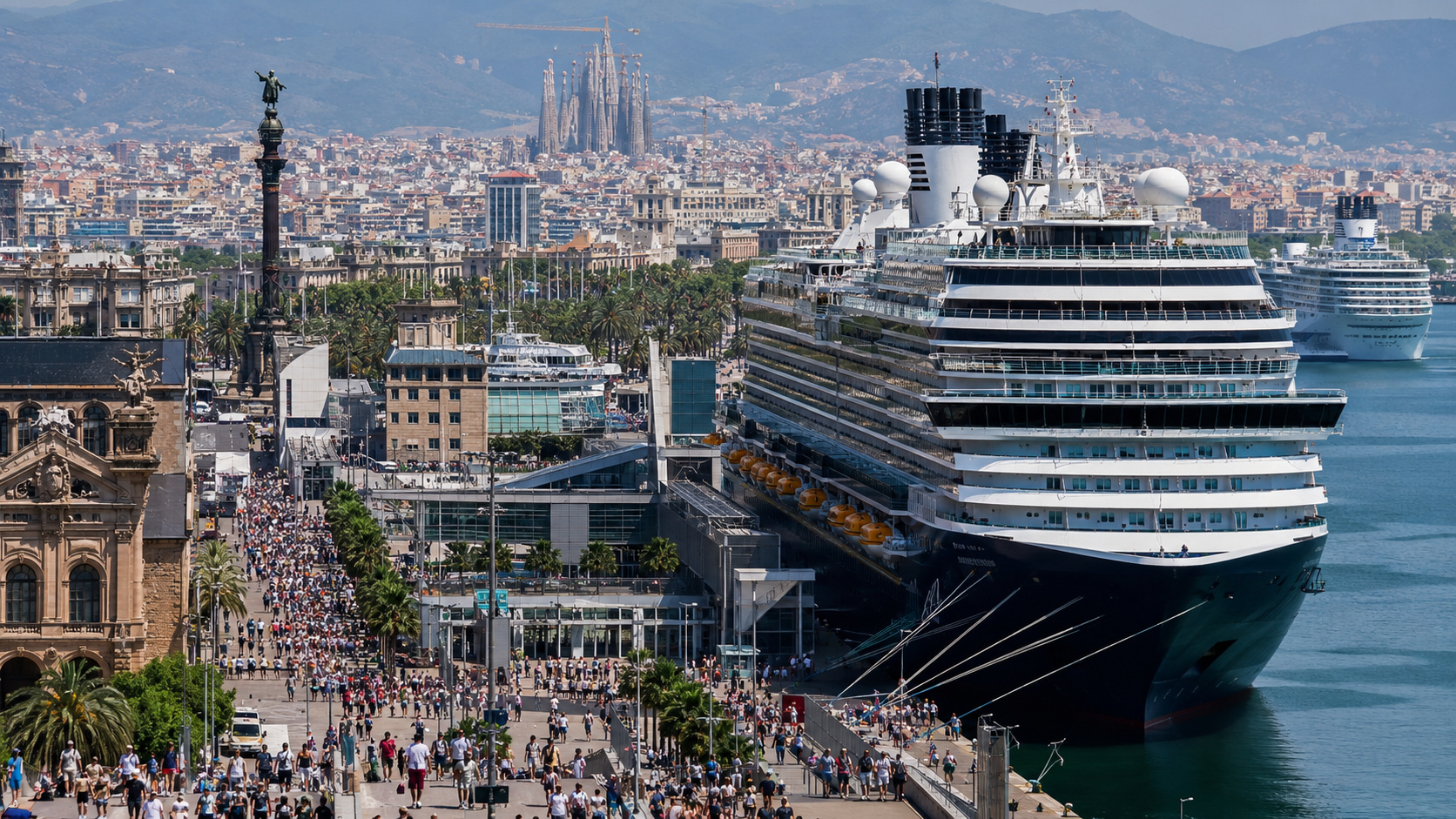
While many ports want to grow, Barcelona has decided to do the opposite and will cut cruise terminals from 7 to 5 after pressure from residents, protests, and crowds.


Brazil, whose economy is heavily tied to international trade, with 20% of its consumption coming from abroad and half of those imports originating from Asia, faces significant challenges. With five direct services connecting Asia to the East Coast of South America, the cost of freight to Brazil could double, further exacerbating the situation as demand pressures direct services in a context where transit through the Suez Canal is being avoided.
Future Perspectives and Impacts on the Supply Chain
The current scenario, although still limited, signals increasing impacts on supply chains that may intensify in the coming weeks if the situation does not stabilize. With the approach of the Chinese New Year, traditionally a period of lower operational capacity at Chinese ports, shipping delays could worsen. This would result in an additional increase in transportation costs, impacting demand and prices of goods offered to the end consumer.
The situation in the Red Sea, therefore, not only challenges global maritime logistics but also places international trade, including Brazil’s, on alert. The need to monitor and adapt to these changes reflects the complexity and interconnection of the global economy, where regional conflicts can have ripple effects, affecting markets and consumers worldwide.
Source: Letícia Herenyi.