Portuguese
  Spanish




Know The Story Behind One of The Greatest Engineering Disasters in Japan and The Solutions to Prevent The Collapse of The Floating Airport
Japan is known for its engineering marvels, such as enormous skyscrapers designed to withstand powerful earthquakes and trains that operate with near-perfect precision. However, not all engineering projects in the Land of The Rising Sun go according to plan. The Kansai International Floating Airport, with a cost of approximately 20 billion dollars, can be considered one of the greatest engineering disasters ever faced by Japan.
Located about 400 km from the bustling Japanese capital of Tokyo, in Osaka Bay, the Kansai Airport was built on an artificial island and has faced sinking problems since its inauguration. After about 12 billion dollars spent on efforts to stabilize it, the issue still persists.
The Grandiosity of Japan’s Floating Airport and The Audacious Project
Understanding the magnitude and importance of this project is no easy task. The island covers an area of 10.68 km² and can be seen from space! The floating airport region is marked by grandeur, from the land access via the iconic Akashi Kaikyo Bridge to the magnitude of the terminal itself, with a length of 1700 m.
-
Brazilian Innovator Transforms 1962 Mercury Comet with Nissan Leaf Electric Motor, Achieving 125 km Range for Under $6,000

-
China Tests Giant 582-Ton Magnets to Contain Plasma Hotter Than the Sun’s Core, Aiming to Cut Superconductor Costs and Generate First Electricity from “Artificial Sun” by 2030
-
Seventh Grader Builds Nuclear Fusion Machine at Home, Aiming for Guinness World Record

-
Ancient Ritual Circle, Hidden for 5,000 Years, Discovered in Scotland’s Machrie Moor Using Sensors, Revealing a “Phantom Stonehenge”



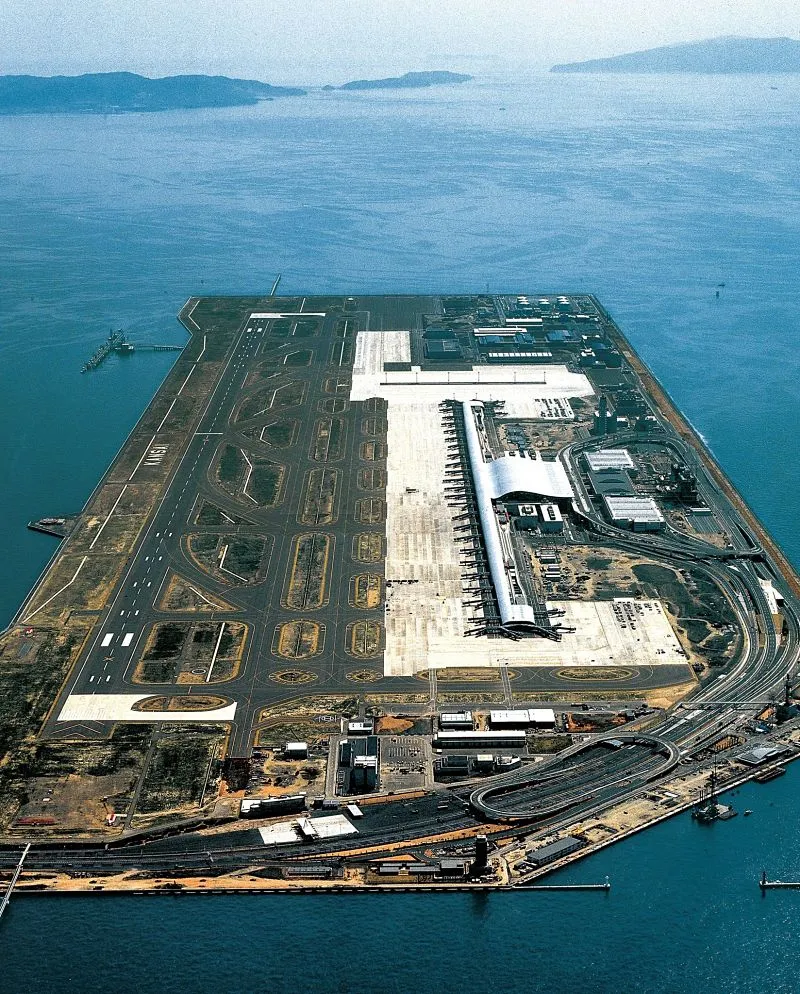
The island was built to relieve the overcrowding of Osaka Itami International Airport, located about 70 km away. The decision to build an artificial island in Osaka Bay was challenging, especially considering Japan’s economic difficulties in the 1980s and 1990s. However, the vision was clear: to create an architectural landmark that revitalized Osaka and put it back on the world stage, rivaling the grandeur of Tokyo.
The Challenges Faced in The Floating Airport Project
Despite the grandiosity of the project, Kansai Floating Airport faces significant challenges, especially regarding its sinking. Initially estimated at 5.7 meters, the sinking increased to 8.2 meters in 1999 and to 11 meters in 2018, after Typhoon Jebi hit the airport. Concerned about the situation, the floating airport administration invested over 150 million dollars to raise the breakwater and reduce the chances of flooding.
Ongoing Solutions to Prevent a Disaster
Engineers have developed measures to prevent the disaster of the sinking floating airport, such as the insertion of iron plates and foundation columns beneath the passenger terminal. However, these solutions are only temporary. It is estimated that the airport will sink an additional 5 meters and reach sea level by 2056.
Kansai International Airport is an impressive example of human ingenuity and the pursuit of innovative solutions. Despite the challenges faced, Japan remains committed to overcoming obstacles and ensuring the safety and efficiency of its engineering structures. The future of Kansai Airport is uncertain and a disaster may be expected, but its story serves as a reminder of the challenges faced in constructing infrastructure in challenging locations.