





 Portuguese
  English
  Spanish
 3 min of reading
  0 comments


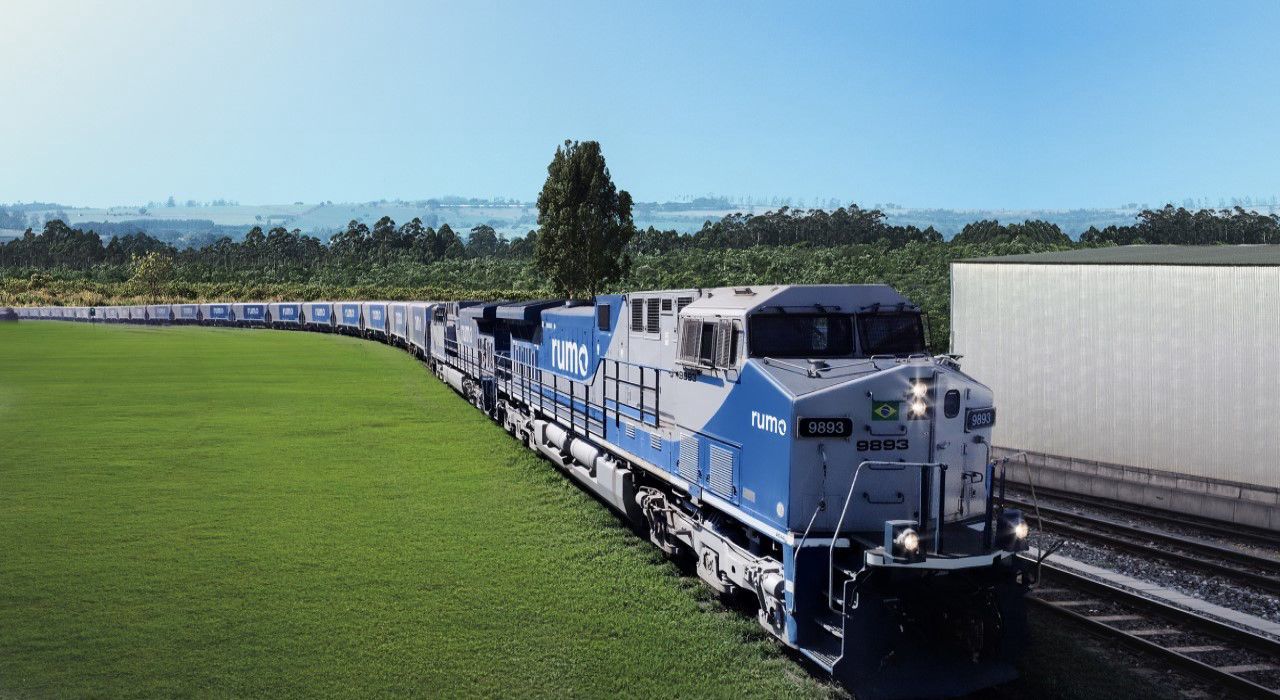
The Construction of the New Railway in Mato Grosso by Rumo Will Be an Important and Sustainable Alternative for Grain Transportation
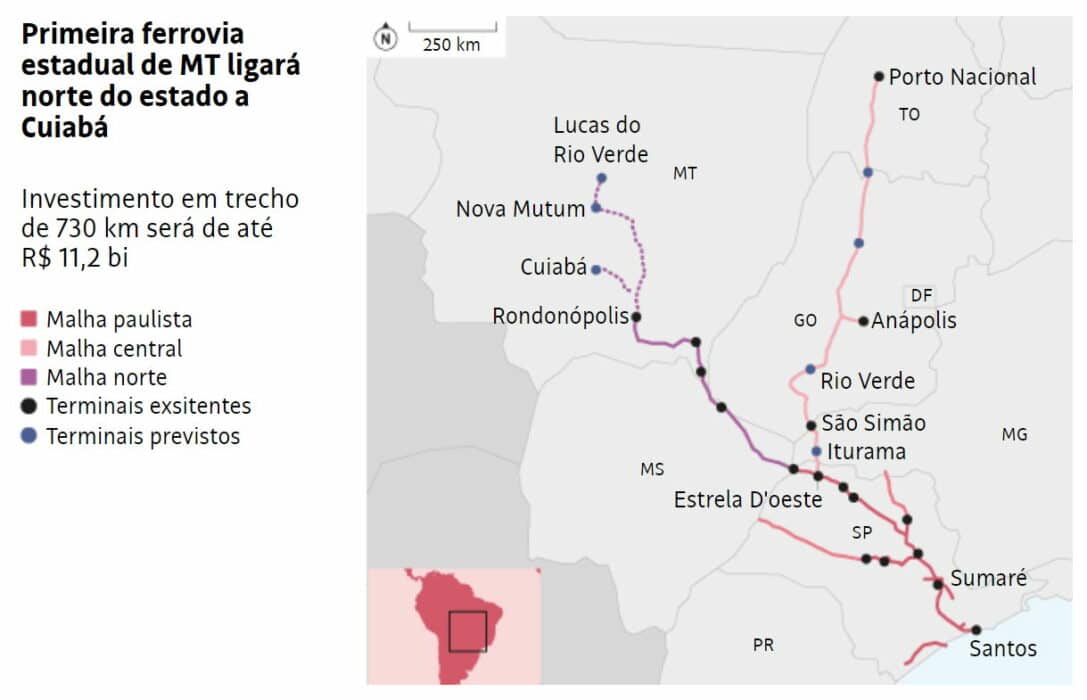
Yesterday, Monday (09/20), the government of the state of Mato Grosso reached an agreement with Rumo Logística for the construction of a new railway. The railway will connect the municipalities of Rondonópolis to Cuiabá and Rondonópolis to Nova Mutum and Lucas do Rio Verde, and it will also connect to the national network that reaches the Port of Santos. According to the governor, this logistical advancement is yet another important and sustainable alternative for grain transportation, whose production in Mato Grosso may exceed 120 million tons annually by 2030. Read more: Mining Company Vale Informs That Construction of the Railway May Cost R$ 8.7 Billion
- Aggreko Plans to Invest R$ 240 Million in Biogas Power Generation Projects
- Former Odebrecht Divests Its Main Company and Affects Petrobras Shares
- Sebrae in Indaiatuba Opens Slots in Free and E-Learning Courses in the Solar Photovoltaic Sector
- Petroleum Company Shell Plans More Investments in Renewable Energy to Become Carbon Neutral
- Petrobras Announces Ambition to Achieve Carbon Emission Neutrality in Its Operations
The Contract Between Rumo and the Government of Mato Grosso for the Railway Construction
The contract with Rumo, which is owned by Cosan, is for authorization for implementation, operation, and private exploration of the railway for a period of 45 years, with the possibility of renewal for another 45 years for all related services. This is the first state railway, without federal interference.
The government of Mato Grosso made a public call in July, and the logistics company was the only interested party. According to Mendes, there will not be a single real from the state invested in the operation. The environmental viability procedures began with the federal government last year, and the process was then transferred to the Secretary of the Environment of Mato Grosso. According to Rumo, it has taken almost three years of work to streamline the licensing, which needed to ensure that the new route did not pass through environmental protection areas or indigenous reserves.
-
Brazil and Morocco face off on the field this Saturday for the World Cup, but off the pitch, the two countries engage in $2.8 billion a year in agricultural trade; Brazilian sugar alone accounts for nearly 60% of everything the African country buys from here.

-
The tax on blouses is out, but ICMS remains: understand why international purchases can still be costly for consumers

-
Partnership between Brazil and the European Union targets chips, AI supercomputer, and cloud services, as the government seeks to strengthen digital sovereignty in areas considered strategic.
-
BYD will invest up to R$ 500 million in batteries in Brazil after the government auction and could generate at least 400 direct jobs.


The Construction of the New Railway in Mato Grosso
The new railway that will connect Cuiabá to Rondonópolis, as well as Rondonópolis with Nova Mutum and Lucas do Rio Verde, in addition to connecting with the national railway network, will have an investment of R$ 11.2 billion. According to the state of Mato Grosso, this investment will generate more than 235,000 jobs, as well as boost the economy.
The start of the work will be after 6 months from the submission of the environmental licensing, which will partly be the responsibility of the government of Mato Grosso and partly of the company that wins the public call for the railway. Construction is expected to begin at the end of 2022. Once the railway is implemented, Rumo is authorized to operate the railway for 45 years, and the railway infrastructure may be shared by the winning company with another railway transportation company that provides services in the state of Mato Grosso.
Increase in Grain Transportation in Mato Grosso
The railway is expected to significantly improve the grain transportation capacity of Mato Grosso, which is estimated to produce 120 million tons of grain per year by 2030, according to the state government. The section will also relieve transportation on the highways significantly.
According to the state secretary of Finance, Rogério Gallo, the railway will also reduce the logistical costs for producers, as rail freight has decreased by more than 35% in the last five years. Over 250 companies in the Industrial District of Cuiabá will be able to use the railway to transport their products and receive supplies, a scenario that is expected to encourage the establishment of new industries.





Be the first to react!