Portuguese
  Spanish


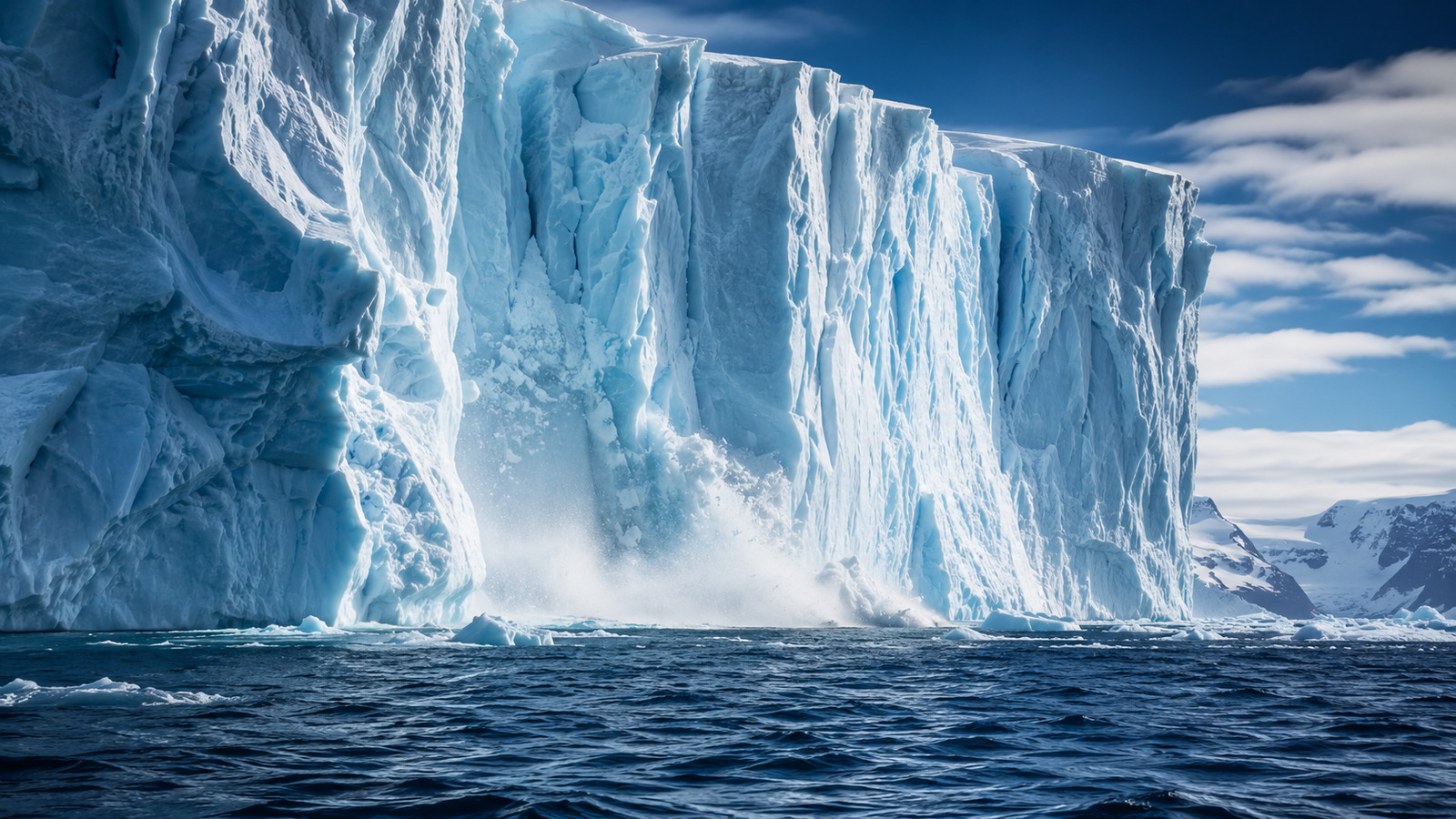

Beyond glacier melting, ocean thermal expansion helps explain why sea level continues to rise, even without direct water increase in some coastal regions
Sea level rise does not only occur when glaciers melt or ice blocks fall into the ocean. A less visible factor also contributes to this process: seawater warms, expands, and occupies more space, a phenomenon known as thermal expansion.
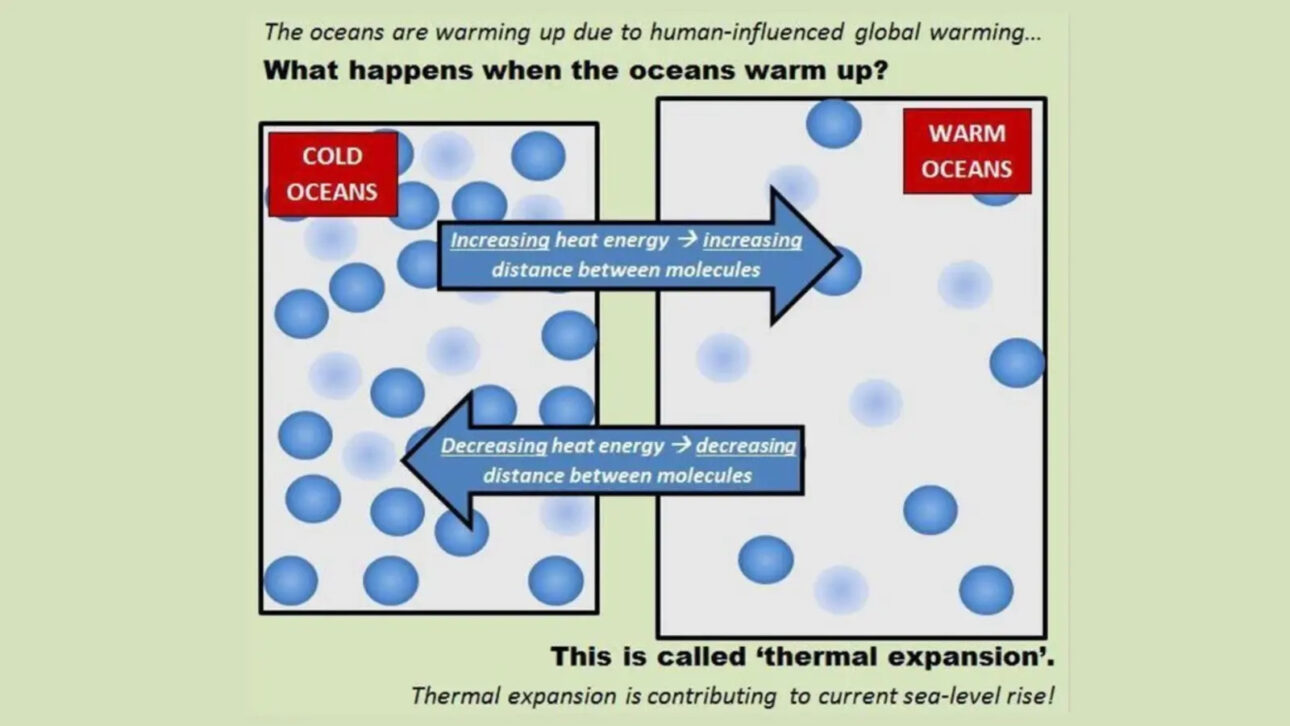
Sea level rise: Thermal expansion explains part of the ocean’s increase
Thermal expansion occurs when a body increases in volume when heated. In the case of the ocean, water absorbs heat, its molecules move more and slightly apart, causing the same amount of water to occupy more space.
On a small scale, like in a glass or a pot, this increase may seem almost imperceptible. But when the process occurs in an entire ocean, the effect becomes relevant to the global sea level.
-
China Uses 432 Robots to Move a 7,500-Ton Historic Building in Shanghai, Preserving Architecture While Creating Space for Underground Center

-
World Cup Ball Chip Uses Technology to Detect Invisible Touches, Confirms Offside, Secures Portugal’s Victory Over Croatia

-
36-Meter Hydrogen-Powered Superyacht Arrives in Brazil to Debut German Engines and Showcase Future of Clean Navigation
-
Indian Students from Jaipur Win Top Prize at World’s Largest Science Fair with EcoFog, an Affordable Mesh to Harvest Fog Water Without Energy




This means that water does not need to increase in quantity for the sea to rise. The existing water itself, when it gets warmer, “swells” and slowly raises the ocean levels.
Oceans absorb more than 90% of retained heat
According to NASA, more than 90% of the heat retained by greenhouse gases has been absorbed by the oceans. This heat is stored in both surface and deep layers of the water.
The problem is that this energy does not disappear. By remaining in the ocean, it warms the water and directly contributes to thermal expansion. This is one of the main factors behind the global sea level rise.
The most common image associated with ocean advancement is that of melting glaciers. However, thermal expansion shows that part of the process happens less visibly, below the surface and on a planetary scale.
Melting also matters, but works differently
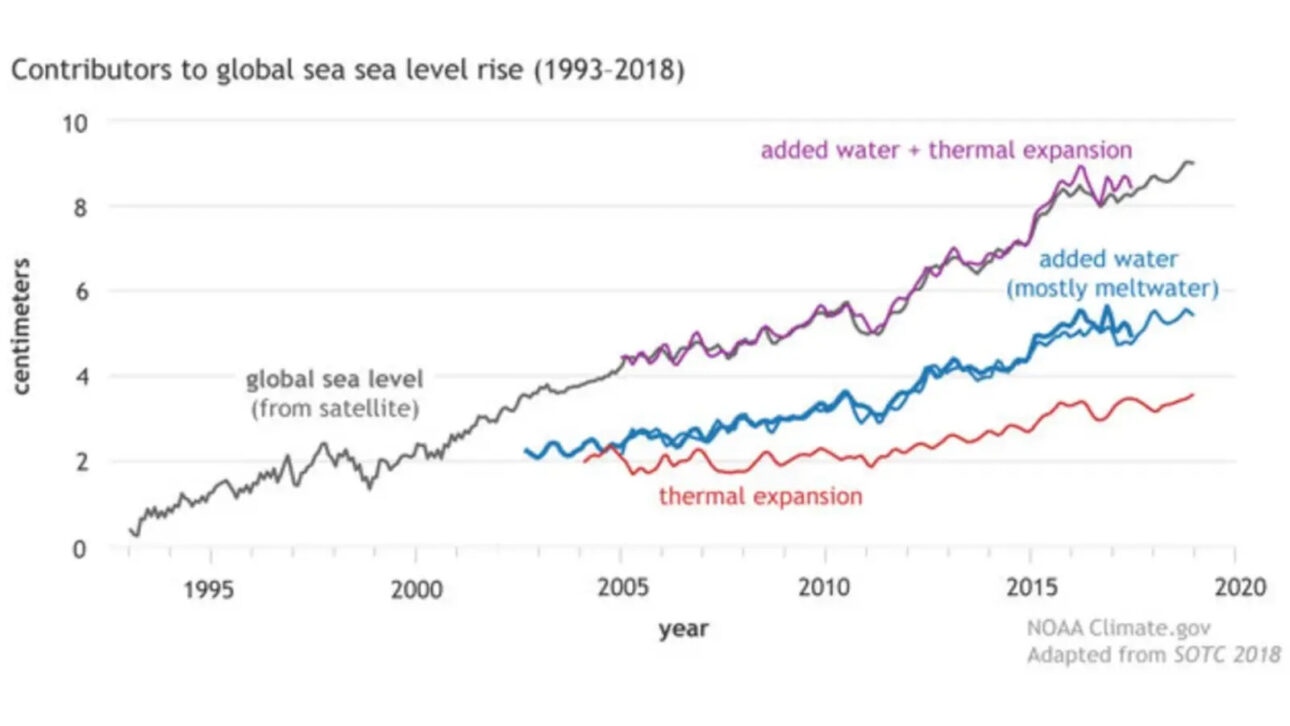
Sea level rise is mainly explained by two processes: the melting of land ice and the thermal expansion of the ocean.
When glaciers or ice caps from Greenland and Antarctica melt, the water that was on land flows into the sea. In this case, there is a direct increase in the volume of ocean water.
Floating sea ice, such as part of Arctic ice, has a smaller direct impact on sea level when it melts. This is because this ice was already displacing water while floating.
Thermal expansion has a different characteristic: it occurs without adding new water to the ocean. What changes is the space occupied by the existing water.


Impact varies according to each coastal region
Sea level does not rise the same way everywhere. Besides ocean warming and ice melting, other factors interfere with the behavior of each coast.
Among them are ocean currents, winds, changes in Earth’s gravity, land subsidence, and tectonic movements. Therefore, two coastal cities may face different rates of rise.
In areas where the land sinks, for example, the perception of sea rise can be more intense. In other regions, changes in ocean currents or the shape of the coastline can also alter local effects.
In Chile, a country with thousands of kilometers of coastline, understanding these processes is important for coastal planning, port infrastructure, erosion, storms, and the future of seaside communities.
Thermal expansion shows that the ocean not only receives heat from climate change. It also stores this heat and responds physically to it, occupying more space and contributing to a silent, gradual, and persistent rise in sea level.
This article was prepared based on information from NASA and the provided source material, with data, numbers, and statements preserved as per the consulted material.