





 Portuguese
  English
  Spanish
  6 min of reading
  0 comments


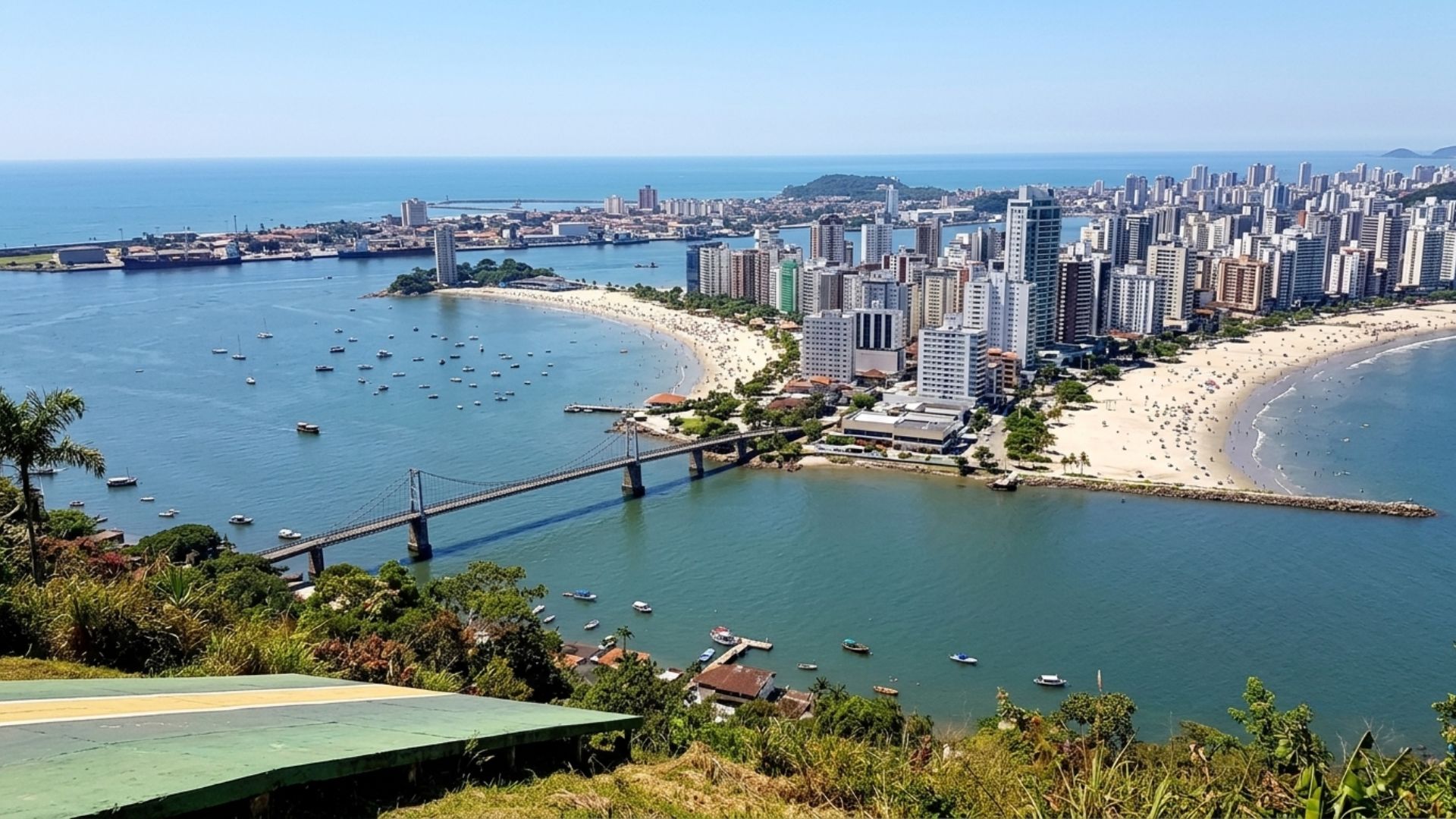
São Vicente held the first recorded elections in the Americas in 1532, established the first municipal chamber, and became a landmark of Brazil’s political origin.
On August 22, 1532, the then Village of São Vicente, on the coast of São Paulo, made history by conducting the process that Brazilian institutional sources consider the first recorded elections in the Americas. According to the Senate Agency, the village chose on that date the first members of the local Chamber, a milestone that the institution itself presents as the beginning of the electoral experience in the territory that would become Brazil.
The episode gained even more significance because São Vicente had been founded just a few months earlier, on January 22, 1532, during the expedition of Martim Afonso de Sousa. According to the São Vicente City Hall, it was there that the first official administrative structure of Portuguese America was consolidated, with Church, Chamber, and Pillory, a foundation that still supports the historical title of Brazil’s first village.
São Vicente hosted the first recorded election in the Americas in 1532
The date of August 22, 1532 appears both in the Senate Agency and the São Vicente City Hall as the moment when the village conducted the selection of the first members of the municipal council.
-
Three-story house weighing 128,000 kg is lifted by hydraulic jacks and removed from the coast in the US before being swallowed by the ocean; 20 properties have already collapsed in the region and the advance of the sea raises an alert for the Brazilian coast.

-
At 360 meters high, a glass bridge extends 35 meters over a canyon in Brazil, leaving visitors “floating” over the Vale da Ferradura, with views of the Caí River and the Caracol Waterfall.

-
The song that made the whole of Brazil sing during the 1970 World Cup seemed like just a celebration of the third championship, but it hid a much more complex story linked to the military dictatorship.

-
With a length of about 150 meters and an estimated weight of 300 tons, a giant hose appeared on a beach in Japan, and now the country must spend R$ 1.6 million to remove the stranded piece with no known owner.





It was not an election similar to the current universal and secret vote, but it already represented an institutional way of selecting local authorities within the Portuguese political model transplanted to the colony.


According to the São Vicente City Hall, the process selected the first members of the Chamber, a role that today is similar to that of a councilor. This fact is central because it shows that the village was not just a nucleus of Portuguese occupation but already had a formal local government organization in the 16th century.
This is the point that makes São Vicente a unique case in the continent’s history. Before many colonial centers gained political weight, the São Paulo village was already operating with a local administration structure based on the selection of representatives, albeit restricted and far from the contemporary concept of democracy.
The first village in Brazil was born with an official local government structure
According to the São Vicente City Hall, the official founding of the village took place on January 22, 1532, when Martim Afonso de Sousa began the administrative organization of the colonial nucleus. The installation of the Church, the Chamber, and the Pillory is treated by the municipality as the concrete foundation of the first organized village in Brazil.
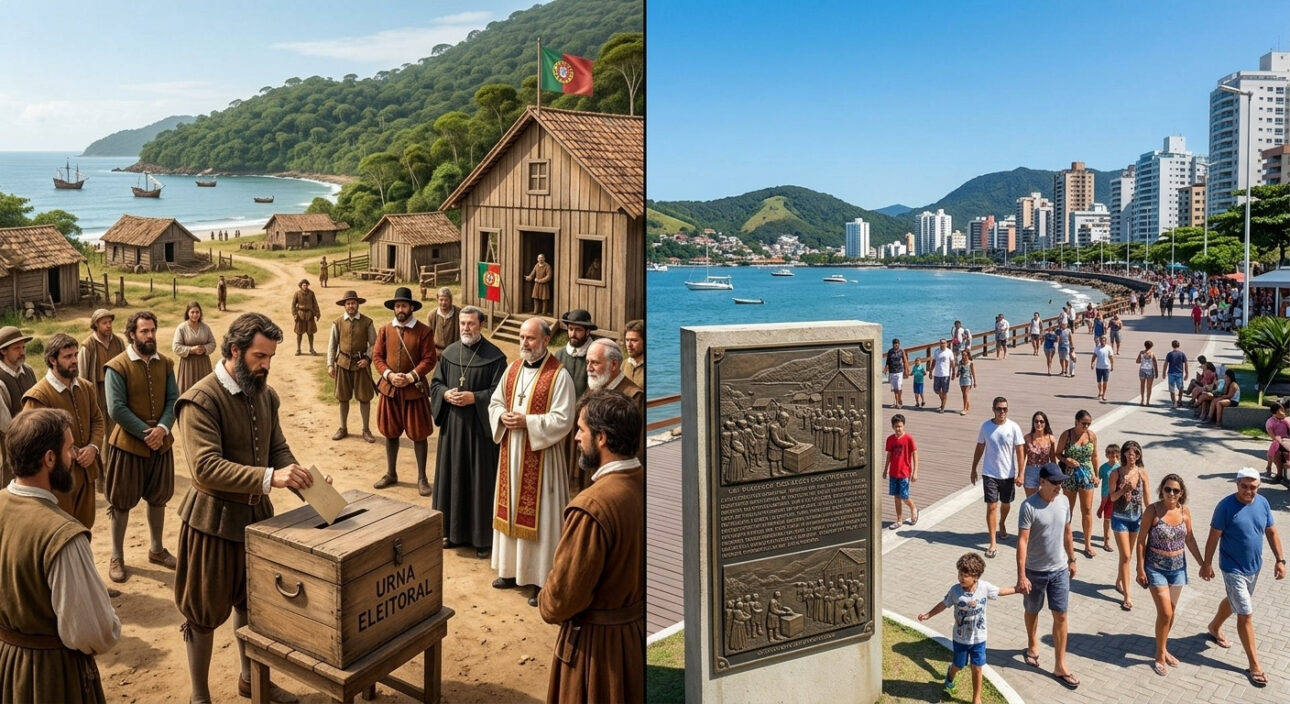
The importance of this detail is significant because the historically more precise term for the period is not city, but village. In that context, it was the village that concentrated the formal structure of local government, with the capacity to organize the administrative, political, and judicial life of the territory.
This condition placed São Vicente at the center of the institutional formation of Portuguese America. The village was not just a coastal occupation point but a space where the Portuguese Crown began to build a permanent presence and regular administration in the New World.
The Chamber of São Vicente concentrated political, administrative, and judicial power
The Chamber installed in São Vicente in 1532 had a much greater weight than a current City Council. In practice, this body accumulated administrative, fiscal, judicial, and daily ordering functions of the village, becoming the real center of local power.
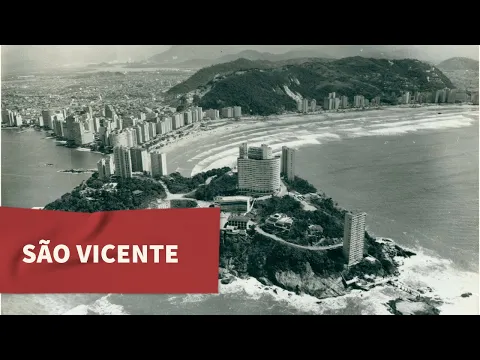
According to the Senate Agency, the system followed the rules of the Ordinances of the Kingdom, a Portuguese normative set that organized the political life of the villages. This means that the election was not just of symbolic value. It defined who would occupy positions with direct influence over the administration of the community.
The process, therefore, was decisive because it marked the effective installation of a local government structure in Brazilian territory. Instead of an isolated experience, the election of São Vicente represented the formal introduction of a political model that would be replicated in other parts of the colony.
The 1532 election was restricted to the local elite and cannot be confused with modern democracy
It is essential to make the historical correction clearly. The election held in São Vicente in 1532 was not democratic in the current sense. The right to participate was limited to the so-called good men, a term used to designate members of the local elite connected to Portuguese power.
This means that women, indigenous people, enslaved individuals, manual workers, and groups outside the white male elite did not participate in the process. According to the São Vicente City Hall, the choice followed the Portuguese political pattern of the period and reflected the exclusionary social structure of the 16th century.
Even so, the episode remains historically relevant. Its value does not lie in anticipating modern democracy, but in recording the emergence of a formal local election structure on the American continent, within the rules and limitations of the Portuguese colonial world.
Martim Afonso de Sousa transformed São Vicente into the starting point of colonial administration
The political history of São Vicente is directly linked to the figure of Martim Afonso de Sousa. According to the Senate Agency, he coordinated the establishment of the village and the holding of the first local elections, making the region a stable administrative center at a time when Portugal was still consolidating its presence on the South American coast.

This movement had a strategic function. The Portuguese Crown needed to assert territorial presence, organize settlement, and create mechanisms of local control in a disputed coastal strip that was still fragile from a colonial perspective. São Vicente emerged precisely as a response to this need.
Therefore, the municipality became much more than a pioneering village. It became Brazil’s first institutional laboratory, a place where colonial administration began to function in an organized manner, with local authorities chosen and public functions defined.
São Vicente still preserves the title of the political cradle of Brazil
The symbolic strength of São Vicente comes from the concentration of several landmarks in the same territory. According to the São Vicente City Hall, the city still preserves the titles of first village in Brazil and cradle of American democracy, an expression used by the municipality to highlight the 1532 election.
This historical memory continues to be used as cultural, tourist, and institutional heritage. The past of São Vicente is not only of interest to the São Paulo coast but also to the very narrative of the origin of Brazilian public life, because it connects the present to a moment when local administration began to take shape on the continent.
Almost five centuries later, the episode continues to draw attention precisely because of this. Before Independence, before the Empire, and long before Brasília, politics in the Brazilian territory began to take shape in a small village on the São Paulo coast, where the Chamber was established and the first local representatives were chosen in 1532.








Be the first to react!