






 Portuguese
  Spanish


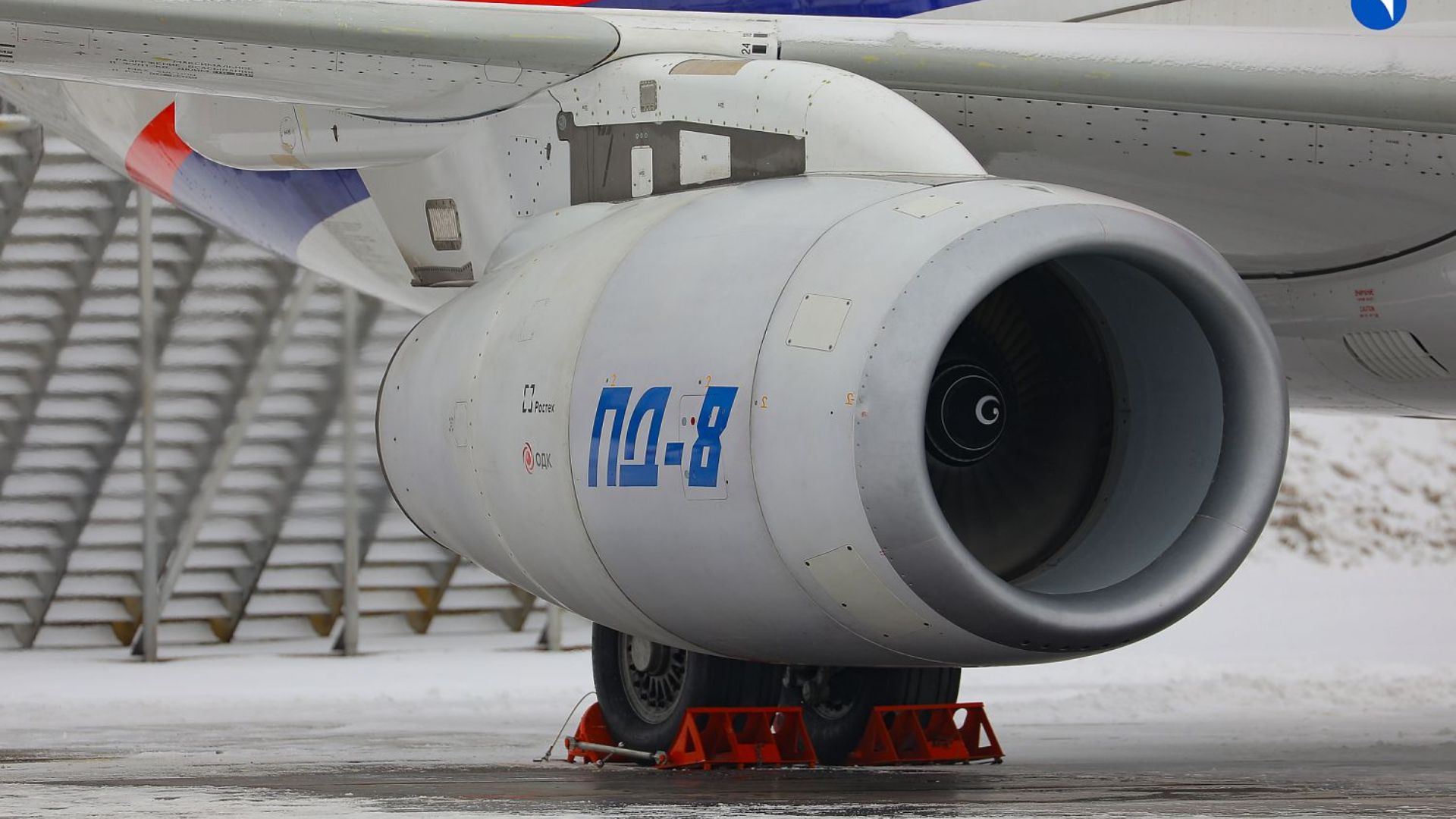


Resumption Of Flights Of The Russian Regional Jet Symbolizes The Attempt To Rebuild Industrial Supply Chains, Reduce External Dependence, And Keep Regional Aviation Operating Under Sanctions, Focusing On Domestic Engines, Endurance Testing, And Replacing Critical Systems Previously Provided By Western Companies.
The Russian aviation industry has returned the Superjet to the skies in a deeply redesigned version, presented as a reconstruction aimed at reducing dependence on imported components and replacing systems previously provided by Western companies.
This return to test flights gained symbolic weight by marking the debut of the PD-8 engine in the regional jet family, reinforcing the official strategy of accelerated import substitution following sanctions imposed by Western countries since 2022.
In addition to the symbolism, the program addresses a concrete operational objective: ensuring predictability of spare parts, technical support, and maintenance in a scenario where global supply chains have begun to operate under stricter constraints.
-
In the Caucasus Mountains, a Community Preserves a Language So Rare Few Outsiders Can Understand It

-
Slovakia’s Ice Cave Holds Over 110,000 m³ of Frozen Wonders, Boasts Walls Up to 27 Meters Thick, and Was Among the First Electrified Caves Globally

-
Street Cleaner Accidentally Receives $200,000 Transfer, Returns Unexpected Fortune to Rightful Owner
-
Australian Space Agency Investigates Six Mysterious Metal Spheres Found on Queensland Beach, Isolating Area Over Possible Space Debris Risk





By preserving the category of regional jets, the initiative seeks to keep medium-sized cities and remote regions connected, where larger aircraft rarely prove economically viable.
PD-8 Engine At The Center Of Reengineering
The most sensitive element of the Superjet’s reconfiguration lies in the propulsion system, considered decisive for the program’s operational autonomy.
In the original version, the aircraft operated with the SaM146, developed by PowerJet, a Franco-Russian joint venture linked to Safran and the United Engine Corporation, responsible for both the engine’s design and support.

With the advancement of sanctions and restrictions on the supply of parts and services, PowerJet ceased, in 2022, obligations related to the supply, maintenance, and repairs of the SaM146, according to public sector records.
This disruption goes beyond the simple unavailability of a component, as it directly affects maintenance routines, spare stock, and the very operational availability of the fleet.
Commercial turbines depend on controlled parts, updated technical documentation, and a highly specialized service network, usually concentrated among a few global suppliers.
In this context, the project has been promoted as SJ-100, a designation associated with the version featuring higher local content and a broader package for replacing foreign items.
The change in identity accompanies the effort to differentiate the nationalized model from the Superjet 100, which was designed with significant international participation.
Flight Tests And Progress Towards Series Production
The debut of the PD-8 in flight occurred in March 2025, when a test SJ-100 took off from the factory in Komsomolsk-on-Amur and remained in the air for about 40 minutes.
The flight profile followed the initial standard of campaigns of this type, focusing on checks of basic parameters and observing system behavior under real operating conditions.
From this milestone, the next phase began to expand the testing envelope, incorporating assessments in regimes closer to regular use, such as cruising altitude and speed.
Each advancement at this stage serves both to validate the engine’s performance and to support the documentation required in the certification and approval processes for the aircraft with the new system architecture.
At the same time, Rostec and the United Aircraft Corporation began to highlight signs of transition from the prototype environment to a design aimed at industrial scale.
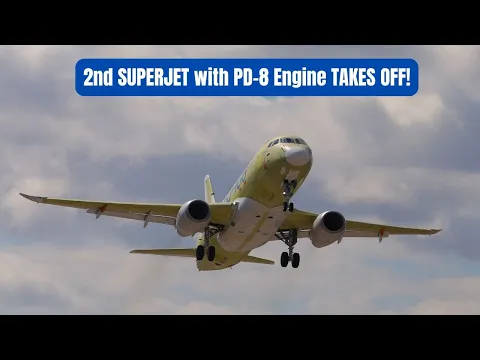

In September 2025, according to Rostec, a serial production SJ-100, already configured with the replacement of imports, completed its inaugural flight, marked as a significant step toward larger-scale manufacturing.
Replacement Of Dozens Of Critical Systems
Although the engine captures much of the attention, the change in suppliers extends to various layers of the aircraft.
Official statements and sector analyses indicate the replacement of dozens of foreign equipment with Russian solutions, covering areas such as avionics, electrical systems, auxiliary units, and control components.
These sets play a central role in both the operation and maintenance of the aircraft, increasing the complexity of the reengineering process.
In practice, this type of intervention is not limited to the direct exchange of parts, as the replacement of flight and control systems alters the integration between equipment, embedded software, and maintenance routes.
It also changes the set of tests needed to demonstrate technical compliance, in addition to requiring adaptations in documentation and training.
As a result, the support logistics undergoes reorganization, replacing established global supply chains with new supply routines, directly impacting aircraft downtime and operational costs.
Still, the replacement of components is presented as a response to a continuity problem, as the existing fleet faces difficulties in maintaining life cycles originally planned with international support.
Extreme Testing And The Certification Challenge
The reliability of the PD-8 is considered a determining factor for the future of the SJ-100.
Alongside the flights, the Russian industry has been publicizing ground testing campaigns aimed at the engine’s endurance and durability.
Recent tests have totaled more than 150 hours under high loads and extreme operating regimes, with verifications related to maximum thrust, rotation, and gas temperatures.
These trials are used to assess performance margins and the behavior of critical components under conditions deemed severe.

While supporting the narrative of technical maturity, these data highlight the challenge of transforming the project into a fully certified commercial product.
A commercial aviation engine needs to combine performance, reliability, and complete documentation, in addition to having an industrial chain capable of producing units in volume and with consistent quality.
At this point, certification timelines and production capacity emerge as sensitive variables in sector analyses.
Reports and specialized articles emphasize that the import substitution involves a high number of systems to validate, which may pressure deadlines and expectations.
Direct Impact On Regional Aviation
Jets with around 100 seats occupy a strategic position in the regional network, connecting medium-sized centers to capitals on short and medium routes.
This type of operation heavily depends on high availability and predictable maintenance, factors directly affected by the scarcity of parts or instability in technical support.
When these links fail, the effect translates into more grounded aircraft, greater operational uncertainty for airlines, and increased pressure for alternative solutions.
In this scenario, the SJ-100 equipped with the PD-8 engine has become a thermometer of Russia’s ability to reconfigure a project conceived with strong international participation.
The central challenge is to adopt a design with domestic supplies without compromising safety requirements while seeking to enable series production within commercial standards.
With flights already conducted, a series aircraft presented as an industrial milestone, and intensive testing of the engine ongoing, what should weigh more on the program’s pace is the speed to certify each replaced system or the ability to produce critical components at scale and with quality.


Eu que não quero voarem um avião com esses motores.
Os USA vai perder o mercado de motores. O Brasil deveria ter seus próprios motores, uma vez que tem a Embraer como um grande fabricante. O mercado de peças e acessórios é grande. Um avião possui de 25.000 itens à 32.000 itens. Até arruela é necessário, só que são de prata. Mas matéria prima o Brasil tem.
o brasil ja esta produzindo e esta em testes motores
os investimentos csao estatais e são poucos
porque o particular prefere investir no que ja esta pronto.
mais chegaremos cla