Portuguese
  Spanish


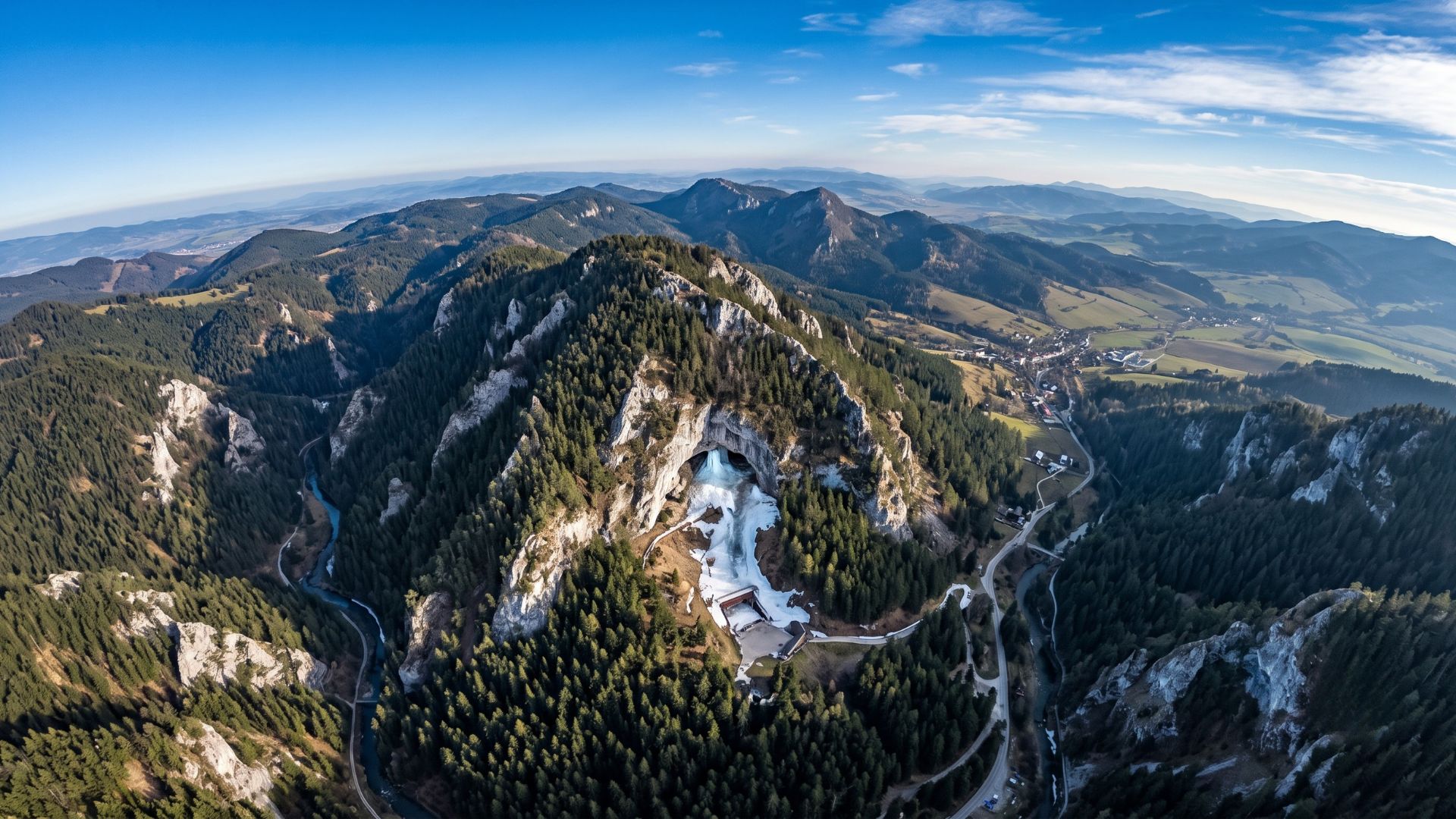

UNESCO Heritage in Slovakia hides 110 thousand m³ of ice, temperatures below zero all year round, and a pioneering history of electrification.
In the heart of Slovak Paradise National Park, Slovakia, there is a cave that challenges the common perception of ice. While many of the planet’s frozen formations are slowly disappearing with rising global temperatures, the Dobšinská Ice Cave continues to preserve a gigantic underground glacier that has formed over thousands of years.
Considered one of the most important ice caves in the world, it houses about 110 thousand cubic meters of ice, has layers exceeding 25 meters in thickness, and maintains negative temperatures throughout the year. Since 2000, the cave has been part of the Caves of Aggtelek Karst and Slovak Karst, inscribed on the UNESCO World Heritage list.
An underground glacier of 110 thousand cubic meters transformed the cave into one of the largest ice reserves in Europe
According to the Slovak Cave Administration, the Dobšinská Ice Cave has an area covered by ice of 9,772 square meters and an estimated volume of 110,100 cubic meters, making it one of the largest ice caves on the planet outside the alpine regions.
-
Street Cleaner Accidentally Receives $200,000 Transfer, Returns Unexpected Fortune to Rightful Owner

-
Australian Space Agency Investigates Six Mysterious Metal Spheres Found on Queensland Beach, Isolating Area Over Possible Space Debris Risk

-
Transform Your Kitchen in a Day: New Flooring Solution Offers Quick Renovation Without the Mess or Noise

-
DNA Test Suggests Boy May Have Two Biological Fathers After Rodeo Rider’s Death, Case Heads to Court




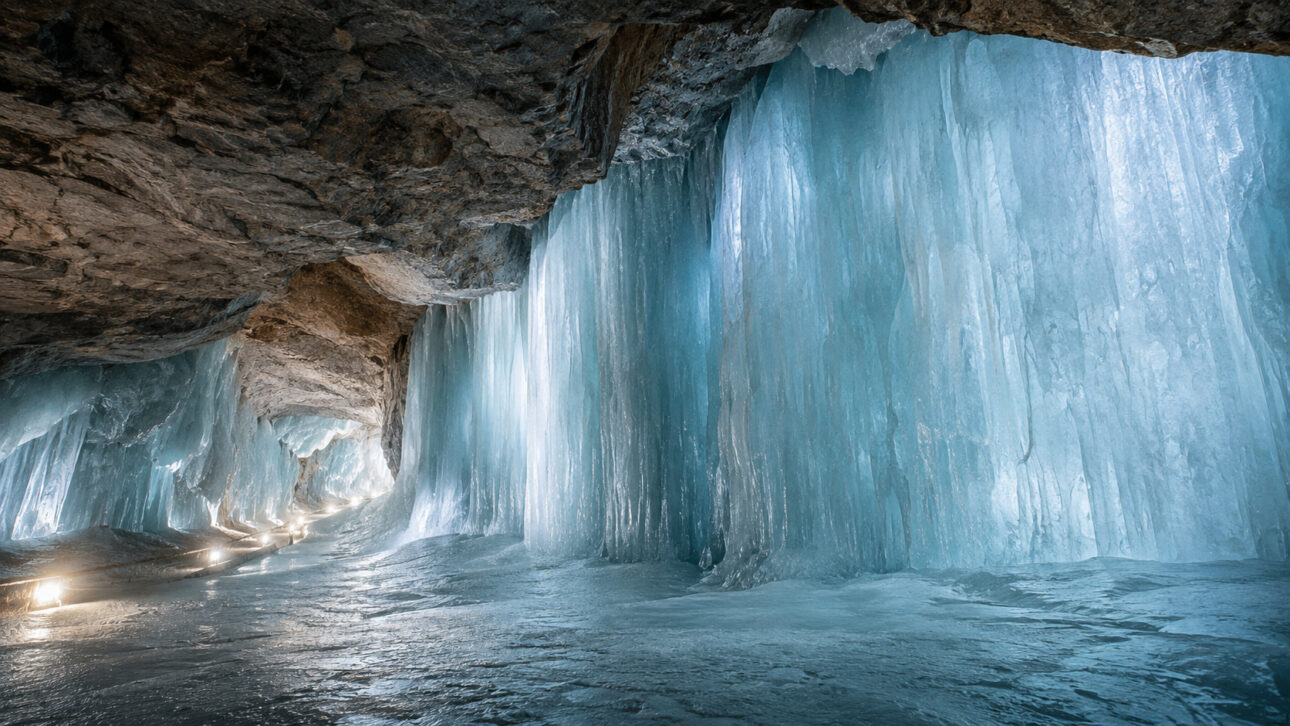
According to the agency, the thickest layer is found in the so-called Great Hall, where the ice reaches approximately 26.5 meters in depth. The underground glacier is so large that experts estimate its complete renewal would take between 1,700 and 2,000 years.
The frozen formation is composed of ice floors, columns, frozen cascades, and huge stratified masses that function as a true natural climate archive, preserving environmental records accumulated over the centuries.
Temperatures remain below zero throughout the year thanks to a natural air circulation phenomenon
The secret to the preservation of the ice lies in the geological configuration of the cave itself. According to the Slovak Caves Administration, the Dobšinská Ice Cave exhibits a behavior classified as static-dynamic, with distinct air circulation regimes in summer and winter.
During the cold months, the cold air penetrates the underground system, intensely cooling the environment. In summer, the interior remains protected from the influence of external heat.


The average annual temperature of the Great Hall varies between -0.4°C and -1.0°C, reaching values between -2.7°C and -3.9°C in February, according to the Slovak administration. Even at the peak of the European summer, in August, some areas remain close to 0°C, allowing the ice to survive permanently.
Experts explain that the cold accumulated during the winter, combined with the freezing of water seeping through the rocks, has kept the gigantic underground deposit stable for thousands of years.
The cave was discovered in 1870 and became one of the first in the world to receive electric lighting
The history of the Dobšinská Ice Cave also impresses with its technological innovation. According to the Slovak Caves Administration, the site was officially explored in 1870 by mining engineer Eugen Ruffinyi, accompanied by Gustáv Lang, Andrej Mega, and F. Fehér. The cave was opened to the public in 1871, just one year after its discovery.
Experiments with electrification began in 1881, but the permanent system was installed in 1887, making the Dobšinská Ice Cave one of the first electrified caves in the world and the first with regular electric lighting in the then Kingdom of Hungary.
The site quickly became an international tourist attraction. Important historical figures visited the cave in the 19th century, while unusual events took place inside the glacier, including musical performances and ice skating sessions during the summer.
UNESCO Heritage continues to be monitored by scientists concerned about the future of underground ice
The Dobšinská Ice Cave represents much more than a tourist attraction. Researchers consider the site an important natural laboratory for understanding climate changes and ice conservation processes in underground environments.
According to the Slovak Academy of Sciences, recent studies analyze the stability of the glacier and the possible impacts of global warming on the thermal balance of the cave.

The scientific importance was recognized internationally in 2000, when the cave officially became part of the UNESCO World Heritage list, as part of the Caves of Aggtelek Karst and Slovak Karst complex.
Even after more than 150 years since its discovery, the Dobšinská Ice Cave continues to intrigue researchers and visitors.
In a continent where surface glaciers retreat year after year, a massive glacier hidden under the mountains of Slovakia still resists, preserving a frozen piece of Europe’s past.