






 Portuguese
  Spanish


The kitchen floor can be replaced without breaking the old covering, but the result depends on technical conditions that do not always appear at first glance during the choice of the new finish.
Renovating the kitchen floor without breaking the old covering is an alternative adopted by residents who seek to change the look of the environment with less dirt, less noise, and less interference in the household routine.
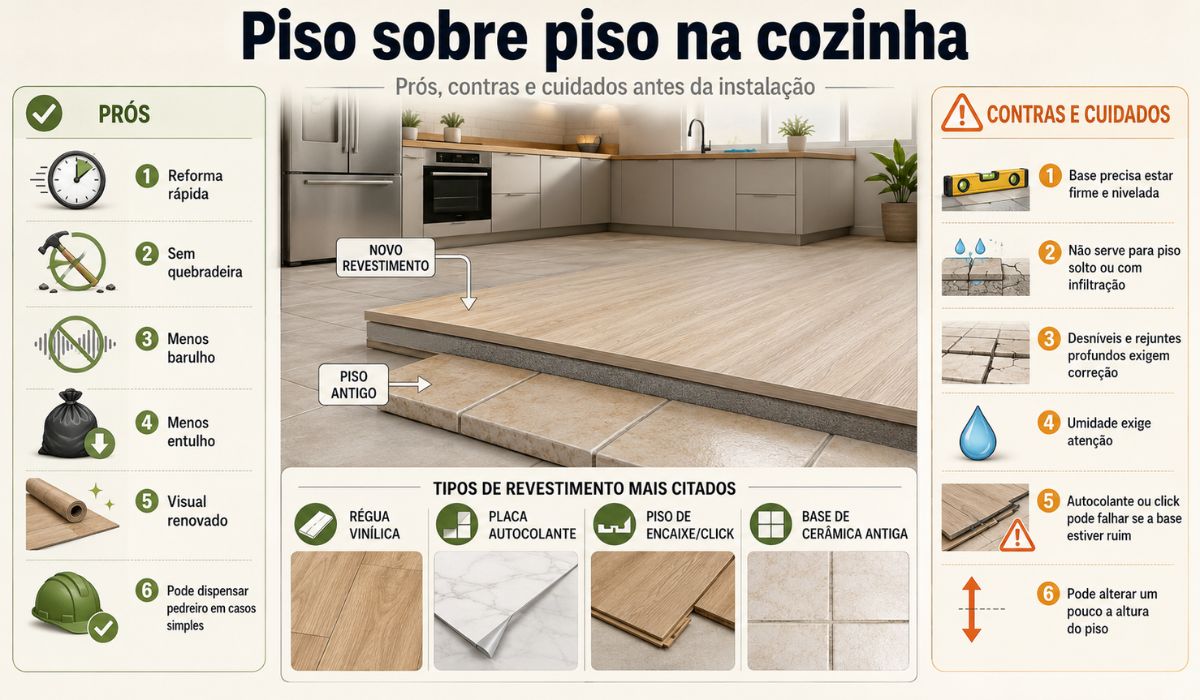
The most used solution in this type of renovation is the so-called floor over floor, a system in which the new finish is applied directly over the existing base, provided it is firm, dry, clean, and level.
This type of intervention avoids some of the disruptions associated with conventional construction.
-
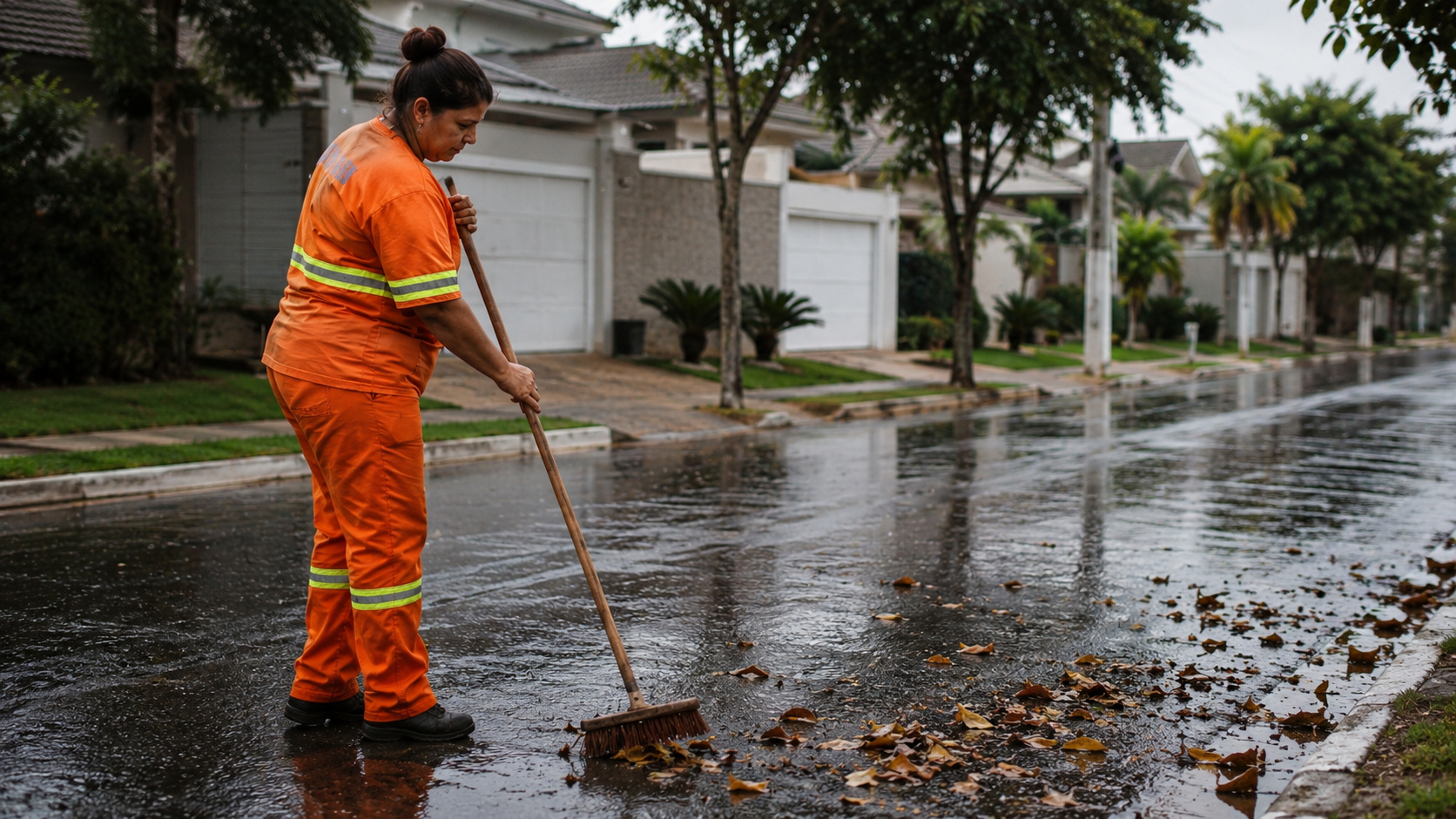
Street Cleaner Accidentally Receives $200,000 Transfer, Returns Unexpected Fortune to Rightful Owner

-
Australian Space Agency Investigates Six Mysterious Metal Spheres Found on Queensland Beach, Isolating Area Over Possible Space Debris Risk

-
DNA Test Suggests Boy May Have Two Biological Fathers After Rodeo Rider’s Death, Case Heads to Court
-
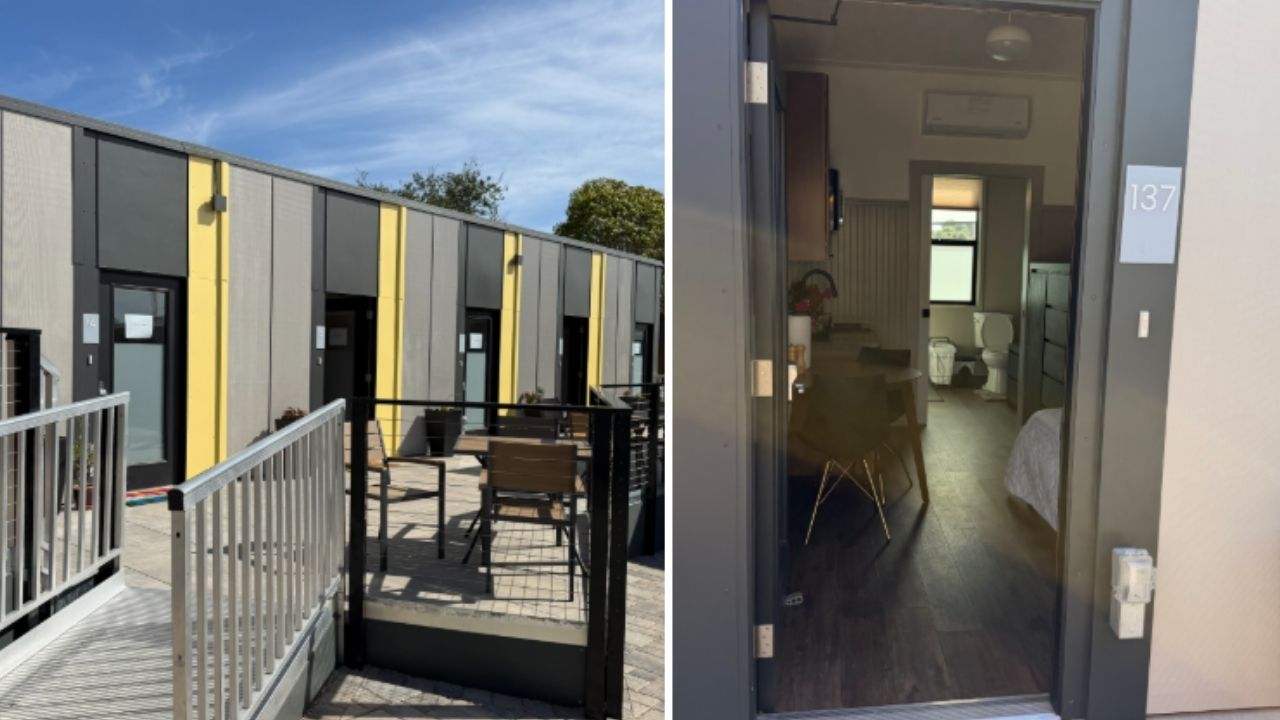
3D-Printed Micro Homes Offer Innovative Solution to California’s Housing Crisis: Village with 40 Permanent and 14 Temporary Units Built in 10 Months Provides Facilities and Social Services to Help Residents Transition from Camps


Instead of removing old tiles, generating debris, and depending on days of breaking, the resident can resort to vinyl floors, interlocking tiles, or low-thickness coverings to update the kitchen with a quicker intervention.
The possibility of transforming the environment in just one day, however, depends on the condition of the old floor.
When there are loose pieces, infiltration, cracks, unevenness, or very deep grout lines, the installation requires corrections before applying the new material.
Industry manufacturers indicate that vinyl floors can be installed over ceramic, porcelain, stone, and other bases, but this use is conditioned to the regularity and stability of the subfloor.
Floor over floor reduces work, dirt, and debris in the kitchen
The system keeps the old covering in place and receives a new layer of finish on top.
For this reason, the technique is often considered by residents of small kitchens, apartments, rented properties, or houses where a long renovation does not fit into the routine.
Among the materials used are vinyl planks, self-adhesive tiles, and interlocking floors.
Since these products have low thickness, they can alter the appearance of the environment without significantly raising the floor height.
The execution time varies according to the chosen model and the surface conditions.
Click floors, for example, do not require glue and, according to manufacturers, can allow the use of the environment right after installation.
Glued floors, on the other hand, require attention to the adhesive and curing time, which can extend the period before full circulation.
Compared to the complete removal of the old floor, the method reduces the generation of dust and the disposal of waste.
For this reason, it has come to be used in rapid kitchen update projects, especially when the goal is to change the finish without structural intervention.
Leveled base is decisive for vinyl flooring to last
The main care before installation is the surface that will receive the new coating.
The base needs to be clean, dry, firm, and flat, because these conditions directly affect the adhesion, fit, and durability of the finish.
Hollow or loose pieces on the old floor can compromise the new layer.
The same applies to unevenness, accumulated grease, persistent moisture, or very wide joints, situations that require leveling before application.
Vinyl flooring manufacturers advise that click models can be installed over ceramic when the subfloor is leveled and when the joints respect the limits indicated for the product.
If there are undulations, depressions, or irregularities above the recommended, the surface should be corrected before installation.
These guidelines show that the renovation can be less complex, but does not dispense with preparation.
Before purchasing the coating, it is necessary to assess whether the existing floor meets the minimum conditions to receive another finish.
Vinyl flooring in the kitchen requires care with moisture
The kitchen is an area of intense use, with daily circulation, splashes, grease, and frequent cleaning.
Therefore, the chosen material must be compatible with this type of exposure and the way the space will be used.
Vinyl flooring can be applied in kitchens, provided the manufacturer’s recommendations are followed.
Companies in the sector inform that there is no general restriction on use in this environment, but they highlight differences between glued and clicked models, especially when there is recurring contact with water.
In glued vinyl floors, manufacturers advise that use in wet areas, such as kitchens, laundries, and powder rooms, requires immediate removal of water after cleaning.
The material should not remain submerged, and maintenance needs to follow the instructions indicated for each line.
Areas near the sink, stove, and cabinets require additional attention because they concentrate a higher presence of grease, dirt, and moisture.
The choice of product, therefore, should consider the resistance declared by the manufacturer, the type of installation, and the maintenance rules.
Self-adhesive and interlocking flooring may not require a mason
The simpler installation is one of the factors that lead residents to consider overlay flooring.
Self-adhesive models and some interlocking systems allow for application without a mason in small areas with simple cuts, as long as the person follows the manufacturer’s instructions.
This possibility does not eliminate preparation steps.
Before starting the service, it is necessary to measure the area, calculate losses, check the installation direction, clean the surface, and observe points like doors, baseboards, thresholds, and level differences between rooms.
In self-adhesive models, adhesion depends directly on the base.
Dust, grease, and moisture reduce the fixation and can cause the pieces to come loose sooner than expected.
In interlocking floors, the regularity of the subfloor affects the locking of the pieces.
When there are irregularities, gaps, movement of the covering, or visible marks in the finish may appear.
Therefore, the idea of installation without a mason is mainly valid for simple cases.
Kitchens with infiltration, broken flooring, significant unevenness, or constant moisture require evaluation and correction of the base before any application.
Coverings to renovate the kitchen without replacing everything
Overlay flooring changes the visual perception of the environment without requiring the replacement of the entire kitchen structure.
In properties with worn ceramics, darkened grout, or outdated patterns, overlaying can update the finish without removing the previous covering.
The models available on the market include patterns that mimic wood, burnt cement, light stone, and porcelain.
These finishes are used in projects with a more neutral proposal and can facilitate the combination with cabinets, countertops, and walls.
The choice, however, should consider the actual use of the environment.
An unsuitable floor for moisture, frequent cleaning, or heavy traffic may show wear before the time expected by the manufacturer.
It is also not enough to evaluate only color and pattern.
Installation on a poorly prepared base can reveal flaws over time, even when the chosen coating is suitable for kitchens.
The result depends on the combination of compatible material, regular surface, and correct application.
When these factors are ignored, the quick renovation may require maintenance or replacement in the short term.
When it’s worth using floor over floor in the kitchen
The overlay floor is usually recommended when the intention is to renew the kitchen’s appearance without heavy construction work.
The solution can be suitable for rented properties, low-impact renovations, or environments where the old coating is firm but visually outdated.
It can also be an alternative for those who intend to reduce debris, noise, and intervention time inside the house.
In small kitchens, installation tends to be faster because the area is smaller and requires fewer pieces, cuts, and adjustments.
This technique, however, does not correct structural problems.
If there is infiltration, loose flooring, pronounced irregularity, or permanent moisture, the priority should be to resolve the cause before applying any new finish.
Covering an existing flaw does not eliminate the defect of the base.
In many cases, it only transfers the problem to the new coating and reduces the installation’s lifespan.
Renovation in one day is possible in specific situations, but it should not be treated as a rule for all kitchens.
The timeframe depends on the area, the type of floor, the condition of the surface, and the manufacturer’s guidelines.
Before choosing vinyl, self-adhesive, or interlocking flooring, the assessment of the base should come first.


