






 Portuguese
  Spanish
  4 min of reading
  0 comments


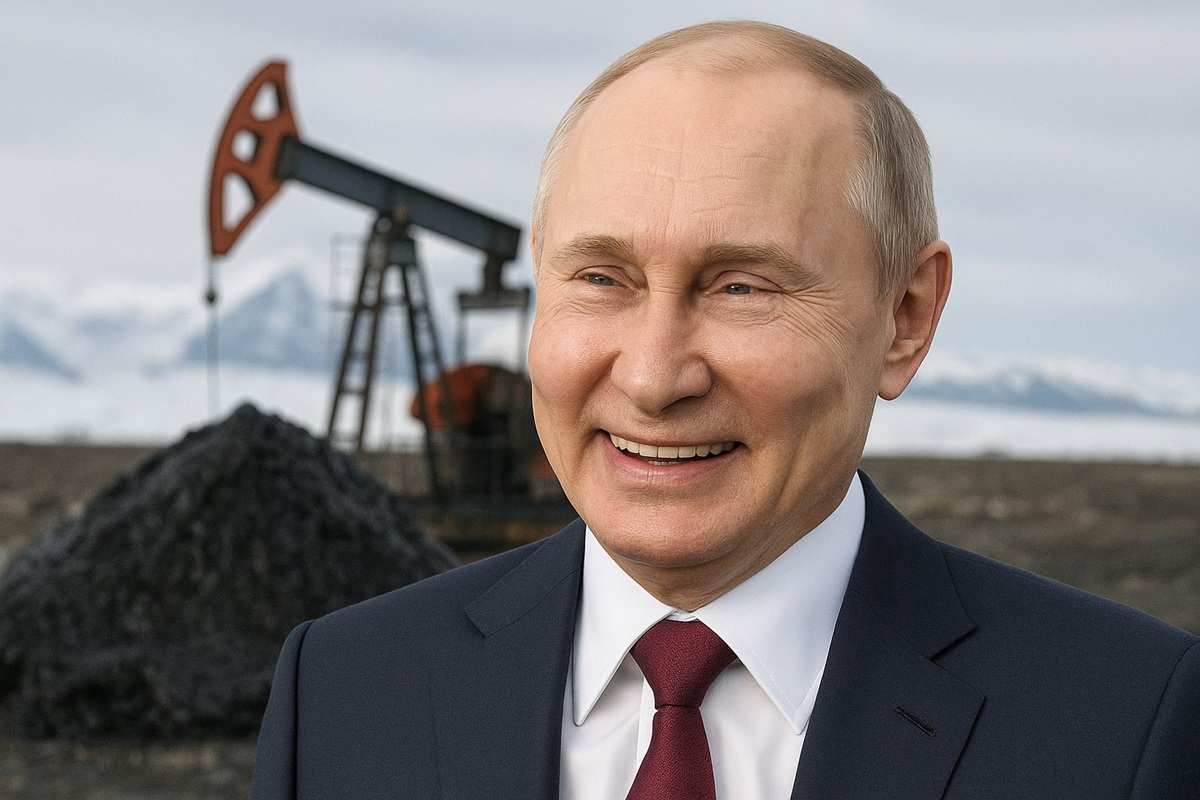
Russian Discovery Of 511 Billion Barrels Of Oil In Antarctica Challenges Treaties And Raises Global Alarm
A recent oil discovery by Russia in Antarctica could jeopardize decades of international consensus on the peaceful and scientific use of the continent.
Reports indicate that Russia has found one of the largest oil reserves on the planet, located beneath the frozen surface of the Weddell Sea.
The revelation has raised alarms among governments and institutions around the world, due to its potential environmental and geopolitical impact.
-
“Bee drone”: Researchers develop an autonomous drone that does not require GPS and can return home after flights of more than 600 meters — meet the Bee-Nav

-
Aluminum alloys created in the USA make truck engines 15% lighter and over 10% more efficient in GM test.
-
China transforms 7 billion tons of coal waste into sand, gravel, and bricks for construction and attempts to reduce the pressure on rivers, quarries, and former mining areas.

-
Stars display different colors in the sky and science explains why.




A Colossal Deposit In Disputed Region
According to information released by NewsWeek, Russian researchers have detected a vast oil reservoir in Antarctica.
The estimate is 511 billion barrels, a figure that significantly surpasses many of the largest known reserves.
For comparison, this amount is nearly double that of Saudi Arabia’s reserves and ten times greater than all of the North Sea’s production over the past 50 years.
The discovery occurred in the Weddell Sea, an area of Antarctica that is part of the sector claimed by the United Kingdom.
However, this same territory is also claimed by Argentina and Chile, making the situation even more delicate. The overlapping interests heighten the tension over control and future exploration of the region.
The Russians made the discovery during scientific expeditions conducted in recent years.
The growing presence of Russia in Antarctica has raised questions about its true objectives. Even without formal territorial claims, activities in the area are attracting attention from other powers.
Limits Of The Antarctic Treaty
The Antarctic Treaty, signed in 1959, prohibits any military activity and economic extraction on the continent. The region has been established as a zone dedicated to scientific research and international cooperation. Several countries, including the United States and the United Kingdom, are signatories of the treaty, which aims to protect the environment and ensure the peaceful use of Antarctica.
However, Russia’s movements have been observed with concern. Reports indicate that seismic studies conducted by Russian scientists may actually be part of a resource prospecting effort.
This raises suspicions that the country may be circumventing the treaty’s principles by disguising economic initiatives under the banner of science.
Professor Klaus Dodds, a geopolitics expert at Royal Holloway College in the United Kingdom, warned that such seismic surveys could be the beginning of oil extraction operations.
He stated that these actions jeopardize the established rules and could set a dangerous precedent for other nations.
A New Global Dispute Field
The discovery comes at a time of heightened international tension, particularly following Russia’s invasion of Ukraine in 2022.
The conflict with the West has deteriorated diplomatic relations and increased suspicion regarding Russia’s actions in various parts of the world.
Now, with a possible new oil source at stake, there are growing fears that Russia could use its presence in Antarctica to assert power and seek strategic advantages.
The possibility of future explorations could completely alter the political and environmental balance of the continent.
China has also been expanding its activities in Antarctica. The country, one of the largest oil consumers on the planet, recently built its fifth research base on the continent.
This movement has been viewed as part of a race for natural resources hidden beneath the Antarctic ice.
Both China and Russia have positioned themselves against the creation of new marine protected areas on the continent. This joint opposition has raised hypotheses of a possible strategic cooperation between the two countries to challenge the current model of international governance of Antarctica.
Official Discourse Versus Suspicions
Despite the criticism, the Russian government claims that its actions in Antarctica adhere to the terms of the 1959 Treaty. Moscow asserts that the conducted studies are strictly scientific and that there are no concrete plans for the economic exploitation of oil found.
However, the increase in seismic activities, coupled with the expansion of Russia’s military presence in other regions of the world, raises doubts about the real intention behind the research. Experts emphasize that the signs are becoming increasingly difficult to ignore.
The United Kingdom, whose territorial claim covers the area where the discovery occurred, has already expressed its stance on the matter.
The British Foreign Office stated that Russia should be held accountable for its actions and that the treaty must be respected, especially in light of the current global climate of instability.
A Test For International Cooperation
The situation in Antarctica presents a direct challenge to the current framework of international governance.
The case puts the global commitment to environmental protection and scientific cooperation to the test. The threat of economic exploitation in one of the planet’s most sensitive regions could open a new chapter of disputes between powers.
Meanwhile, the international community seeks ways to respond to Russian actions without disrupting the delicate balance that sustains the Antarctic Treaty. The future of environmental preservation and scientific diplomacy in the frozen continent may hinge on the decisions made in the coming years.







Be the first to react!