Portuguese
  Spanish


Sabesp Inaugurates Four Solar Plants and Expands the Use of Clean Energy in Its Operations, Reducing Costs and Reinforcing Its Environmental Commitment in the State.
The Sabesp Inaugurates Four Solar Plants and, with this, strengthens Its Journey Towards Sustainability in the sanitation sector. As one of the largest sanitation companies in Latin America, it demonstrates that it is possible to combine innovation, environmental responsibility, and efficiency.
Since 1973, the year of its founding, Sabesp has been working to provide drinking water and treat sewage for millions of people in São Paulo. Over time, the company has not only expanded its capacity.
It has also modernized its operational systems. For this reason, the search for sustainable solutions has intensified, especially in the face of the high electricity consumption required by its operations.
-
Solar Chimney in Spain Harnessed Sun to Generate Electricity for 7 Years Without Burning Fuel

-
Solar energy reaches 55 GW, becoming the second largest power source in Brazil’s energy mix

-
Solar energy can increase property value by up to 10% and become a selling point.
-
Solar and wind energy surpass natural gas for the first time in the world and accelerate energy revolution

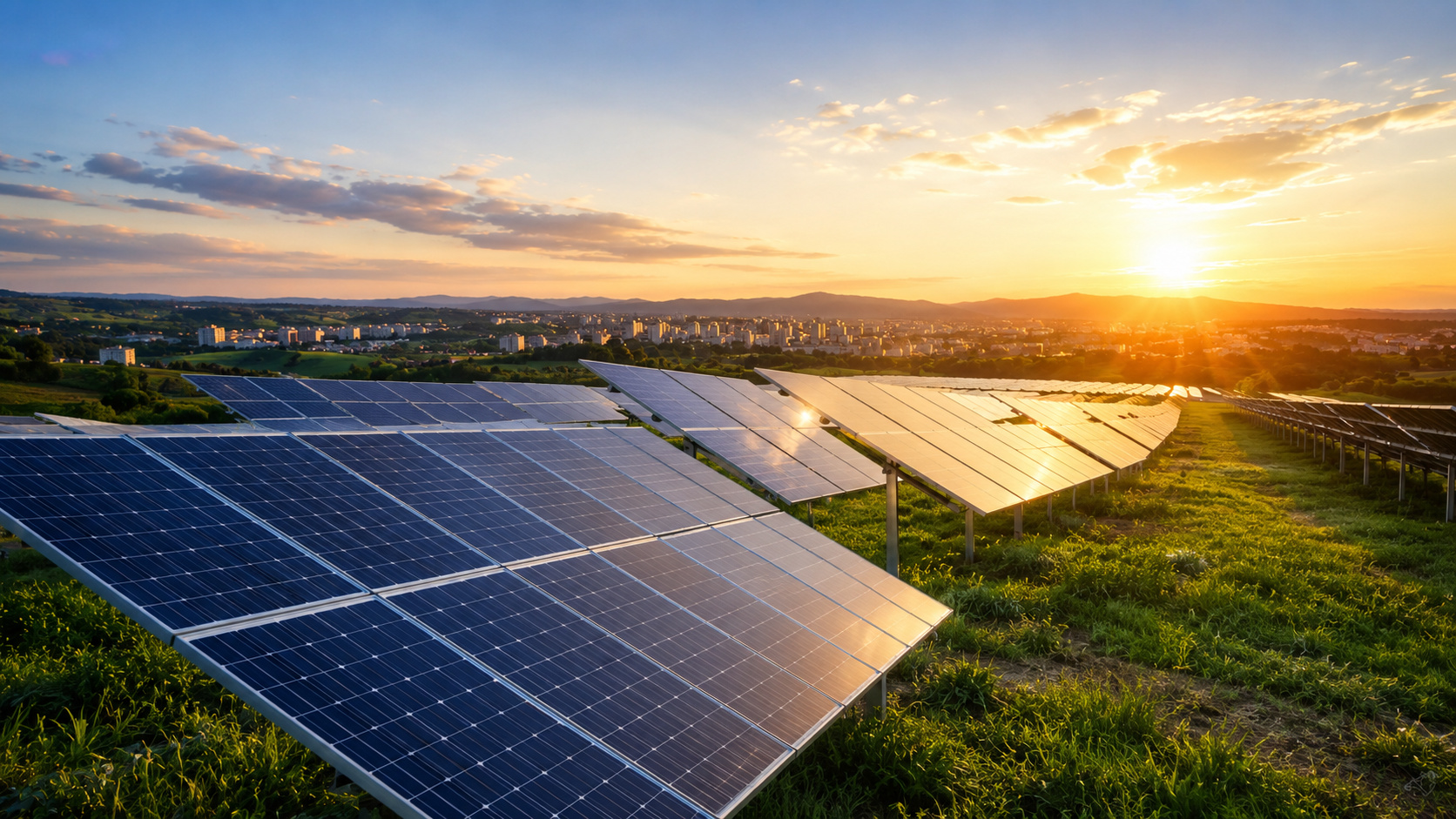


Thus, with the advancement of urbanization and the growing demand for treated water, it became urgent to rethink the energy matrix used. Instead of relying solely on traditional supply, the company chose to invest in clean and efficient alternatives.
In this sense, the Photovoltaic Energy Generation Program emerged as a strategic response to this need.
Sustainability and Energy in Basic Sanitation
As is known, basic sanitation heavily relies on reliable energy sources. After all, energy is needed to capture, treat, and distribute water, as well as to collect and treat sewage.
Until recently, Sabesp predominantly used energy from hydropower and thermal power plants. However, this model increased emissions and left the company vulnerable to crises in the electrical sector.
For this reason, in light of climate change and the growing pressure for environmental responsibility, Sabesp decided to change its strategy. By adopting solar energy, the company not only reduced operational costs, but also minimized its environmental impacts.
Thus, the launch of the new plants represents another concrete step towards self-sufficiency and decarbonization.
In addition, investments in solar energy also bring social and economic benefits. This is because Sabesp, by stimulating this market, generates jobs, boosts the local production chain, and contributes to the environmental awareness of the communities involved.
Sabesp Inaugurates Four Solar Plants and an Expanded Impact
As a result of this energy transformation policy, Sabesp installed four new plants in Águaí, São Manuel, Pederneiras, and Pindamonhangaba, all located in the interior of São Paulo.
With these units, the total number of solar plants operated by the company reached 32. The installed capacity now sums 44.35 megawatts (MW), enough to supply a medium-sized city like Itanhaém.
Although the generated energy does not go directly to residences, it serves about 2,300 installations of the company itself. Among them are pumping stations, treatment units, and operational centers.
For this reason, Sabesp gains autonomy and significantly reduces its dependence on the conventional power grid.
For years, many viewed solar energy as an expensive and inefficient technology. However, with technical advancements and falling equipment prices, this reality has changed.
Today, Brazil stands out as one of the largest producers of solar energy in the world, demonstrating that the photovoltaic sector has become competitive and viable.
Investments, Capacity, and Energy Savings
To make these four plants a reality, Sabesp invested approximately R$ 30 million. Among them, the Pederneiras unit stands out as the largest, with 3 MW of capacity.
Following closely are São Manuel (2 MW), Águaí (1.75 MW), and Pindamonhangaba (1 MW). Together, they supply 403 company installations, which corresponds to the monthly consumption of about 24,000 people.
In this context, the savings generated by solar energy are significant. In addition to reducing the electricity bill, the company gains cost predictability and more control over its consumption.
In a country like Brazil, where energy tariffs vary widely, this advantage becomes even more important.
According to Gisele da Cunha Abreu, director of Management and Energy at Sabesp, the change in the energy matrix reinforces the company’s environmental commitment. Therefore, the transition to renewable sources is part of a larger institutional transformation project.
Thus, by reducing its emissions, seeking efficiency, and using clean sources, Sabesp reaffirms its role as a responsible agent.
Expansion of the Solar Generation Program
Based on the positive results, Sabesp continues to expand its Photovoltaic Energy Generation Program. The goal is to install 44 plants in total, with an installed capacity of 60 MW.
When this occurs, it will be possible to meet up to 60% of the company’s low-voltage demand — an unprecedented achievement for the sector.
In addition, most of the new plants will be built next to the Sewage Treatment Stations (ETEs), making use of existing spaces and structures.
With this, the use of new areas is avoided and the environmental impact of the works is reduced.
Until the project’s completion, the company is expected to invest around R$ 150 million. However, this investment will bring lasting benefits, both economic and environmental.
Thus, Sabesp consolidates itself as a reference in sustainability in the public sector and in sanitation.
At the same time, the project reinforces the company’s alignment with the UN Sustainable Development Goals, especially those related to clean energy, climate action, and resilient cities.
A Clean and Viable Future with Solar Energy
As is known, Brazil has one of the largest solar potentials on the planet, thanks to its geographic position and climate. Despite this, the country took time to take advantage of this advantage.
Only in recent years, with the regulation of distributed generation and the advancement of technology, solar energy has become more accessible.
Fortunately, companies like Sabesp have shown vision and courage by investing in this transition. Thus, in addition to ensuring energy autonomy, they reduce expenses and promote good environmental practices.
The installation of new plants represents not only a technical decision but also an ethical commitment to sustainability.
Over time, solar energy has ceased to be a promise and has established itself as a reality in various sectors of the economy.
Thanks to its strategic choice, Sabesp takes on a prominent role among public institutions leading the energy transformation in Brazil.
Therefore, when Sabesp Inaugurates Four Solar Plants, it not only expands its infrastructure but also sends a powerful message: it is possible to innovate, save, and protect the environment at the same time.
This stance serves as an example for other companies and demonstrates that the future begins now — with planning, courage, and clean energy.