






 Portuguese
  Spanish





Construction Robots Are Already Operating in UK Projects, Replacing Traditional Human Labor, Accelerating the Process and Paving the Way for New Technical Roles in the Construction Industry.
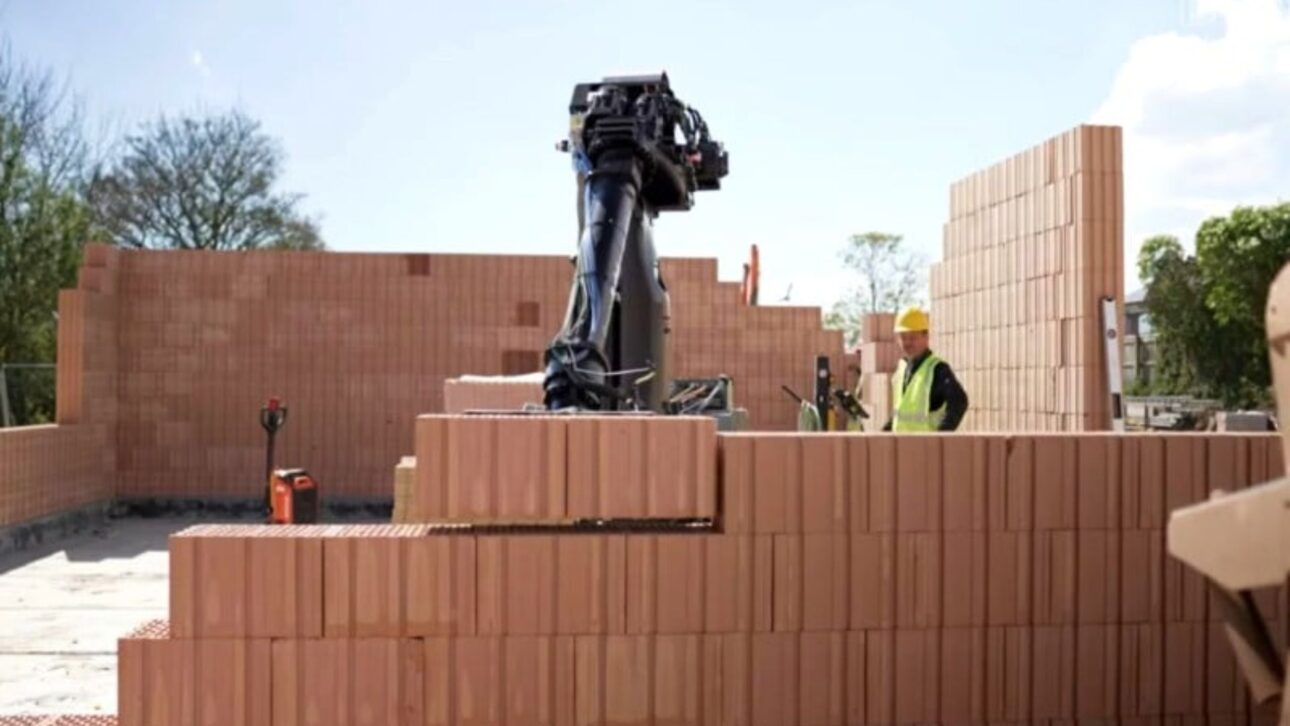
The British construction industry is undergoing a rapid transformation with the arrival of the construction robot WLTR, known as “Walter,” capable of erecting entire houses in just 24 hours.
This technological innovation is already in use in the UK and promises to profoundly alter the dynamics of construction sites by performing tasks traditionally carried out by human bricklayers, but with unprecedented speed and precision.
Bricklaying Robot Accelerates House Construction
Developed in the Czech Republic, the WLTR was recently introduced to the British market and is already involved in the construction of 27 homes in the city of Durham, in northern England, under the responsibility of the company JT Lifestyle Homes.
-
Engineers Develop Jacket That Converts Air Humidity Into Drinkable Water, Producing Up to 900 ml Daily for Hikers, Campers, Rescuers, Rural Workers, and Military in Remote Areas

-
NASA Plans to Repurpose Mars Rover for Lunar Mission, Sending a 1-Ton Nuclear-Powered Vehicle to Explore the Moon’s South Pole Without Solar Dependence
-
Early Humans Made Beds Nearly 200,000 Years Ago in African Caves, Study Reveals

-
Japanese Smart Bike Detects Cyclist’s Intent to Turn and Potential Falls


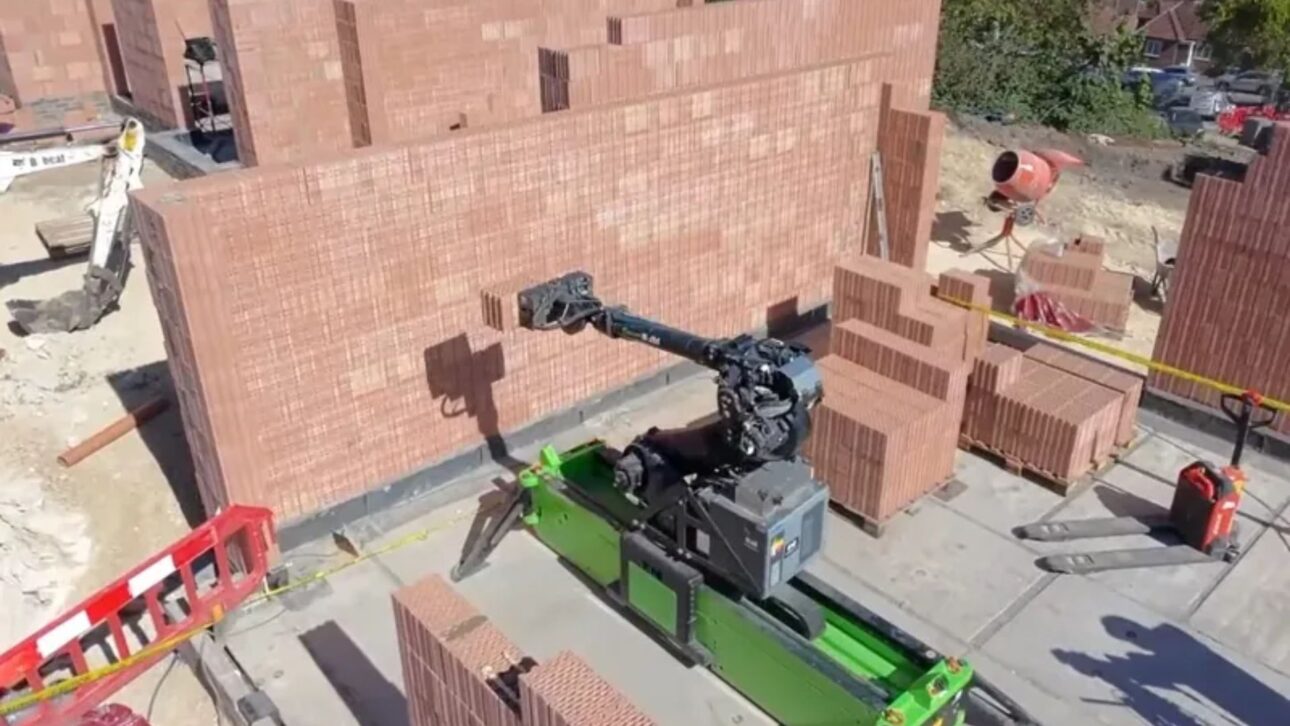
According to information released in July 2025, the robot can lay up to 200 square meters of masonry per day, a performance ten times greater than that of an experienced human professional.
The use of Walter arises amid a scenario of labor shortage in the sector, a context that has motivated the search for innovative solutions.
Official data from the UK Office for National Statistics indicate more than 35,000 open positions in the British construction industry — a historic record.
Moreover, the average age of workers in the sector has reached 46 years, revealing an aging workforce and indicating a trend of worsening qualified professional shortages in the coming years.
Walter, the Construction Machine and the Advancement of Automation
Against this backdrop, the bet on advanced technologies like the WLTR has become strategic for construction and real estate companies.
According to industry sources, the robot operates continuously, does not require breaks for rest or food and assembles the structures without the need for scaffolding, contrary to traditional practices.
Another differentiator is the ability to erect walls up to 3.6 meters high, even under adverse weather conditions, maintaining consistent productivity thanks to a system of smart sensors that monitor and adjust the precision of the block laying.
The accuracy and regularity of Walter contribute to the reduction of human errors, promoting higher quality and uniformity in the constructions.
New Roles on the Construction Site
According to the founder of JT Lifestyle Homes, Dr. Jan Telensky, the robot does not entirely replace human workers but creates new roles, such as specialized robotics operators and project supervisors, expanding the demand for professionals with distinct technical skills.
Telensky also notes that the introduction of robots on construction sites represents a response to the challenge of meeting the UK government’s forecast of building an additional 1.5 million homes in the coming years.
Projects and Initiatives with the Bricklaying Robot
In addition to the homes already underway, Walter is set to act in other significant projects, such as the revitalization of an old post office building in Hull and the construction of new apartments in Eastwood, Notts.
The homes built by the machine will primarily be aimed at rental programs with an option to buy, directed at buyers seeking affordable housing alternatives.
Public Initiatives for Training and the Future of the Sector
The advance of robotics in the construction sector coincides with government initiatives in the United Kingdom to alleviate the labor crisis.
Recently, the new British Chancellor, Rachel Reeves, announced the creation of a £600 million fund aimed at training 60,000 workers in the sector over the next four years.
The goal is to ensure that the British workforce keeps pace with technological innovations and the growing demands of the real estate market.
Impact on the Job Market and Sustainability
Amid the implementation of Walter, questions arise about the future of work in the sector, as automation may accelerate changes in the profile of required professionals.
According to experts, the trend is towards valuing skills related to the operation and maintenance of automated systems, while traditional roles may gradually lose ground.
On the other hand, the adoption of robotics promises to enhance safety on construction sites as it eliminates the need for scaffolding and exposes fewer workers to accident risks.

The arrival of Walter also raises discussions about sustainability and environmental impact.
The automation of the construction process, coupled with a reduction in errors and waste, contributes to a more efficient and less environmentally aggressive project, an aspect that has been gaining prominence in the strategies of companies in the sector.
According to specialists, the integration of robotics and modern construction methods may represent an important advance in the quest for more sustainable and energy-efficient buildings.
Technological Revolution and Global Perspectives
Walter fits into a global context of growth in solutions based on artificial intelligence and industrial automation, a phenomenon observed in various segments of the economy.
Countries like the United States, Japan, and Germany are already using robots in construction tasks, but large-scale implementation, as seen in the UK, indicates a new level of productivity and digital transformation in the field.
ChatGPT said:
Will automation with robots like Walter signify the end of traditional jobs in the construction industry, or can it open up space for new professions and opportunities in the sector?





O desemprego irá aumentar. Contudo talvez o custo da obra reduza. É o futuro do nosso mundo..Que tal um robô que pense no ser humano que pense na sua saúde que passe nas casas p realizar exames médicos. Que tal um robô que transforme o saneamento básico caótico do Brasil onde as crianças pisam em ****. Que tal um robô para acabar com as favelas. Finalmente o Nosso Brasil onde um regime governa mais de 20 anos e não fez o dever de casa..
Considero Muito interessante essa in entao sou Engenheiro Construtor e tenho ideias sobre invençoes do tipo, para compensation a perda de Profissionais competentes e suficientes para as demands da.Construçao. para mim è muito bem-Vinda este começo.
E tem o operador ,o cara para levar os tijolos e o mais engraçado não usa cimento quando coloca os tijolos e só de encaixe e