Portuguese
  Spanish


Project by IFRN students transforms construction debris into reusable material and shows how applied science can deal with urban waste, irregular disposal, and environmental challenges in inland cities.
Students from the Federal Institute of Rio Grande do Norte developed a mini-plant to crush construction debris and reuse construction waste in the production of blocks, mortars, and other cement artifacts.
The project was created at the São Paulo do Potengi campus, in the Potiguar interior, from the observation of construction waste discarded on the streets and vacant lots of the municipality.
The initiative, called “SPP Sustainable: recycling in Potengi”, was developed by students of the integrated technical course in Buildings at IFRN.
-
Scientists Develop Needle-Free Insulin That Penetrates Skin, Reduces Glucose in Animals Within an Hour, Paving the Way for Diabetes Patches and Creams for Humans

-
After 40 Years of Research, Powdered Coconut Water to Be Produced in Brazilian Biorefinery, Aiming to Revolutionize Health for Children, Elderly, and Hospital Patients
-
Queen Guitarist Brian May Collaborates with ESA Scientists to Study Asteroids Bennu and Ryugu Using 3D Simulations
-
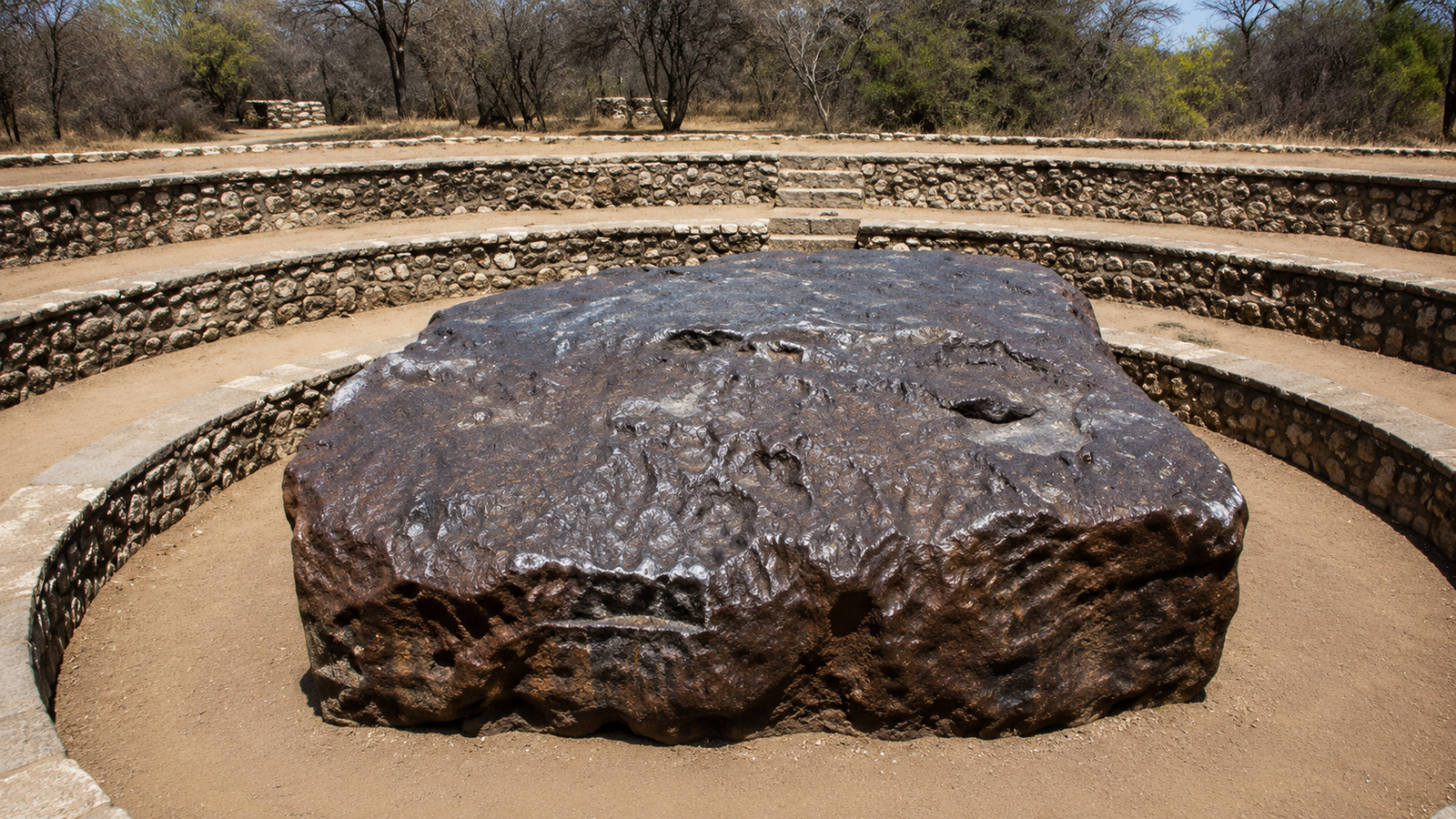
Largest Known Single-Piece Meteorite, Weighing 60 Tons, Puzzles Scientists with Its Intact Fall and Lack of Visible Crater


The work gained national projection by being elected, by popular vote, champion of the Solve For Tomorrow Brazil 2023, a Samsung program aimed at science and technology projects developed by public school students.
Since then, the initiative has circulated as an example of applied science to environmental education and the reuse of construction waste.
The proposal presented by the students is not limited to the manufacture of a cement piece.
The group organized a small-scale processing model, with collection, separation, crushing, transforming debris into recycled aggregate, and using this material in new construction products.
According to IFRN, the project’s goal is to create a compact unit for recycling construction waste at the São Paulo do Potengi campus, focusing on the correct management of these materials and identifying reuse possibilities within the construction chain itself.
How the IFRN mini-plant transforms debris into recycled material
The process begins with the sorting of waste.
The team defined that the prototype would work with materials classified as Class A, a classification provided in Conama Resolution No. 307/2002 for reusable or recyclable waste as aggregates.
This group includes, for example, fragments of concrete, mortar, blocks, bricks, and ceramic components from construction, renovations, repairs, and demolitions.
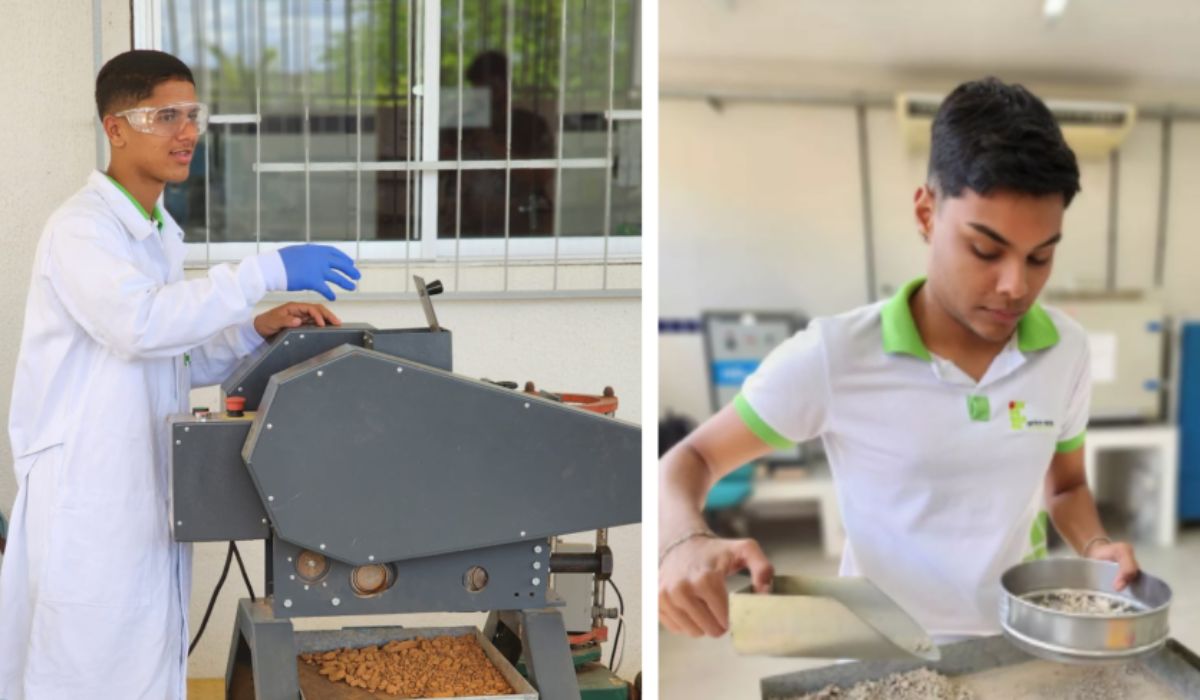
After selection, the materials proceed to crushing.
In this stage, the debris is broken down until it reaches a granularity that allows its use as recycled aggregate.
The result can serve as input in new tests and products, provided that the applicable technical standards for each purpose are respected.
In the prototype developed at IFRN, the students mixed the recycled aggregate with cement and water to produce blocks and cementitious artifacts.
The proposal described by the team does not involve burning the material, which differentiates this process from the manufacture of traditional ceramic pieces.
The transformation of waste into recycled aggregate also changes the way of dealing with debris generated by small works.
Instead of going directly to disposal, the material undergoes processing and can return to the production cycle in applications compatible with its quality and technical performance.
Construction waste became a research topic at IFRN
The idea arose during the Construction Materials course, taught by the mediator professor Neuber Araújo.
According to the teacher, the discussion in class started from problems observed by the students themselves in the municipality, especially the irregular disposal of waste in urban spaces.
“We talked about recycled materials, because this has been my research area since postgraduate studies. So, I always ask students what problems exist in their city, what kind of waste they see in inappropriate places, and how we can try to solve them,” said the professor, in material released by the program.
From this discussion, the class began to evaluate which waste could be reused and what kind of structure would be necessary to process them.
IFRN provided a laboratory, equipment to crush the materials, and basic inputs, such as cement, used in the prototype development phase.
The project was structured as a production flow.
The team not only worked on creating a block but also on defining steps to receive, separate, process, and test the waste before its reuse.
Technical tests reinforced the students’ project
Before reaching Solve For Tomorrow, the students presented the initiative in internal competitions and events.
In one of the stages on campus, the group came in second place and received feedback on technical points of the project.
The professor advised the team to review the proposal and incorporate the received feedback.
According to Neuber Araújo, the students began to include tests and procedures aimed at evaluating the materials.
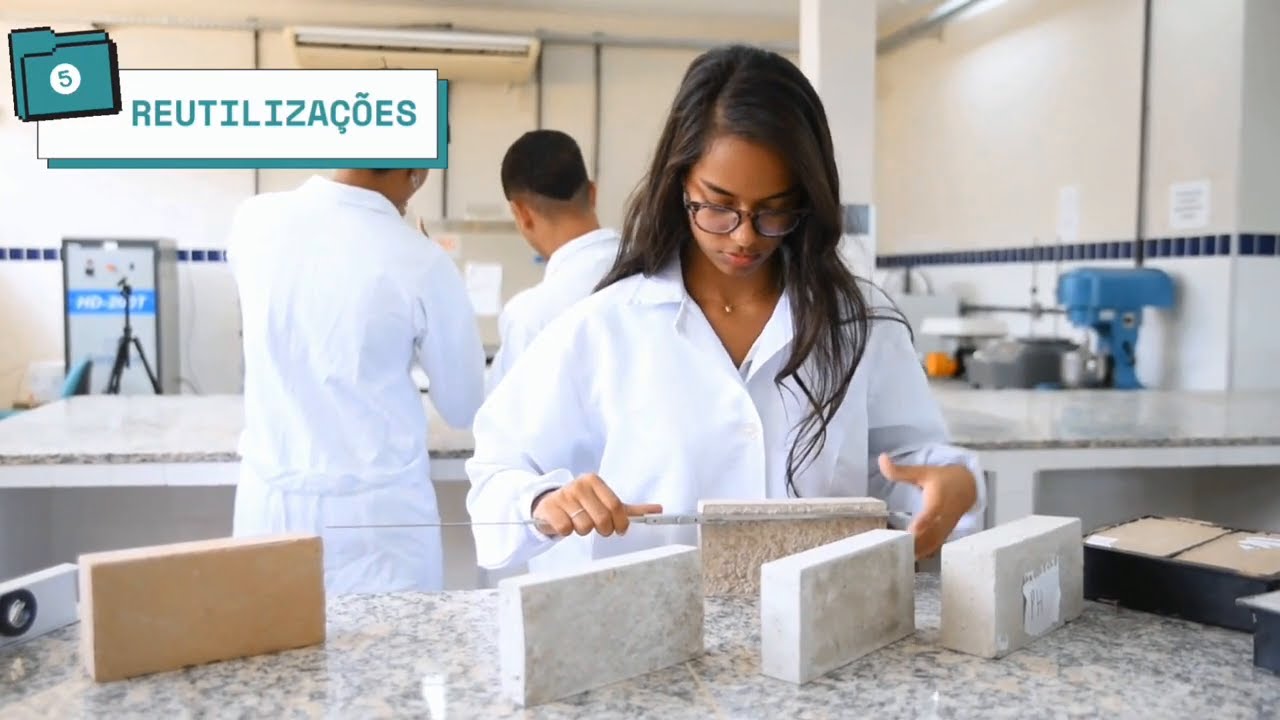
The measure was adopted to bring the prototype closer to the technical requirements of civil construction and improve the consistency of the presented solution.
“We chose techniques that we understood to be important, such as including some technological tests that would allow for expanded material testing and, indeed, follow technical standards,” said the educator.
The proposal review was part of the project’s development until its national presentation.
In the report released about the initiative, the professor stated that external evaluations contributed to the team’s maturity and the adjustment of the work before the final phase.
Environmental education took the project beyond the laboratory
In addition to technical tests, the students conducted outreach activities for the community.
The group organized workshops, mini-courses, social media publications, and a podcast with information on the disposal and reuse of construction waste.
These actions aimed to present the topic to residents and other interested parties, with guidance on the correct disposal of debris and recycling possibilities.
Communication with the community was treated by the team as part of the project itself, not just as a step after the prototype’s creation.
The compact mini-plant was conceived as an alternative to process waste on a small scale.
According to the presented design, the solution can reduce the exclusive dependence on external collection when there is adequate infrastructure, proper material separation, and technical monitoring.
Irregular debris disposal can cause urban and environmental impacts, such as the accumulation of waste in open areas, obstruction of public spaces, and increased cleaning costs.
In the original project text, the students also associate the problem with the proliferation of disease-transmitting insects in places where garbage remains accumulated.
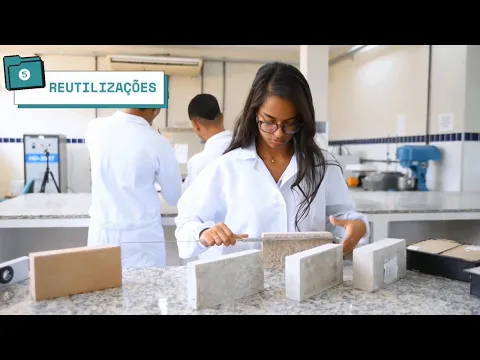

Recycling Mini-plant Aroused Institutional Interest
With the repercussion of the work, the City Hall of São Paulo do Potengi, through the Municipal Environment Secretariat, sought to learn about the proposal, according to the original report.
However, no reliable public confirmation was found that the mini-plant was implemented by the municipality at a later stage.
The original material also reports that environmental researchers and a construction company showed interest in the products and technology developed.
As there is no detailed public confirmation on the continuity of these partnerships, this information remains restricted to the initial project report.
At IFRN, the continuation of the initiative depends on the transition to new students.
As participants advance in the technical course, the team began organizing ways to maintain the development of the mini-plant and studies on recycled materials.
Neuber Araújo stated that the students involved began participating in scientific events in the area.
According to him, two articles related to the project were approved at the Brazilian Concrete Congress, aiming to disseminate the results in the technical field of civil construction.
Project Brings Technical Training and Waste Reuse Closer
The project brought together content from the Building course with a problem identified by the students themselves in the municipality.
The experience involved concepts of construction materials, waste recycling, technological testing, and scientific communication.
In practice, the mini-plant functions as an exercise in technical application on a reduced scale.
The students started with a common waste in construction sites, defined separation criteria, processed the material, and tested ways of reusing it in cementitious products.
The initiative is also part of a broader discussion on the disposal of construction waste.
According to Brazilian environmental legislation, this type of material must follow management procedures, with separation, reuse, recycling, or proper disposal according to its classification.
In São Paulo do Potengi, the project showed how a local demand can be transformed into a research topic within a public educational institution.
From debris discarded in urban areas, the students developed a prototype that combines technical training, laboratory research, and environmental education.
The proposal still depends on continuity, validations, and eventual structuring for use outside the academic environment.
Even so, the work already outlines a possible route to treat waste from small constructions as reusable material, provided the application is guided by technical and environmental criteria.