Portuguese
  Spanish




The Discovery of a Room with a Mosaic Floor About 1,600 Years Old, Measuring 3 by 4 Meters and Located in the Civic Area of Ancient Izmir, Reveals Symbols of Protection, Urban Reuse, and Aspects of Public Life Between the 4th and 6th Centuries AD
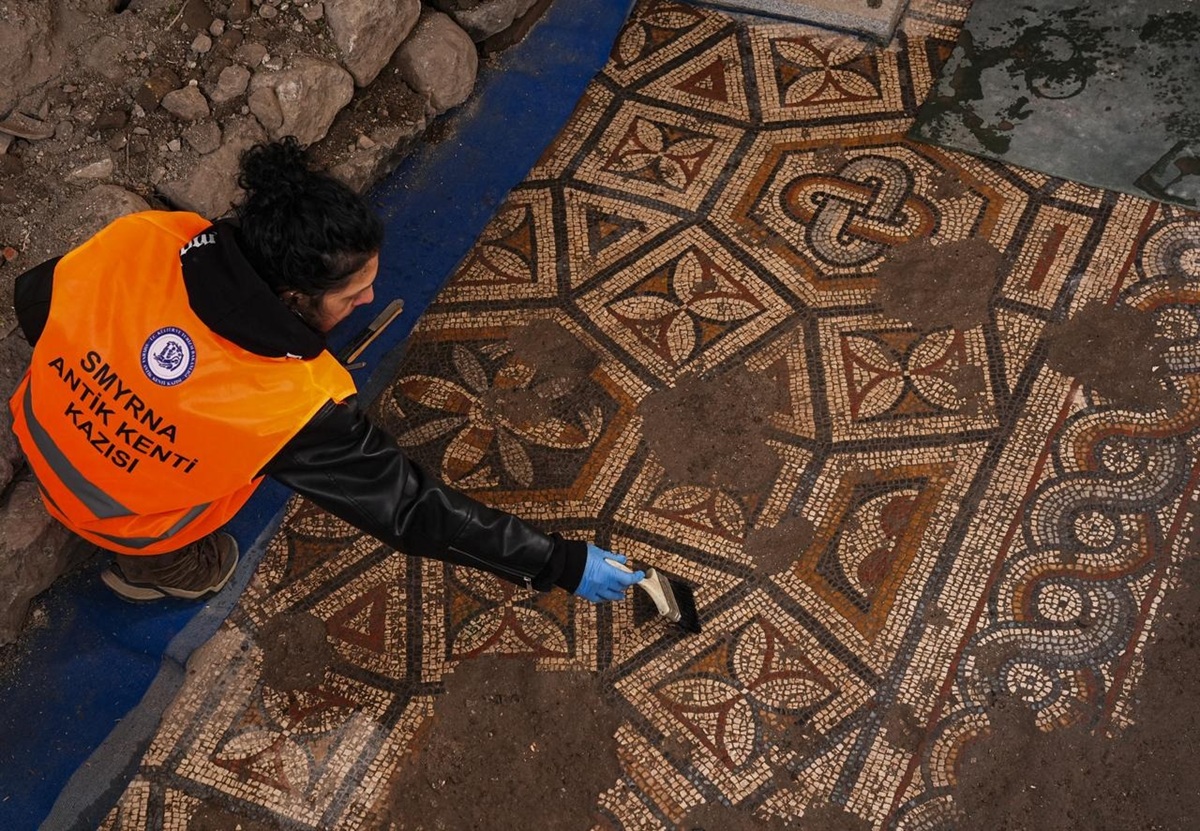
The discovery of a room with a mosaic floor dated to about 1,600 years ago was made by archaeologists in the ancient city of Izmir, revealing a space of 3 meters by 4 meters with the symbol of the Star of David in a central area of public life.
Discovery in Strategic Civic Area of the Ancient City
The mosaic floor was located in a civic neighborhood of Izmir, near the public square and the ancient theater, in an area considered strategic for the urban organization of the ancient city. The discovery occurred during an ongoing archaeological excavation in the urban center of Izmir.
The archaeologists identified that the mosaic was inserted in an unidentified building, situated on a main street of the ancient city. The position of the property suggests that it played a relevant role in local public life between the 4th and 6th centuries AD.
-
Driver Crosses 100-Year-Old Railway Bridge Over Uruguay River, Encounters Rural Couple Preserving Traditional Farming Methods

-
Rural Producer Returns to Brazilian Farmland, Builds Family Agricultural Business with Children’s Support and Industry Backing
-
Goiás Couple Boosts Artisan Cheese Production from 25 to 70 Kilos Daily with Technical Support, Transforming Family Life in Rural Brazil
-
13-Year-Old Discovers Ancient Roman Ring Near Mount Carmel, Now Set for Display in Jerusalem




Although the exact function of the building remains unknown, the privileged location reinforces the hypothesis that the space was not intended solely for common domestic use. Researchers carefully recorded this data to try to understand the functional context of the room.
Technical Characteristics and Composition of the Mosaic Floor
The mosaic floor measures exactly 3 meters by 4 meters and features interlinked dodecagonal panels made up of colored geometric and botanical designs. These patterns were common during the Late Roman period, to which the mosaic is attributed.
The motifs exhibit a dynamic composition, with preserved colors and sophisticated technical arrangement, indicating a planned and carefully executed work. The set drew attention not only for its aesthetics but also for its state of preservation.
In the center of the floor, the Star of David stands out, an element that immediately attracted the attention of archaeologists due to its recurring symbolic significance in different cultures and ancient religions.
The Star of David and Its Symbolic Function in the Space
The Star of David was traditionally associated with protection against bad luck, misfortune, and negative forces. Its presence in the center of the mosaic suggests that the floor had a function that went beyond simple decoration, although this has yet to be confirmed by archaeologists.
The symbol also represented eternity and wisdom and was associated with warding off the so-called evil eye or envy. These meanings were shared by various religious traditions over time.
According to the responsible archaeologist, in a statement to the magazine The Archaeologist, the crosses around the star were initially decorative but were incorporated into religious iconography over time, reinforcing the symbolic character of the set.
Comparisons with Previous Findings and Surprise of the Researchers
Archaeologists had discovered another mosaic room in Izmir about 70 years ago, making this new discovery particularly surprising. The astonishment is due both to the long interval between findings and to the relatively modest size of the new floor.
According to a report from Turkiye Today, researchers did not expect to find such a well-preserved mosaic after so many decades without similar records in the same urban area. This surprise led to a meticulous recording of the details found.
The find contributes to the understanding of daily life and the belief systems that structured the civic center of ancient Izmir, revealing how art and symbolism were integrated into urban routine.
Reuse of the Building and Historical Continuity
The archaeologists found that the building where the mosaic was discovered not only occupied a central position in the ancient city but was also reused many years later. Evidence indicates that the space was repurposed about 1,500 years after its original construction.
The mosaic floor was likely reopened by a nearby non-Muslim hospital or by local residents, who chose to preserve it and integrate it into renovations carried out at the site.
It remains unclear whether these individuals understood the historical significance of the mosaic or stumbled upon it by chance, as modern archaeologists did during the current excavation, a detail that is still being analyzed.
Future Excavations and Importance for the History of Izmir
Excavations in Izmir are expected to continue, with work planned for 2026, when new rooms or architectural elements associated with the building may be revealed. These discoveries could help clarify the original function of the space.
The mosaic represents a link of continuity in the history of the city, functioning as a thread that has traversed centuries of urban occupation. The Star of David remains a lasting symbol in various cultures.
According to the responsible archaeologist, the mosaic floor accurately depicts the character of Izmir, a city where art, belief, and daily life were deeply interconnected, a conclusion that summarizes the historical relevance of the find, despite small gaps that still need to be clarified.