






 Portuguese
  Spanish


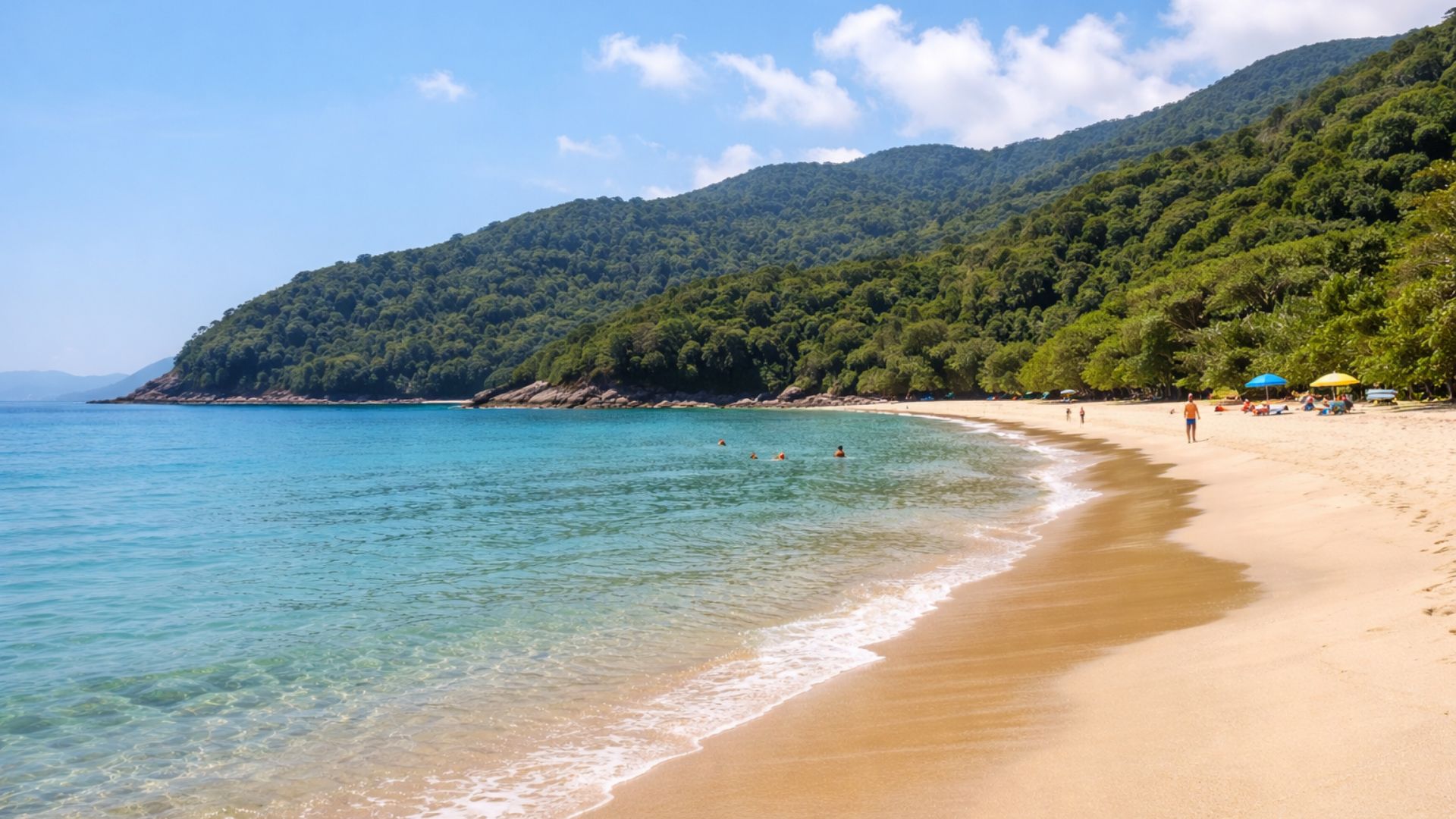

Preserved sections of the Paulista coast combine low urbanization, environmental control, and favorable bathing conditions, revealing destinations where water quality depends on both nature and constant monitoring, especially after climate changes and variations in visitor flow.
Even under urban pressure and intense tourist circulation along the coast, the Paulista coast still hosts areas where human presence is more limited, access is controlled, and environmental preservation directly contributes to a safer and more predictable bathing experience.
According to the weekly bulletin from CETESB released on April 9, 2026, four beaches in this selection were classified as suitable for bathing: Tombo, in Guarujá, Praia Vermelha, in Ubatuba, Guaratuba, in Bertioga, and Tabatinga, in Caraguatatuba.
Furthermore, the environmental agency emphasizes that the analysis is updated frequently on a weekly basis, making it essential to consider the most recent data before entering the sea, especially during periods marked by heavy rains and variations in natural conditions.
-
Brazilian Entrepreneur Turns Door-to-Door Jewelry Sales into a Family Business Empire with Over 70 Stores

-
$75 Million Bridge in Brazil Opens to Connect Cities, Create Jobs, and Cut Travel Time from 30 to 2 Minutes; Spanning 1.24 km, It’s Among the Country’s Largest and Ends Decades of Ferry Queues.

-
Brazilian Farmer Builds 8-Ton Tractor from Army Truck Engine, Plants Over 100 Hectares of Soybeans
-
11-Year-Old Entrepreneur Turns Fear of Bees into Honey Lemonade, Wins $60,000 on Shark Tank, Secures Whole Foods Deal, and Expands Brand Across U.S. Stores




Factors that impact water quality on the Paulista coast


More than observing the color of the sea, the assessment of bathing suitability requires attention to less visible factors, such as recent rainfall volume, the presence of nearby rivers, and any irregular sewage discharges along the coastal strip.
In this scenario, the dynamics of tides and water renewal flow also play a decisive role, rapidly altering bathing conditions and requiring constant monitoring of the official data released by the responsible environmental agencies.
In April 2026, the CETESB system recorded 175 monitored beaches throughout the state, with periodic updates that reinforce the importance of decisions based on technical information, not just on the visual appearance observed by visitors.
Praia do Tombo maintains high quality standards in Guarujá
Among the most consistent examples of environmental management on the Paulista coast, Praia do Tombo stands out for its frequent monitoring, structural organization, and international recognition related to water quality and the safety offered to visitors.
In addition to being deemed suitable for bathing in the consulted report, the beach has once again earned the Blue Flag certification for the 2025/2026 season, a label that considers strict criteria for environmental preservation, infrastructure, and education aimed at the conscious use of the space.
Even situated in a city with high urban density, the combination of oversight and planning helps keep the location among the most reliable for bathing throughout different periods of the year.
Itaguaré preserves natural characteristics in a protected area
Located in Bertioga, Itaguaré presents a landscape marked by the presence of native vegetation, sensitive ecosystems, and usage rules associated with the Bertioga State Restinga Park, which helps reduce direct environmental impacts.
The limitation of constructions and control over visitor circulation favor the maintenance of more balanced natural conditions, although the absence of specific bathing data in the consulted report prevents an unqualified current classification.
Still, the preservation context places the beach among those with the greatest potential for environmental quality on the São Paulo coast, especially outside periods of climatic instability.

Praia Vermelha in Ubatuba requires attention to climatic variations
On the northern coast, Praia Vermelha appears as one of the monitored points with a recent favorable condition, having been classified as suitable for bathing in the CETESB report released in April 2026.
Surrounded by steep terrain and dense vegetation, the beach maintains characteristics that help reduce external interference, although the stability of the water still depends on climatic factors and the natural dynamics of the region.
Thus, even with a positive history, the recommendation remains linked to the continuous verification of weekly data, avoiding decisions based solely on the location’s reputation among frequent visitors.
Barra do Una combines natural beauty and river influence
In the municipality of São Sebastião, Barra do Una brings together distinct geographical characteristics by integrating the meeting of the Una River and the sea, forming an environment that favors nautical activities and increases tourist interest in the region.
This configuration, however, also requires heightened attention, as the direct influence of the river can alter the transparency and quality of the water, especially after episodes of more intense rain.
Without specific confirmation in the analyzed report, the bathing condition at the location should be assessed based on updated information and the observation of recent environmental factors.
Tabatinga presents regularity in CETESB monitoring
In Caraguatatuba, the beach of Tabatinga showed consistency in the most recent data, with two points classified as suitable for bathing in the survey released by CETESB in April 2026.
Among them, the stretch near the Tabatinga River and the area next to the Gaivotas condominium stand out, both assessed as suitable for bathing within the analyzed period.
Despite the positive scenario, the proximity to the river reinforces the need for caution on rainy days, when local drainage can directly influence water quality.

Guaratuba combines environmental preservation and good bathing conditions
Also located in Bertioga, Guaratuba combines lower urban occupancy with insertion in environmental protection areas, factors that contribute to maintaining more balanced conditions over time.
In the most recent report consulted, the beach was listed as suitable for bathing, reinforcing the perception of a less pressured environment compared to more urbanized stretches of the São Paulo coast.
Still, the guidance remains the same as adopted throughout the state, always prioritizing consultation of weekly updates before entering the sea.
Castelhanos maintains controlled access in a preserved area
In Ilhabela, the beach of Castelhanos preserves its natural characteristics largely due to access restrictions imposed on visitation, which limits the flow of people and reduces direct environmental impacts.
According to official rules, access for private vehicles depends on prior authorization, is restricted to 42 cars per day, and requires the use of 4×4 vehicles, in addition to complying with specific circulation times.
Although this control favors the conservation of the landscape, the lack of confirmation in the weekly report prevents the assignment of a current bathing condition based on the analyzed data.
When considering these seven destinations, it becomes necessary to distinguish between the favorable environmental context and the effective bathing condition, which can vary rapidly according to climatic and operational factors.
While preserved areas tend to offer better structural conditions for water quality, the confirmation of bathing suitability depends exclusively on technical monitoring conducted periodically.
In this scenario, the choice of where to enter the sea should always consider updated information, avoiding decisions based solely on appearance or the popularity of each beach.
Distributed across different municipalities, these beaches demonstrate that the São Paulo coastline still concentrates areas where preservation and tourism can coexist, as long as they are accompanied by environmental management and constant attention to natural conditions.


