






 Portuguese
  Spanish


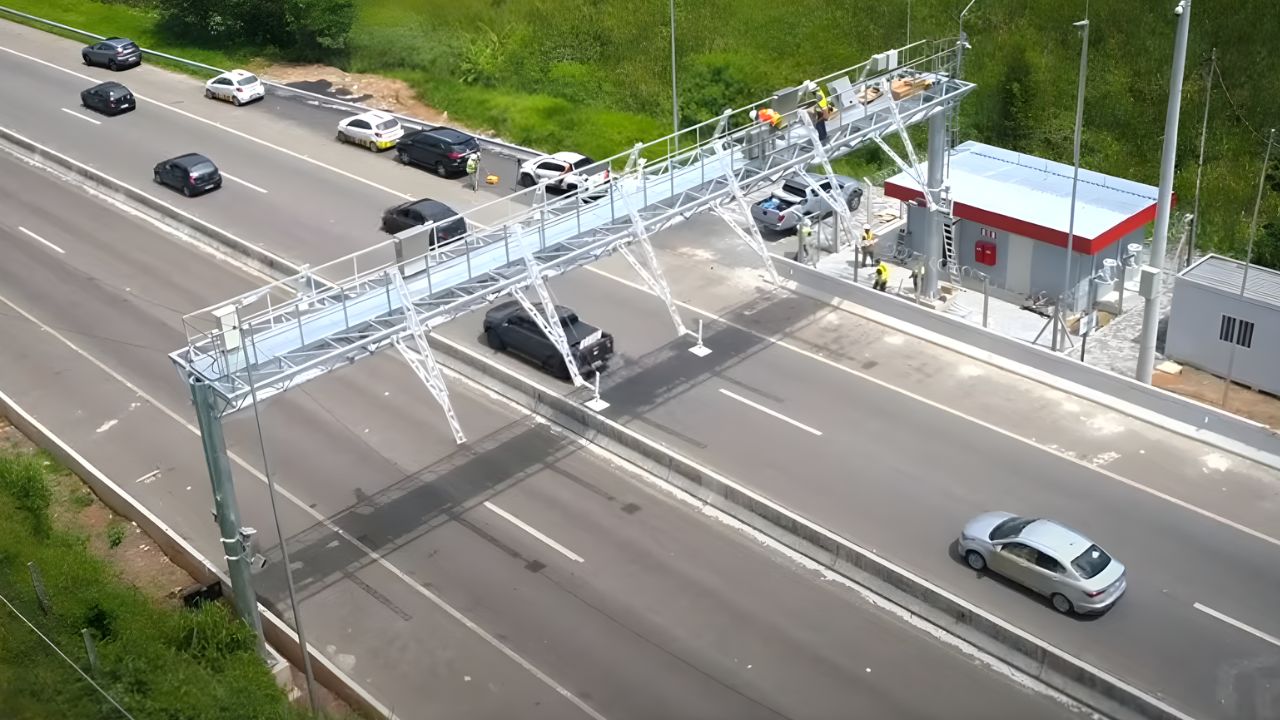

12 Free Flow Tollbooths in São Paulo Were Disconnected Due to Low Adherence and Outdated Contracts; Only the Ubatuba-Rio–Santos Section Remains in Operation.
The Department of Highways of São Paulo (DER-SP) announced the deactivation of 12 sections of free flow tolls that were planned for implementation on state highways. The decision was motivated by the low adherence of registered drivers on the digital platform and the need for updating the concession contracts, which still use conventional toll rules.
The free flow model allows for electronic toll collection without the use of physical barriers, charging the fee based on the distance traveled.
The initiative aimed to reduce congestion and speed up traffic, but encountered obstacles that required adjustments before the system’s expansion.
-
São Paulo to Revamp 174 Roundabouts on State Highways with $7.7 Million Investment to Improve Safety

-
New Helmet Rule in Brazil Requires Inmetro Digital Seal and QR Code from July 1, 2026, But Existing Helmets Are Exempt — Here’s What Changes and How to Verify Authenticity

-
Bus Strike in Rio Disrupts Public Transport, but Court Ruling Ensures 50% of Fleet Remains Operational
-
Driver who “holds” the left lane can receive a hefty fine and 4 points on their driver’s license even if they think they are going at the correct speed for the road.


Sections That Had the Free Flow Disconnected
Among the sections that had the implementation of free flow tolls suspended are:
- Sorocabana Concession: five portals that were originally to be used for toll collection are now functioning only as traffic monitoring points, with no fee application.
- Padre Manoel da Nóbrega Highway (SP-055), south coast: two planned portals were deactivated before they began operations.
- Region of Piracicaba: three portals planned for this phase will not be installed.
At the moment, the only section that remains active is the Rio–Santos, in Ubatuba, under the administration of Ecovias Litoral Norte.
The toll fee for this section varies according to the distance traveled, ranging between R$ 2.50 and R$ 4.50.
It is essential for drivers to keep their vehicle registration updated, as unregistered plates can lead to automatic charges or penalties for toll evasion.
Reasons for the Deactivation of Free Flow Tolls
According to DER-SP, the disconnection of the 12 sections results from two main factors:
- Old concession contracts: the agreements are still based on traditional tolls, making the full implementation of free flow difficult.
- Few registered drivers: the low adherence to the digital platform resulted in lower-than-expected revenue.
These issues led the government to suspend partial installation, ensuring the system functions efficiently and sustainably before further investments.
Despite the suspension in some sections, the free flow model will continue to be adopted in future highway concessions.
The state government intends to make technical and regulatory adjustments to increase the number of registered users and ensure the proper functioning of the system.
Experts point out that, when fully implemented, free flow can reduce queues, expedite traffic, and lower maintenance costs for toll plazas, benefiting drivers and concessionaires.
Consequences for Drivers
While some highways had the system disconnected, it is important for users to be aware of the sections still active to avoid improper charges.
In the Ubatuba section, attention to accurate plate registration is crucial to avoid receiving automatic fines.
Free flow is considered a modern alternative to conventional tolls, with the potential to improve vehicle flow and reduce daily inconveniences, provided there is sufficient adherence from drivers.
Source: CanalTech


