Portuguese
  Spanish


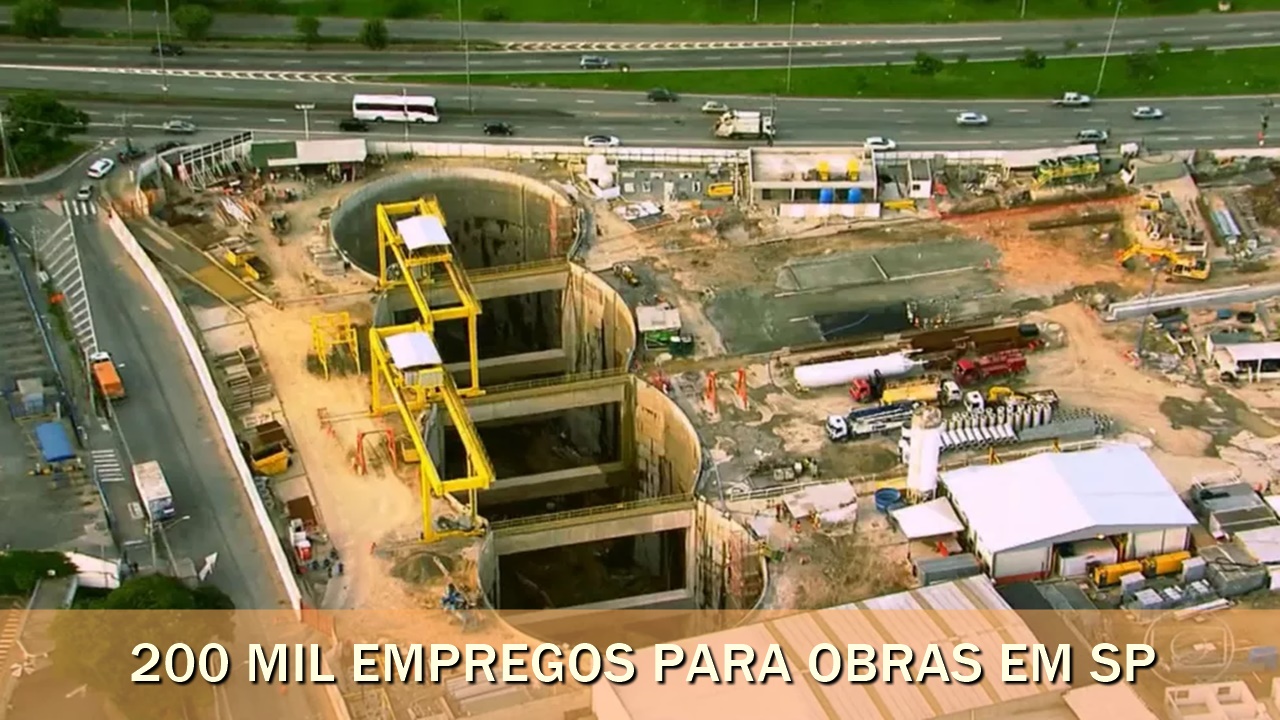

The Main Topics Related to Infrastructure and Construction Are Being Debated at Paving Hybrid Until Friday, 22, When It Welcomes the Minister of Infrastructure, Tarcísio Gomes de Freitas
The government of the State of São Paulo announced an investment of R$ 47.5 billion until 2022, to generate 200,000 jobs and the forecast of eight thousand works. According to João Octaviano Machado Neto, Secretary of Logistics and Transport of the State of São Paulo, in the area of logistics and transport, the recovery of three thousand kilometers of roads and two thousand kilometers of resurfacing of highways is planned. “This resumption of investment and economic growth will be driven by infrastructure,” said the secretary during the opening ceremony of Paving Hybrid, which runs until Friday, October 22, at Expo Center Norte.
Read Also
- ENAI and Neoenergia Offer 1,100 Slots in Free Online Courses for Professionals with Elementary Education in Construction (Electricians, Masons, Painters, etc.)
- More Than 5,000 Temporary Job Openings Available Today (10/21) for End-of-Year Demand Including Black Friday and Christmas
According to Machado Neto, the government of São Paulo is also investing to increase the logistical and transportation capacity of the state, applying technology and sustainability, including the pursuit of zero carbon. In his view, the technological issue can contribute to road safety and the reduction of operational costs in the sector.
Investments in Works Will Generate Thousands of Jobs in the State of São Paulo
In the case of the city of São Paulo, Marcos Monteiro, Municipal Secretary of Infrastructure and Works, commented on the two infrastructure goals, which include the construction of 14 new reservoirs, but 27 new reservoirs are planned. “It’s not enough to build; it’s necessary to leave projects for future administrations,” he explained. Another program he discussed was focused on the maintenance and inspections of the city’s structures, which is continuous and consistent, covering everything from simple maintenance like pavement and fences to heavier interventions like recovery and reinforcement of structures.
-
China’s Engineered Bamboo: The “Material of the Future” Stronger Than Steel and a Sustainable Wood Alternative

-
Egypt’s “New Nile”: 170 km Artificial River Aims to Turn Desert into Farmland, but Water Supply Concerns Loom
-
Eni Acquires 25% Stake in Chilean Lithium Project, Plans to Invest Up to $225 Million in Eco-Friendly Extraction Method
-
Unable to secure a mortgage as a self-employed single mother, she designed her own floating home from a 20-meter boat and now lives “off-grid” with her two children and solar panels on an English canal.




Monteiro mentioned the release of 30 bids for bridges and viaducts by the end of this year, based on previous inspections, and for the next year, another 80 bids are planned in this area. A Risk Area Recovery Program has also been created. He also spoke about the work being done in conjunction with the State Government to announce a new mobility plan for the city, with plans to construct new corridors, new terminals, and BRT lines.
Still at the opening ceremony of Paving Hybrid, Guilherme Ramos, director of STO Feiras e Eventos, the event organizer, emphasized that in three days, the audience will have the opportunity to participate in discussions about the most current and relevant topics for the development of infrastructure and construction. “We are also present at Expo Center Norte, with exhibitions from companies and product demonstrations,” he pointed out.
Paving Hybrid and the Relevance of Infrastructure
Senator Giordano also attended the hybrid event and highlighted the importance of holding Paving Hybrid and the relevance of infrastructure, which brings wealth and development to the country.
During the panel on Highway Concessions, moderated by João Fornari, director of Kartado, the participants unanimously affirmed the importance of maintaining and preserving highways to ensure road safety, traffic flow, and user comfort. “Maintenance is in the public’s interest because the user begins to benefit from it the moment they enter the highway,” said Victor Junqueira de Magalhães, business consultant at CCR, who added that a challenge in this area is keeping up with the digital revolution, using databases, Machine Learning, and Business Intelligence, so that maintenance can be carried out at the right time, more accurately.
Sérgio Santillan, president of Eixo SP, emphasized that the new contracts are more demanding, with performance parameters that must be met, as they affect the profitability and revenue of the concessionaire. At Eixo SP, 41% of the parameters are focused on pavement, while 38% pertain to operational systems, the environment, and traffic flow. He also mentioned that concession programs and concessionaires have been, over the years, agents of significant changes for greater professionalization in the sector. “Previously, few companies were aware of the need to ensure safety. Today, we already see this cultural shift that demands compliance, integration, and training.”
In this regard, Lucas Gama, coordinator of budgeting and planning at Elo Construções e Instalações, echoed Santillan’s assessment, saying that service providers need to adapt to offer their solutions to the concessionaires to establish an effective and correct partnership. “We are always seeking advancements, new technologies, such as in the conservation of right-of-way, where equipment has come from agriculture,” he commented. According to him, “service providers face the challenge of finding alternatives and making investments so that the conservation of highways is always focused on the safety of users and collaborators who work on-site.”
About Accidents and Fatalities on São Paulo’s Highways
Regarding accidents and fatalities on highways, Mauro Szwarcgun, planning manager at Dersa, stated that currently, no death is acceptable in a traffic area, whether on a state, federal, or municipal highway. “There has been a change towards a zero vision, where no death is acceptable, and the understanding that the driver is responsible for the accident has shifted. The modern view is shared; that is, infrastructure should be able to forgive human error, with signage or safety elements designed to eliminate inherent risks on the highway.”
Earlier in the morning, the panel on Infrastructure in the Digital Age featured lectures by engineer Jefferson Inoue, Fabricio Rossi, Marcel Wallace, and Rodrigo Nunes, who showed that the central point of engineering is planning and management, in order to achieve success in construction.