






 Portuguese
  Spanish
  3 min of reading
  0 comments


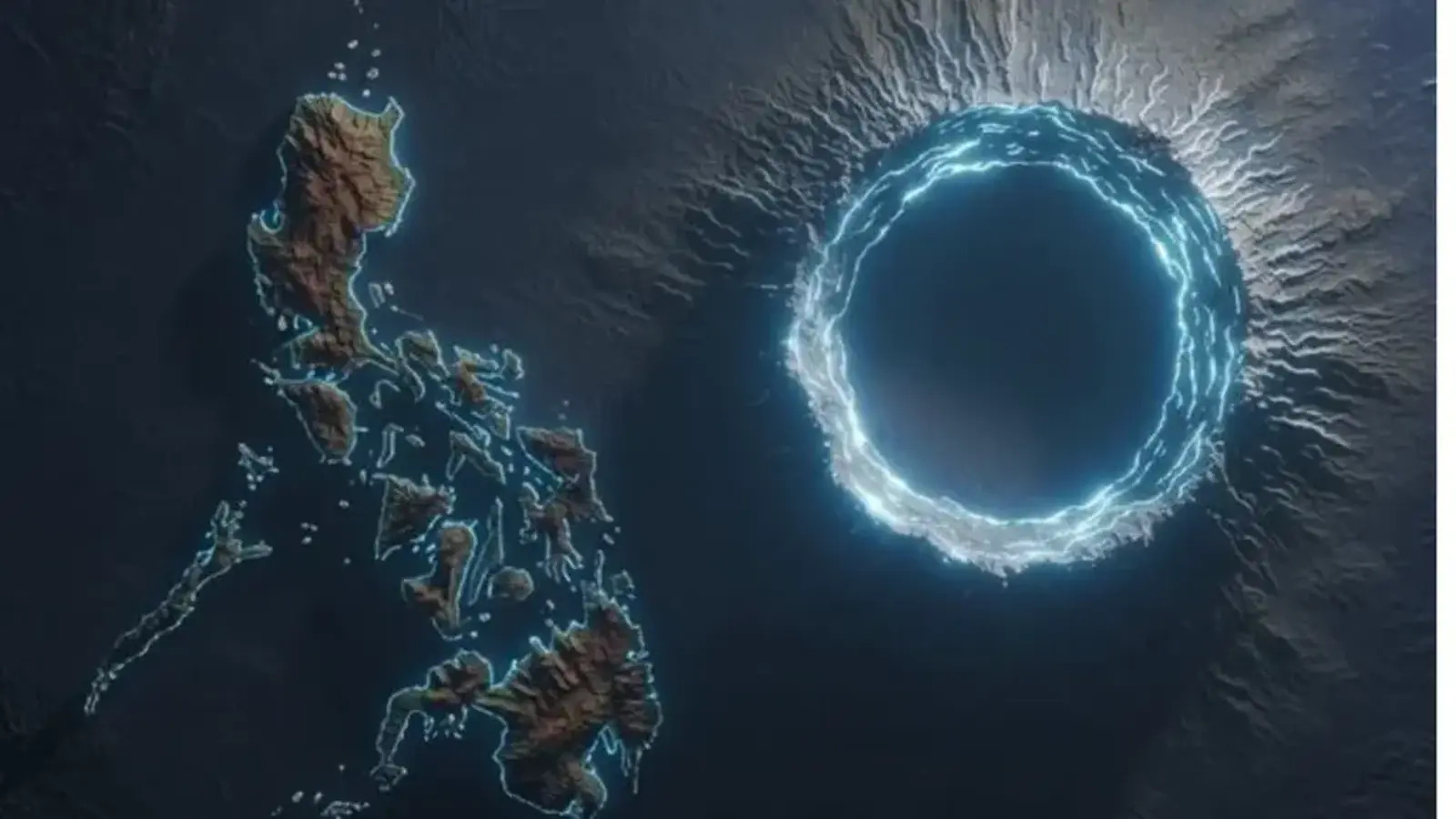
Hidden at more than 5,000 meters deep in the Pacific, the Apolaki caldera surpasses Yellowstone and Toba in size, it was confirmed in 2019 and helps scientists study underwater volcanoes
The Apolaki caldera, located under more than 5,000 meters of water off the coast of the Philippines, has been recognized as the largest known volcanic caldera on the planet. With about 150 kilometers in diameter, the structure is located in the Benham Rise region and helps explain the volcanic history of the Western Pacific.


Apolaki caldera impresses with its scale on the ocean floor
The structure is hidden at the bottom of the Pacific Ocean, in an area far from direct human observation.
Its base is approximately 5,200 meters below sea level, on the Benham Rise, also known as Benham Plateau.
-
Invisible Induction Technology Enables Wireless Power for Blenders, Coffee Makers, and Air Fryers, Reducing Countertop Cables

-
Smart Outdoor Lighting Transforms Gardens into Living Spaces with Weather Resistance and App-Controlled Scenes

-
Green dot on top of smartphone intrigues users, signals privacy alert in Android 12 that experts say shouldn’t be ignored.
-
Humanoid Robot Climbs 6,263-Meter Volcano in Ecuador, Sets Sights on Everest Challenge





The size is the central data of the discovery. With about 150 kilometers in diameter, the Apolaki caldera surpasses other famous volcanic formations.
Yellowstone, in the United States, is about 60 kilometers in diameter, while Toba, in Indonesia, reaches approximately 100 kilometers.
The name Apolaki means “giant lord” in Filipino and refers to an ancient deity associated with the sun and war.
The choice directly relates to the dimension of the formation, considered one of the most striking geological structures ever identified under the sea.
High-resolution mapping revealed the underwater formation
The identification was conducted by studies led by marine geophysicist Jenny Anne Barretto, with participation from an international team.
The researchers analyzed the submarine relief for years using high-resolution mapping technology.
It was this work that allowed the confirmation that the observed formation corresponded to a gigantic marine volcanic caldera.
Although the Benham Rise region had already been studied, the confirmation of the structure occurred in 2019.
The validation came through specialized scientific publications and recognition from the Geological Society of the Philippines. From there, Apolaki began to be officially regarded as the largest known caldera on the planet.

Structure may have emerged after massive eruption
Scientists believe that the caldera was formed millions of years ago, after a massive volcanic eruption.
With the collapse of the magma chamber, the terrain sank and gave rise to the large depression now located under the ocean.
The edge of the structure has escarpments up to 300 meters high, interpreted as evidence of violent volcanic episodes in the distant past. The region also features a layer of volcanic rocks about 14 kilometers thick.
Samples collected at the site indicated rocks aged between 47 million and 26 million years. These data help reconstruct the geological evolution of the Western Pacific and better understand the dynamics of tectonic plates in that area.
Discovery expands study of underwater volcanoes
Apolaki may be part of a large submarine igneous province, a phenomenon associated with massive volcanic events in Earth’s history. For science, the discovery offers a rare opportunity to study large submerged calderas.
This type of formation is still poorly understood, mainly due to the difficulty of research in such deep oceanic environments.
Jenny Anne Barretto defined Apolaki as an “exceptional window” into the tectonic and volcanic history of the Pacific.
So far, there is no evidence of recent eruptive activity in the Apolaki caldera. Even so, experts consider it important to maintain monitoring of the region, due to the size and complexity of the underwater structure.
This article was prepared based on information from the base material provided about the Apolaki caldera, with data, numbers, and statements preserved as per the consulted material.



-

-

-

-

-

-

93 people reacted to this.