






 Portuguese
  Spanish


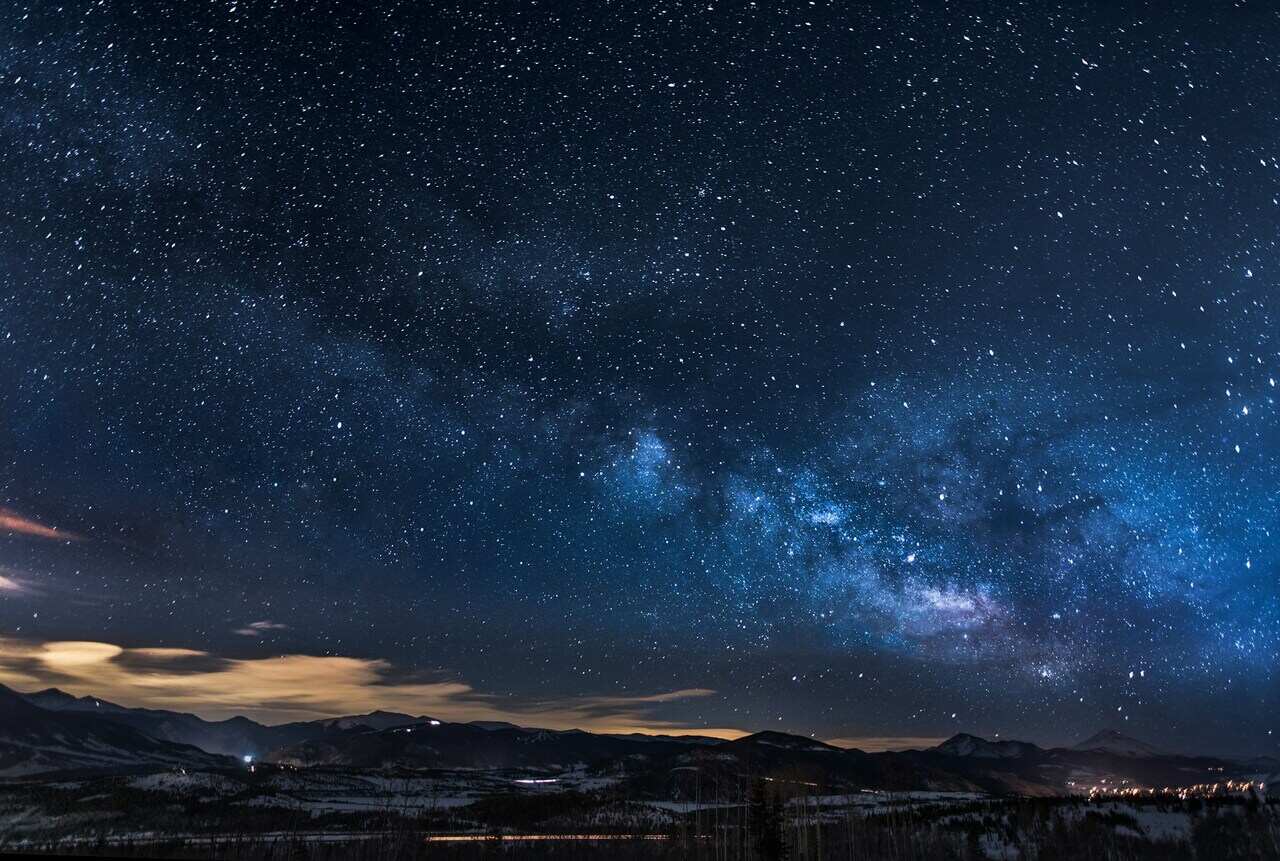

Even With Trillions of Stars in the Universe, the Night Sky Remains Dark — and the Answer Involves Time, Distance, and Cosmic Expansion
At first glance, it seems a mystery: if there are trillions of stars in the universe, why is the night sky dark? This question is so old that it even has a specific name among astronomers: Olbers’ Paradox.
When we look at the sky at night, we see bright points scattered throughout the darkness. But scientists estimate that there are about 200 billion trillion stars in the observable universe.
Many are as bright as the Sun — some even brighter. So why isn’t the sky completely filled with light?
-
World’s Most Powerful X-Ray Laser, 3.4 km Long and Emitting 27,000 Flashes Per Second, Unveils Atoms in Motion in Germany

-
Former SpaceX Rocket Engineer Develops Fast-Growing Grass Panels to Replace Wood in Construction, Secures $47.5 Million Funding

-
A Simple Finger Movement Gains Attention for Its Potential Role in Alzheimer’s Prevention
-
MSC Orders Largest Fleet of Gas-Powered Ships in Maritime History, Set to Impact Global Freight Costs




This question has puzzled scientists for a long time. One way to understand the answer involves studying stars and planets outside our solar system. This helps astronomers understand why, even with so many sources of light, space remains dark.
Distance Does Not Explain Everything
A common idea is to think that darkness exists because the stars are very distant. Indeed, the farther away a star is, the less light it sends to us. A star that is 10 times farther away will appear 100 times fainter.
But this explanation is not enough. Even with light becoming dimmer with distance, the number of stars increases enormously the farther you look. In other words, more stars should fill the dark gaps.
The Imaginary Bubble
To help visualize this reasoning, imagine a bubble with Earth at the center. If this bubble has a diameter of 10 light-years, there will be some visible stars inside it.
Now, if you increase that size to 1,000 light-years, then 1 million, and finally 1 billion light-years, the number of stars inside the bubble grows significantly.
Even though each individual star may appear fainter because it’s far away, the total number of stars inside the bubble compensates. With billions and billions of stars contributing light, the sky should appear much brighter. And yet, that doesn’t happen.
The Age of the Universe Limits Visible Light
The explanation lies in the age of the universe. It is about 13 billion years old. This means we can only see the light that has had time to travel to us since the beginning of the universe. The light coming from more distant stars has not yet reached Earth.
Therefore, even if there are many stars beyond the 13 billion light-year “bubble,” we cannot see them. They are simply beyond our visual reach. The light is still on its way.
When we look at the sky, we see stars in some directions and darkness in others. This happens because, in those dark areas, the light is still traveling and hasn’t arrived here yet. Over time, more distant lights will appear. But the universe also has other barriers.
The Universe Is in Motion
Another important point is that the universe is expanding. Galaxies are moving away from Earth at high speeds. Some are moving so fast that the light they emit undergoes an effect called Doppler Shift.
This effect causes the light to stretch, shifting to wavelengths that our eyes cannot see.
Even if this light reaches Earth one day, it will no longer be visible to the human eye. This reinforces the reason the sky remains dark.
An Increasingly Dark Future
Besides distance and expansion, there is the factor of time. Stars do not last forever. The Sun, for example, is expected to shine for about 10 billion years. After that, it will cease to emit light.
Astronomers believe that in a very distant future — something like a trillion years — the universe will be a dark place. There will be no more active stars. Only white dwarfs, black holes, and other remnants of what was once a bright universe will remain.
A Special Moment to Observe
Today, we live in a rare moment in the history of the cosmos. There are still many active stars. The night sky is a rich mix of light and shadow.
Even though it is not completely illuminated, we still have the chance to observe a universe full of life, with galaxies, stars, and planets within our reach of eyes and telescopes.
The darkness of the sky, therefore, is a reminder of our position in time and space. It is not an absence of light, but the result of a young, expanding universe filled with physical limits. A dark sky that, at the same time, is full of history and movement.
With information from Earth Sky.


