Portuguese
  Spanish



The Pará State Agency Issued the Necessary Environmental License for Petrobras to Conduct a Simulation That Could Begin Exploration of the Equatorial Margin. The State-Owned Company Continues to Discuss Some Points with Ibama to Proceed with the Project in the Area.
The state-owned oil company Petrobras confirmed that the Secretary of Environment and Sustainability of Pará granted the necessary environmental license for the company to proceed with the project for exploration of the Equatorial Margin. The document for conducting a simulation in the state is another step for the initiative. The state-owned company anticipates investments of US$ 2.9 billion in the production campaign in the region.
Petrobras Obtains New Environmental License from the Government of Pará and Advances in the Exploration Project of the New Brazilian Pre-Salt, the Equatorial Margin
Petrobras announced the receipt of the necessary environmental license from the Secretary of Environment and Sustainability of Pará to conduct a simulation in the state.
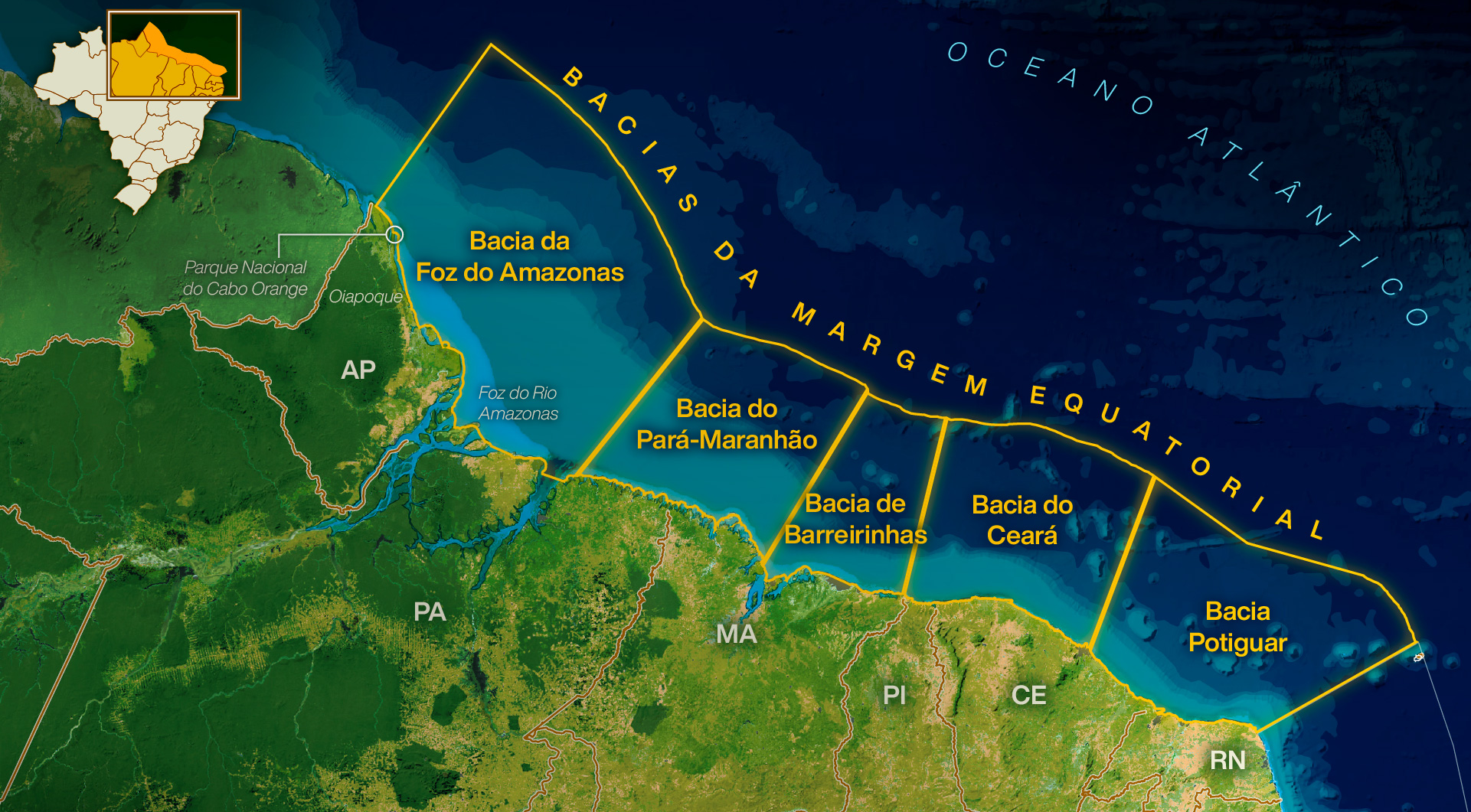
The company’s goal is to accelerate the processes to initiate the exploration project of the Equatorial Margin, starting from Amapá and going to the state of Rio Grande do Norte.
-
With a record production of nearly 3 million barrels per day, Petrobras resumes importing diesel in July, highlighting the bottleneck in Brazilian refining.

-
Qantas and Airbus Invest in Company Aiming to Convert Unsorted Household Trash into Jet Fuel

-
Brazil’s ANP Opens 86 New Oil Blocks in the Equatorial Margin, Expanding the Amazon River Mouth Frontier

-
OPEC+ Boosts Oil Supply by 188,000 Barrels per Day in July 2026, Leading to Price Drop from $112 to $89 per Barrel in Under Two Months

With investments of US$ 2.9 billion planned for the coming years, the oil company’s campaign in the new Brazilian pre-salt could be one of the largest in the national oil and natural gas market.
With the receipt of the new environmental license, the company is now only discussing a few more details of the project with the Brazilian Institute of Environment and Renewable Natural Resources (Ibama) to begin work.
The environmental license granted by the Government of Pará will serve for the operation of the Wildlife Recovery and De-oiling Center (CRD), built in Icoaraci. The plant will be responsible for monitoring Petrobras’s operations in the exploration campaign in the region.
In addition, it will also serve to ensure environmental safety in the drilling of the so-called Morpho Well, located about 175 kilometers off the coast of Amapá and at a depth of 2,880 meters.
This is because the center will ensure care for animals that may be injured or affected by Petrobras’s operations in the region. This is the first well that the company is expected to operate if the simulation enables exploration of the Equatorial Margin by it.
New Brazilian Pre-Salt, Equatorial Margin Region, Is the State’s Big Bet for Fuel Exploration in Brazil
The receipt of the environmental license for the simulation in Pará is just one step in Petrobras’s exploration campaign in the Equatorial Margin.
The region is pointed out by industry experts as one of the great bets for the large-scale production of fuels in Brazil over the next few years.
The president of the Brazilian Institute of Oil and Gas (IBP), Roberto Ardenghy, stated: “To give you an idea, out of every ten wells drilled in the world, nine are generally classified as sub-commercial, meaning they cannot be commercially exploited. In others, oil is not even found. Often, only water or CO2 (carbon dioxide) is discovered.”
“In any case, there is strong belief that oil exploration in the so-called Equatorial Margin will be possible, especially since other wells have already been discovered in the region, in areas belonging to Guyana, for example, which has grown significantly due to this activity,” concluded the executive.
Thus, Petrobras’s exploration campaign in the Equatorial Margin could facilitate significant investments in the Brazilian oil and gas market in the coming years.