





 Portuguese
  English
  Spanish
  4 min of reading
  0 comments


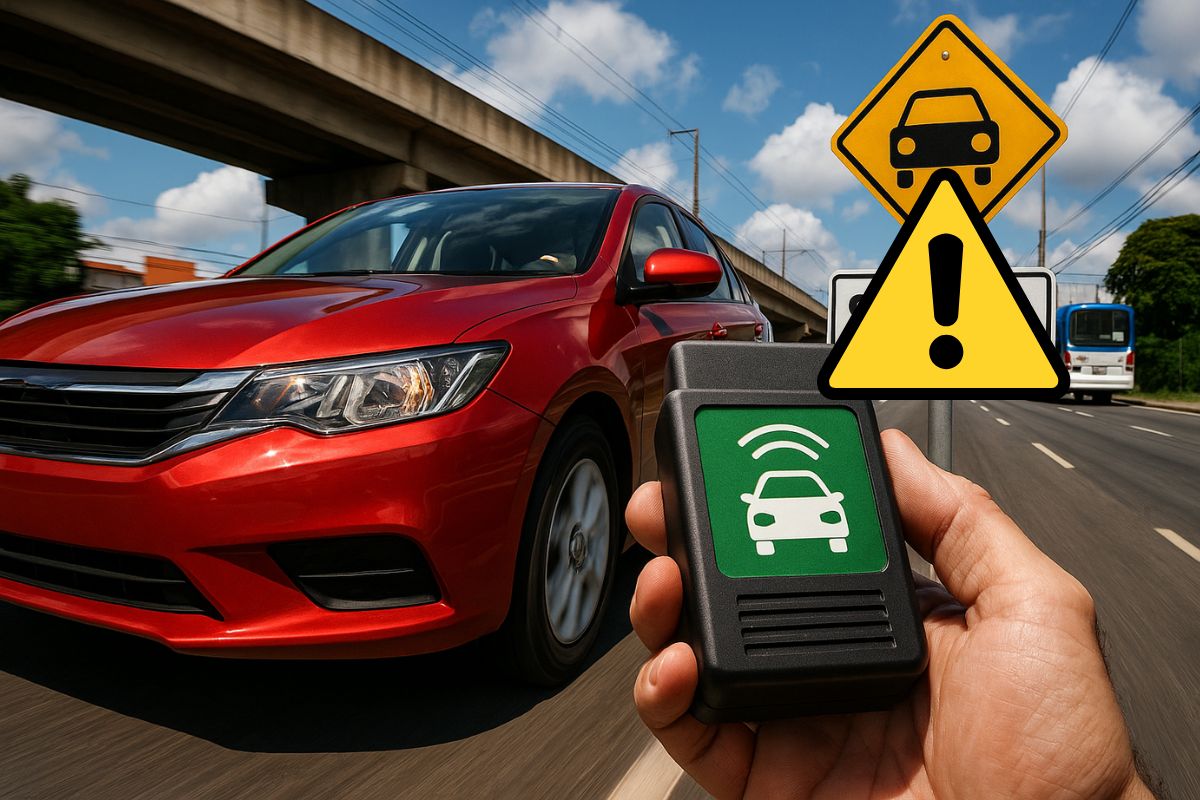
With Devices in the Car or App on the Phone, Insurers Monitor Driving and Recalculate Premiums According to the Actual Risk of the Driver.
Brazilian Insurers have already adopted telematics to monitor how you drive in order to personalize the auto insurance value. Those who accelerate less, brake smoothly, and respect speed limits tend to pay less; those who drive recklessly may see the price increase.
The model, known as “usage-based insurance,” works through a device installed in the vehicle or through an app on the phone. According to the NSC portal, the collected data turns into a behavior score, and, based on that, the policy receives discounts or surcharges that generally range from 10% to 15% depending on the Insurer.
How Telematics Measures Your Risk
Telematics captures information such as average speed and peaks, hard accelerations and braking, sharp turns, mileage, and times/locations of use (driving at night on high-risk roads carries more weight).
These data are processed by algorithms that assign a driving score.
-
Cheaper than expected and with a cut of up to 50% in taxes, the Golf GTI may arrive in Brazil at a reduced price after the EU-Mercosur agreement and Volkswagen’s strategy that promises to turn the tide by 2041.

-
The Chinese electric car that travels 1,036 km on one charge, accelerates to 100 km/h in 2.7 seconds, and recharges in 5 minutes — half the price of a Porsche

-
An electric car caught fire on a street in Curitiba, and the driver only escaped because he noticed the smoke in time to stop and exit the vehicle before the flames took over everything.

-
BYD better watch out because a new Chinese company is arriving in Brazil with an electric vehicle similar to the Kwid that promises to cost less and steal customers right in its first year of operation in the country.



The better the score, the greater the discount potential. Hard braking, aggressive overtaking, and speeding lower the score, signaling a higher likelihood of claims.
Important: there are two ways to capture this data. Vehicle device (hardware) installed in the car with dedicated sensors; or telemetry app on the smartphone that uses GPS and accelerometers.
Both are intended to evaluate behavior, not just locate the car.
Telematics Is Not a Tracker and Why This Matters
Tracker focuses on locating and recovering the vehicle in the event of theft.
Telematics goes further: it observes how you drive to price the risk.
Many plans offer both: tracker (for safety and recovery) + telematics (for discount/premium adjustment).
Confusing the concepts can lead to incorrect expectations; installing a tracker does not guarantee discounts for good driving.
In practice:
- Telematics: behavior (e.g., speeding, braking, times).
- Tracker: car position (e.g., immobilization, virtual fences, recovery).
Advantages for Good Drivers
For the cautious driver, the insurance becomes more “fair”: the price reflects their actual driving history, not just age, ZIP code, or car model.
Another benefit is awareness behind the wheel. Seeing your own score and risky events encourages improvements, reducing accident chances.
Some plans allow you to track weekly reports, which helps adjust driving habits.
Safety bonus: when the package includes a tracker, the chance of recovering the vehicle increases, which also influences the loss ratio of the contract over time.
Points of Attention: Privacy, Rules, and Price Variations
Data privacy is the main concern. Insurers must clearly inform what data they collect, why they collect it, and how long they store it, in line with best data protection practices.
Transparency and consent are vital.
Another point is price volatility: the same system that provides discounts can raise the premium if behavior worsens (more nighttime driving, speeding, sudden events).
“Hasty” drivers pay the cost of risk.
Keep an eye on:
- Usage Policy: some plans require the device in the car; others work only via app.
- Evaluation Rules: how each variable affects the score varies from one Insurer to another.
- Typical Discount: around 10% to 15%, depending on performance and product criteria.
Who Is Offering It in Brazil and How It Works Day-to-Day
According to the insurtalks portal, in Brazil, insurtechs and traditional Insurers are already operating with telematics.
In app-based models, the user installs the app, authorizes the sensors, and undergoes an evaluation period; the obtained score influences the policy value.
In offers with a vehicle device, the client schedules the installation, after which driving events are automatically captured.
Reports and dashboards in the app show the score’s evolution and improvement tips (for example, reducing hard braking in specific areas).
Practical Tip: driving less during critical times and maintaining smooth driving usually raises the score and protects your discount throughout the contract.
What to Check Before Signing Up
Before hiring, read the fine print. Look for, in the Insurer’s materials:
- List of Collected Data (e.g., speed, location, phone use while driving).
- Scoring Criteria and discount/mark-up ranges.
- If the tracker is mandatory and how this impacts installation and costs.
- Cancellation Policy and what happens to your data if you terminate the contract.
Keep this idea in mind: “fair price” means a price consistent with the measured risk.
If your driving improves, you reap the benefit and the system also protects the wallet of those who drive well by redistributing costs to riskier profiles.
And you, would you be willing to share your driving data to pay less for insurance? Do you think it’s “fair play” for Insurers to charge more for “hasty” drivers? Share your experience: has the monitoring changed your way of driving or is it an invasion of your privacy? We want to hear from those who live this in practice.








-

-

-

-

8 people reacted to this.