






 Portuguese
  Spanish
  6 min of reading
  0 comments



A Single Forgotten Sensor And A Wiring Harness With Poor Contact Can Steal Power, Increase Consumption, Fail The Environmental Test, And Shorten The Life Of The Engine While The Shop Replaces Expensive Parts Without Finding The True Hidden Villain
While you drive thinking everything is normal, a single sensor the size of a finger and some aged wires can steal power, increase consumption, and reduce the engine’s lifespan without turning on any warning lights on the dashboard. The car becomes weak, thirsty, stalling at random moments and often fails environmental inspections, as if it were doomed to malfunction forever.
In this scenario, millions of drivers live with weak and thirsty cars, hearing different diagnostics at every shop. Spark plugs, coils, fuel pumps are replaced, injectors are cleaned, and nothing works. The defect only disappears when someone remembers to check exactly where almost no one looks: that tiny dirty sensor and the wiring harness with poor contact, which can indeed steal power, increase consumption, and mess up the entire work of the electronic control unit.
The Invisible Villain That Makes The Engine Work Against Itself
In a modern engine, everything revolves around information. Each sensor sends real-time data to the electronic control unit, which calculates how much fuel to inject, when to generate a spark, how to correct the mixture, and even how to protect the engine in a risky situation.
-
Chinese Giant Uses Metal Structures and Cranes to Deliver Over 700 Electric Cars to Brazil

-
Uber Faces Shareholder Scrutiny as Board Accused of Ignoring Safety, Compliance, and Harassment Warnings Amid Over 3,500 U.S. Lawsuits

-
Ferrari’s First Electric Car Divides Fans, Priced at $630,000, Amid Concerns Over Limited Editions; Brand Clarifies It’s Not Just for Future Perks
-
BYD Dolphin Mini: The Electric Car That Defies Depreciation, Losing Only 3.58% in a Year and Becoming the Best-Selling Retail Model Under $22,000


When a sensor is dirty or contaminated, it starts lying to the control unit. The mixture becomes too rich, too lean, or out of timing. Result: the engine loses power, consumption increases, and emissions spike, even though nothing apparent is broken. In many diagnostics, the sensor is electrically “okay,” but its readings are distorted by dirt, oil, fuel varnish, or natural aging.
That’s why it’s pointless to just run the scanner and replace parts one by one. In many cases, what can truly steal power, increase consumption, and cause headaches is a physically intact sensor, but completely dirty, working outside of the correct range.
MAF, MAP, And Oxygen Sensor: Wrong Mixture, Lower Power, And Higher Consumption

Some sensors have a direct impact on the air-fuel mixture, which is the heart of performance and consumption.
The MAF sensor, for example, measures with high precision the amount of air entering the engine. It uses a very thin heated wire and monitors how much this wire is cooled by the airflow. Over time, dirt, oil vapors, and filter debris settle on this wire, changing its characteristics. The control unit begins to believe that more or less air is entering than reality, adjusts the mixture incorrectly, and the car becomes weak, heavy, and thirsty, a typical case where the dirty sensor can steal power, increase consumption without presenting a clear electronic defect.
A similar issue occurs with the MAP sensor, which reads the pressure inside the intake manifold. Dried, cracked, or partially loose vacuum hoses create false air entries and make the sensor indicate a greater engine load than actual. The control unit injects excess fuel, black smoke appears, rich mixture codes show up, and the car owner sees the consumption gauge rise without understanding the reason. Often, simply replacing hoses and cleaning the sensor port resolves most of these cases.
The oxygen sensor (lambda) is the control unit’s “eye” in the exhaust. It detects whether the mixture is rich or lean and corrects the engine thousands of times per minute. When contaminated with bad fuel, burnt oil, or inadequate additives, it becomes slow and imprecise, correcting out of timing. The result is a dangerous combination: powerless car, high consumption, and certain failure in emissions tests, yet another concrete example of how dirty sensors can steal power, increase consumption, and still fail the environmental report.
Temperature And Position: Sensors That Confuse Starting And Daily Operation
Other sensors do not directly affect the mixture but disrupt the entire logic of engine operation when they begin to fail.
The coolant temperature sensor informs the control unit whether the engine is cold, warm, or hot. If it constantly indicates a cold engine, the control unit keeps the mixture rich and the RPM high, as if the car never truly warmed up. The owner notices excessive consumption, irregular idle, and even oil contamination from excess fuel, all without an obvious symptom other than the car consuming too much.
Meanwhile, the throttle position sensor (TPS) acts as a “translator” of your foot on the accelerator. It informs what angle the throttle is at, allowing the control unit to recognize whether you are smoothly accelerating or demanding full load. With internal track wear, dead spots emerge in frequently used positions. The driver feels jerks, power holes in specific pedal positions, and stalling during acceleration, and many people end up replacing coils and injectors. In practice, what can steal power, increase consumption, and ruin driving comfort is a tired or dirty TPS.
Rotation sensors, such as the crankshaft position sensor and the camshaft sensor, also suffer from shavings, thick oil, and dirt. When their signal becomes weak or intermittent, the engine stalls while driving, takes a long time to start, and loses smoothness, situations that frighten and often lead to “condemned engine” diagnostics when the real problem is a small, inexpensive component.
Wiring Harness And Connectors: The Ghost Defect That Deceives Scanner And Workshop
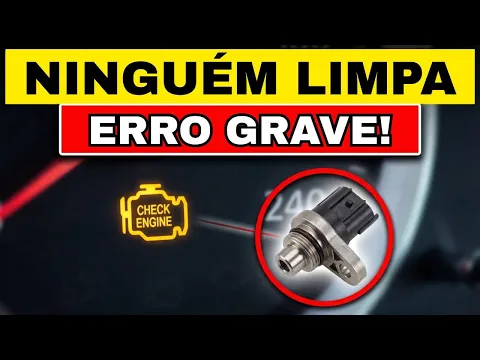

It’s useless to have all sensors in order if the information pathway is broken. In many cars with several years of use, the real problem isn’t with the sensor, but with the wiring harness and connectors feeding it.
Heat from the engine, vibration, humidity, and dirt gradually oxidize pins, dry out insulation, break wires internally, and loosen grounds. The control unit receives signals that “disappear and reappear” as the car moves, the engine heats up, or the wiring harness shifts slightly. The scanner indicates a fault in the temperature, oxygen, position, or pressure sensors, and the frequent solution is to replace the component.
Experienced technicians know that, before condemning expensive sensors, it’s essential to manipulate the wiring harness, clean connectors with the proper product, check splices, grounds, and fixations. In many complex diagnostics, it’s precisely this poor contact that can steal power, increase consumption, cause stalling, and create the “electronic ghosts” that no one can resolve.
How To Avoid Replacing Parts Unnecessarily And Protect The Engine
In practice, the driver does not need to become an expert in automotive electronics, but some simple actions make a difference:
- Be cautious of diagnostics based solely on serial parts replacement, especially when the car has already undergone spark plug, coil, injector, and pump replacements without a definitive solution.
- Explicitly ask about sensors and wiring harness, demanding the shop check connectors, wires, vacuum hoses, and possible contaminations before authorizing expensive parts.
- Authorize cleaning when recommended, using specific products for sensitive sensors, instead of letting dirt accumulate until it becomes a chronic defect.
- Keep air and fuel filters up to date, as much of the contamination comes from delayed maintenance or low-quality parts.
When it comes to modern engines, the real savings lie in correct diagnostics, not in cheaper parts. A tiny dirty sensor or a abused wiring harness can steal power, increase consumption, cause failures in inspections, and accelerate internal wear, while the one paying the bill is always the owner.
And you, have you ever gone through the situation of replacing several parts on your car only to find that the problem was just a dirty sensor or a wiring harness with poor contact that could steal power, increase consumption, and drive any diagnosis crazy?


-

-

-

-

7 people reacted to this.