






 Portuguese
  Spanish




The Bradesco BBI Report on the Oil and Gas Sector in 2025 Reveals a Strong Contrast Between Companies Less Exposed to the Commodity and Producers, as Well as Indicating the Main Vectors That Should Guide the Market in 2026.
The year 2025 painted a clear picture of the oil and gas sector in Latin America. While companies less dependent on commodity prices delivered significant returns to shareholders, the so-called “oil proxies” faced a more adverse scenario.
This assessment is from Bradesco BBI, which conducted a detailed review of who gained, who lost, and which trends should guide investment decisions in 2026.
According to the bank’s research team, oil performance throughout the year was quite weak, something that the market largely anticipated.
-
With a record production of nearly 3 million barrels per day, Petrobras resumes importing diesel in July, highlighting the bottleneck in Brazilian refining.

-
Qantas and Airbus Invest in Company Aiming to Convert Unsorted Household Trash into Jet Fuel

-
Brazil’s ANP Opens 86 New Oil Blocks in the Equatorial Margin, Expanding the Amazon River Mouth Frontier

-
OPEC+ Boosts Oil Supply by 188,000 Barrels per Day in July 2026, Leading to Price Drop from $112 to $89 per Barrel in Under Two Months
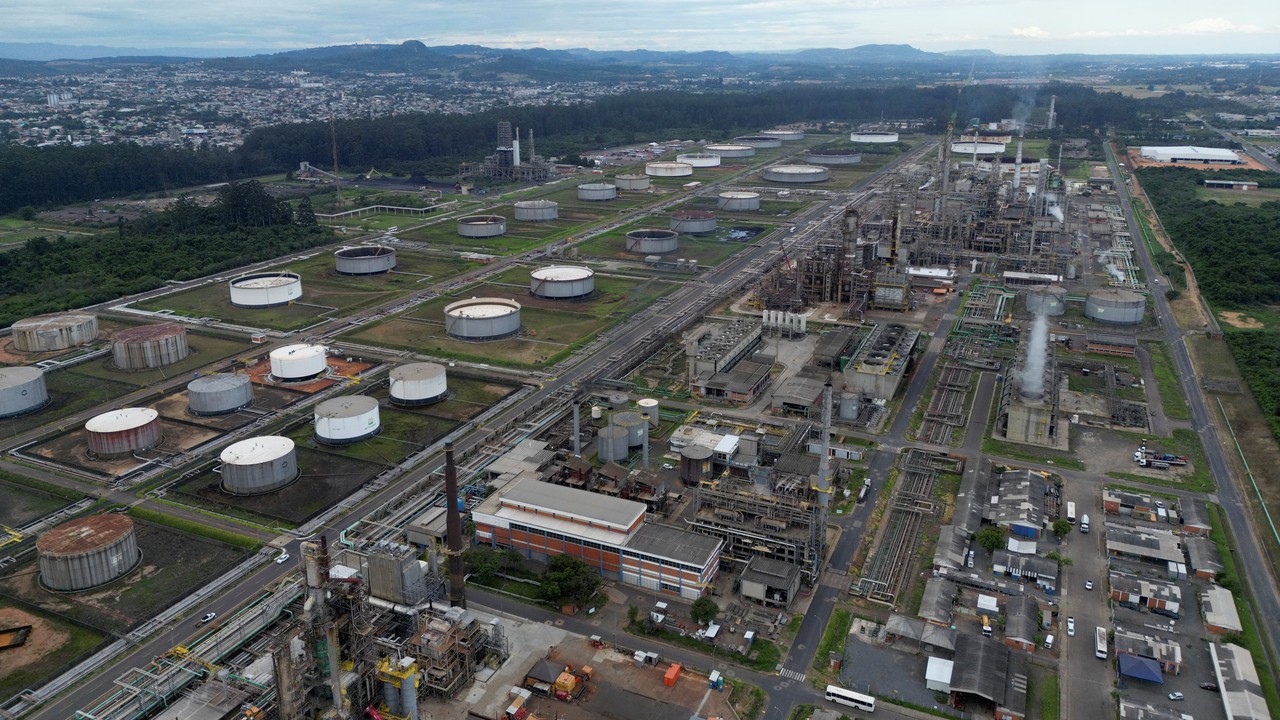



At the same time, companies with more defensive or less commoditized business models benefited from structural factors, such as operational efficiency, regulatory changes, and re-pricing of contracts.
Surplus Supply and Geopolitical Premium Shaped Oil Prices
The backdrop of 2025 was marked by strengthening expectations of surplus supply in the global oil market. However, these projections were temporarily mitigated by a high geopolitical premium throughout the year.
This premium peaked in June during the 12-day war between the United States and Iran, which brought volatility and supported prices at certain times.
As the end of the year approached, the scenario changed. A calmer geopolitical environment, combined with successive production increases by the Organization of the Petroleum Exporting Countries and allies (OPEC+), made the surplus supply more visible. As a result, global inventories grew, putting pressure on commodity prices.
In this context, the performance of oil and gas sector stocks in Latin America began to more clearly reflect this dynamic. Companies with greater direct exposure to oil prices suffered more, while those less tied to the commodity managed to stand out.
Less Commoditized Companies Lead 2025 Gains
Within this challenging environment for oil, some companies achieved significant results. The main winner of 2025, according to the BBI survey, was the fuel distribution company Vibra (VBBR3).
The company’s shares accumulated a 65% increase for the year, far surpassing both the MSCI for Latin America and the Ibovespa.
Vibra’s performance was driven primarily by success in combating informality in the fuel distribution sector. This move strengthened the formal market agents, increasing volumes and improving margins.
Just behind, the silver medal went to OceanPact (OPCT3), which recorded a 62% appreciation in 2025. The company benefited from strong re-pricing of day rate contracts, improved spot contract management, and a favorable outlook for shareholder remuneration.
Ultrapar (UGPA3) completed the podium, taking home the bronze. Its shares ended the year in line with the Ibovespa, with a 44% increase. The positive outlook for the fuel distribution segment helped, but part of that potential was neutralized by risks related to capital allocation.
In general, the other names in the sector showed performance below the indices or negative results when measured in dollars, reinforcing the market’s selectivity in a year marked by pressure on oil.
Oil Proxies Face the Worst Performance of the Year
On the other end of the ranking, the so-called “oil proxies” performed much weaker in 2025. The worst results came from the smaller independent producers, known as junior E&Ps. This group accumulated an 18% decline for the year, reflecting greater direct exposure to fluctuations in oil prices.
Chemical companies also faced difficulties, with an average decline of 6%. The sector was impacted by the prospect of prolonged global surplus supply and still depressed cycles, which pressured margins and profitability.
State-owned oil companies saw a more moderate decline of 3%. This relatively better performance was largely influenced by Ecopetrol, which rose 18% for the year.
The appreciation was associated with the political cycle in Colombia, which brought specific expectations for the company.
BBI Recommendations: Corrections, Adjustments, and Frustrations Over the Year
In Bradesco BBI’s assessment, the main recommendations made throughout 2025 worked well, despite some missteps along the way. During the year, the firm consistently recommended building positions in Vibra, PRIO (PRIO3), and OceanPact, with price targets of R$ 36, R$ 62, and R$ 10, respectively.
Among the clearest successes, the bank highlights Vibra and OceanPact, whose fundamentals and positive vectors were confirmed throughout the year.
On the other hand, PRIO ended up being penalized by the drop in oil prices. Nevertheless, it managed to achieve a positive performance of 9% in dollars, while its Latin American peers, except for Ecopetrol, recorded significant declines.
BBI also started 2025 with Petrobras among its main bets. However, the stock was removed from the list in the first half of the year.
Despite good operational results, high capex levels and growing expectations for mergers and acquisitions reduced the dividend potential. Additionally, the stock became increasingly sensitive to the electoral cycle in 2026.
Preferences for 2026 Maintain Focus Outside Pure Oil
Looking ahead to 2026, Bradesco BBI enters the new year with the same preferences as the end of 2025: Vibra, PRIO, and OceanPact, with Vibra holding the top choice position.
The bank particularly highlights Brazil’s advances in combating informality in the fuel market. This issue gained momentum in 2025 with a series of legal and administrative reforms. As a result, formal distributors like Vibra, Ipiranga, and Raízen have already begun to reap the benefits of this movement.
The expectation is that, in 2026, there will be an intensification of this process, with greater volumes, more robust margins, growth in NOPAT and ROIC, and a reduction in capital costs. This set of factors may open space for multiple expansions in the sector.
PRIO and OceanPact: Growth, Production, and Shareholder Remuneration
In the case of PRIO, BBI assesses that the company should be the one that most compensates for a scenario of weak oil prices through production growth. The projection is for a 60% increase in average production in 2026 compared to 2025, reaching 173,000 barrels of oil equivalent per day. Additionally, the company has the lowest maintenance cost per barrel in the region. “Even so, the stock should continue to be pressured by the negative oil scenario, although it is expected to stand out again in relative terms.”
For OceanPact, the expectation is for a year marked by growth and dividends. In addition to new contracts in the inspection services area, BBI projects a net receipt of R$ 328 million related to a legal dispute with Petrobras.
This resource should significantly reduce leverage and open up space for a more aggressive shareholder remuneration policy.
The bank estimates that the company could return more than 80% of its market value to shareholders over the next three years, reinforcing the stock’s appeal even in a challenging oil environment.
Structural Themes That Should Influence the Sector in 2026
Finally, BBI’s report outlines seven major themes that are expected to guide the oil and gas sector in 2026. Among them are the political cycles in Brazil and Colombia, the global dynamics of oil supply and demand, the prospect of falling interest rates, and the ongoing advances in combating informality in the fuel market.
Also on the radar are the performance of the Argentine economy under the Milei government and a potentially favorable environment for mergers and acquisitions.
This movement is expected to gain momentum, especially if oil prices decline more sharply over the next year.








