Portuguese
  Spanish


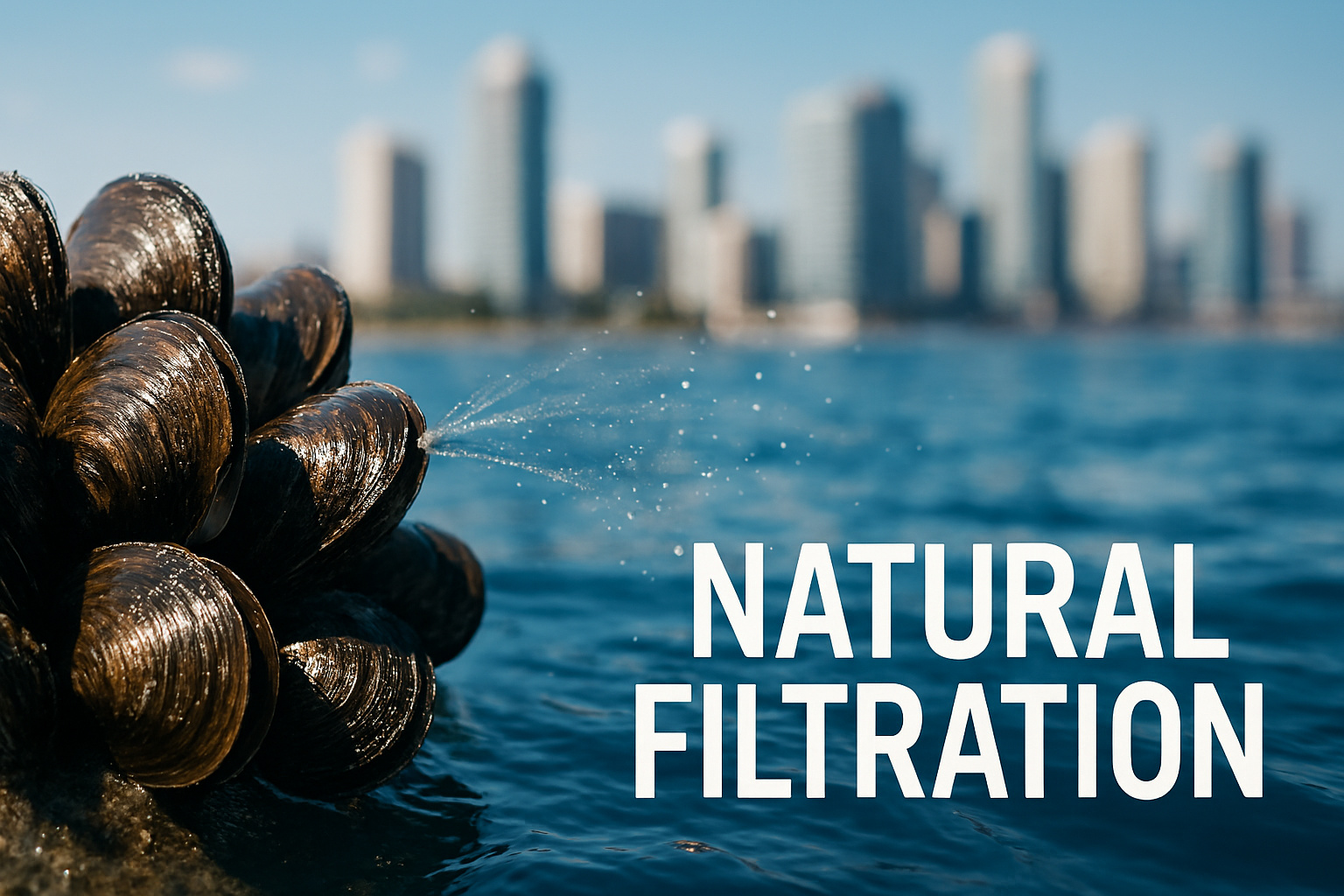


Many People Overlook This, But A Simple Mussel Can Filter Entire Cities: Bivalves That Clean Water, Reduce Algae, And Provide Giant Ecological Services
When discussing “organisms that modify ecosystems,” the imagination often goes to large predators, invasive plants, or highly mobile animals. However, one of the world’s greatest environmental transformers is tiny, stationary, and silent: the mussel. This bivalve, found on coastlines, estuaries, lakes, and farming platforms, filters enormous volumes of water to obtain food, and in this process, it ends up performing something much greater, a kind of natural water treatment service.
The ecological logic is simple and powerful: by pumping water through its gills, the mussel captures phytoplankton, bacteria, microalgae, and sediments, removing these materials from the water column and clarifying the environment. On an individual scale, this is already impressive, but in dense aggregations, the effect is almost industrial.
Mass Filtration: Numbers That Impress
The numbers vary by species, temperature, and turbidity, but studies from NOAA, FAO, and aquaculture institutes show that:
-
California Startup Develops Giant “Space Sling” to Launch Vehicles at Mach 6, Reducing Fuel Use and Enabling Thousands of Satellite Deployments

-
ChatGPT Alerts FBI to Prevent Planned Murder of 8-Year-Old in Brazil’s Espírito Santo
-
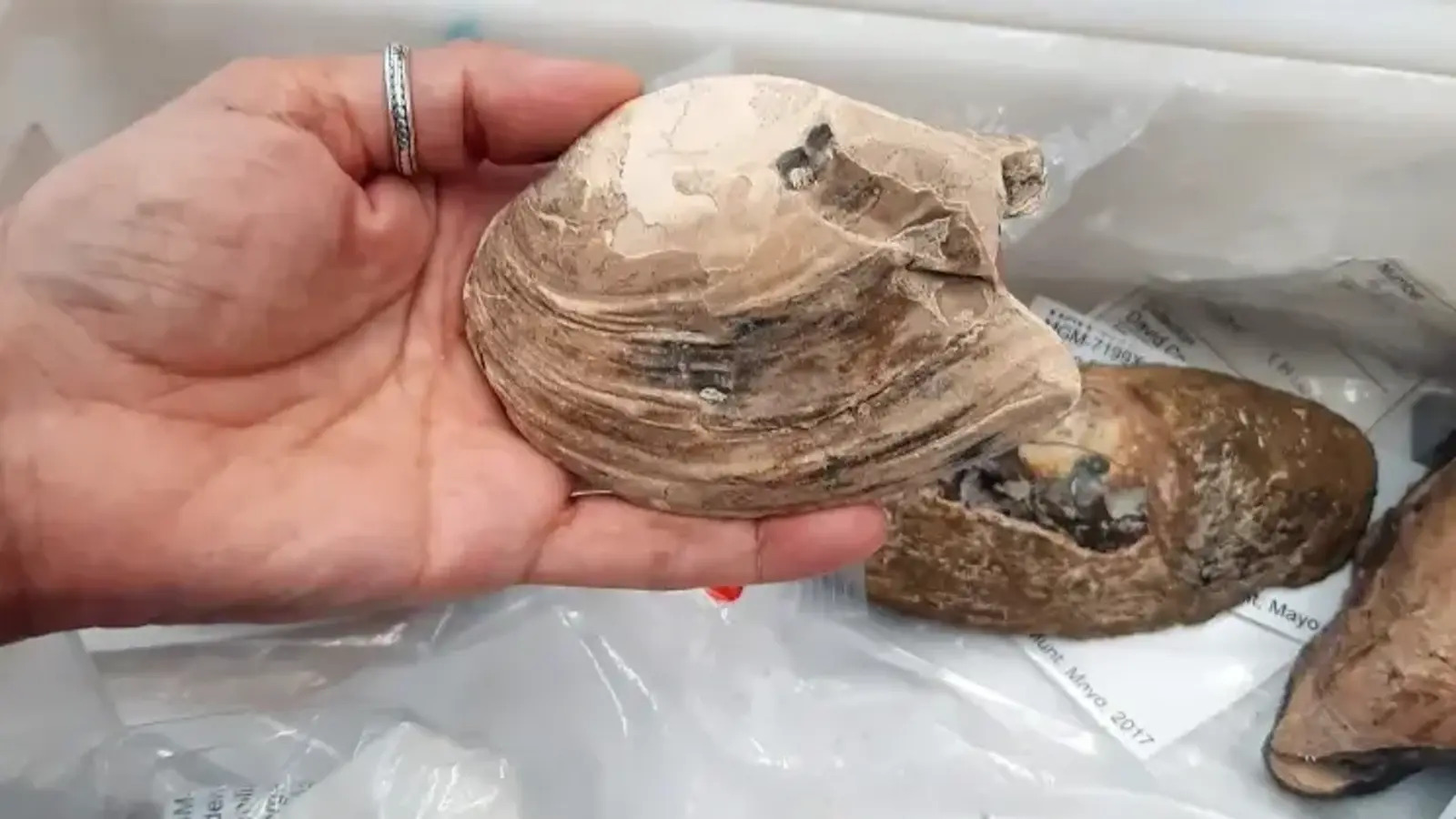
Scientists Discover 125-Million-Year-Old “Pregnant Fossil” with Preserved Embryos and Microscopic Larvae Inside Mollusk in England

-
17-Year-Old Justin Bernstein Develops Bacteria to Produce Glass on Arctic Ice to Reflect Sunlight, Wins $50,000 U.S. Scholarship




• a single mussel can filter 20 to 50 liters of water per day
• 1 square meter of natural beds can contain hundreds of individuals
• mussel farming can reach tens of thousands of individuals per hectare
In other words, in just 24 hours, a dense community of mussels can filter volumes equivalent to entire swimming pools, and over weeks, entire ecosystems. That’s why biologists describe these animals as “discreet ecosystem engineers”: they transform the environment without moving or making noise.
The “Invisible Cleaning” And The Clearer Water
When mussels reduce suspended particles, two things happen:
- the water becomes clearer, allowing light to enter
- macroalgae and seagrasses (such as Zostera) begin to grow again
This process can restore entire habitats, benefiting juvenile fish, crustaceans, and the entire food web. This is one of the reasons why estuaries with healthy mussel beds have greater biodiversity than degraded areas.
Valuable And Underestimated Ecosystem Services
Among the main recognized benefits are:
✔ removal of fine particles (turbidity)
✔ reduction of algal blooms
✔ reduction of pathogenic bacteria in some contexts
✔ increased water transparency
✔ ecological cascades for fish and aquatic vegetation
✔ stabilization of structures, substrates, and stable beds
This has led researchers to consider the use of filter-feeding mollusks in environmental restoration projects, especially in places affected by eutrophication.
Mussel Farming: When The “Living Filter” Becomes An Industry
Besides the environmental services, there is an economic component: mussel farming, the practice of growing mussels for human consumption. Countries such as Chile, Spain, Italy, New Zealand, and China have long traditions and have integrated farming into sustainable systems called IMTA (Integrated Multi-Trophic Aquaculture), where waste from one species becomes food for another.
In this model, mussels consume excess phytoplankton, cleaning the water while producing high-value protein, with a very low environmental footprint.
Not Everything Is Rosy: Impacts And Risks
There are also negative effects: introduction of invasive species, such as the golden mussel in Brazil and the zebra mussel in the U.S., can block pipelines, alter food chains, and compete with native species. The same mechanism that cleans the water can disrupt ecosystems outside their native range.
In other words: mussels are powerful, but they need to be in the right place.
What makes this topic so fascinating is the contrast: an organism just a few centimeters long, motionless and silent, can do the work of a treatment plant, and almost no one notices.
From an ecological standpoint, mussels connect water chemistry, biology, economics, and sustainability, showing that nature’s engineering is as efficient as it is complex.
For those studying estuary restoration, aquaculture, or ecosystem services, the mussel is no longer just food but becomes biological infrastructure — perhaps one of the most elegant that exists.