






 Portuguese
  Spanish


New Sustainable Method Uses Wind Energy to Repurpose Industrial Gases, Converting Them into Raw Materials for Fuels and Products Like Cosmetics and Plastics
Industries have always been pointed out as major contributors to climate change. But what if their emissions could be converted into useful products? Researchers are now exploring ways to transform industrial waste gases into essential items like shampoos, detergents, and fuels.
A study led by Professor Jhuma Sadhukhan and Professor Jin Xuan from the University of Surrey evaluated the environmental benefits of converting CO₂ emissions into valuable chemical ingredients.
For the first time, scientists conducted a comprehensive life cycle analysis of repurposing waste gases from steel mills and paper factories to produce surfactants, essential components of consumer products.
-
Brazil Aims to Become a Global Exporter of Green Hydrogen, the Clean Fuel Set to Generate Billions

-
Brazil to Hold First Offshore Wind Energy Auction, Aiming to Become the Country’s New Hydropower
-
Brazil to Hold First Auction for Batteries to Store Solar and Wind Energy from the Northeast
-
Brazilian scientists are simultaneously advancing two research projects on clean hydrogen and driving solutions that could transform the energy matrix, enhance industrial competitiveness, and accelerate large-scale emission reduction targets.

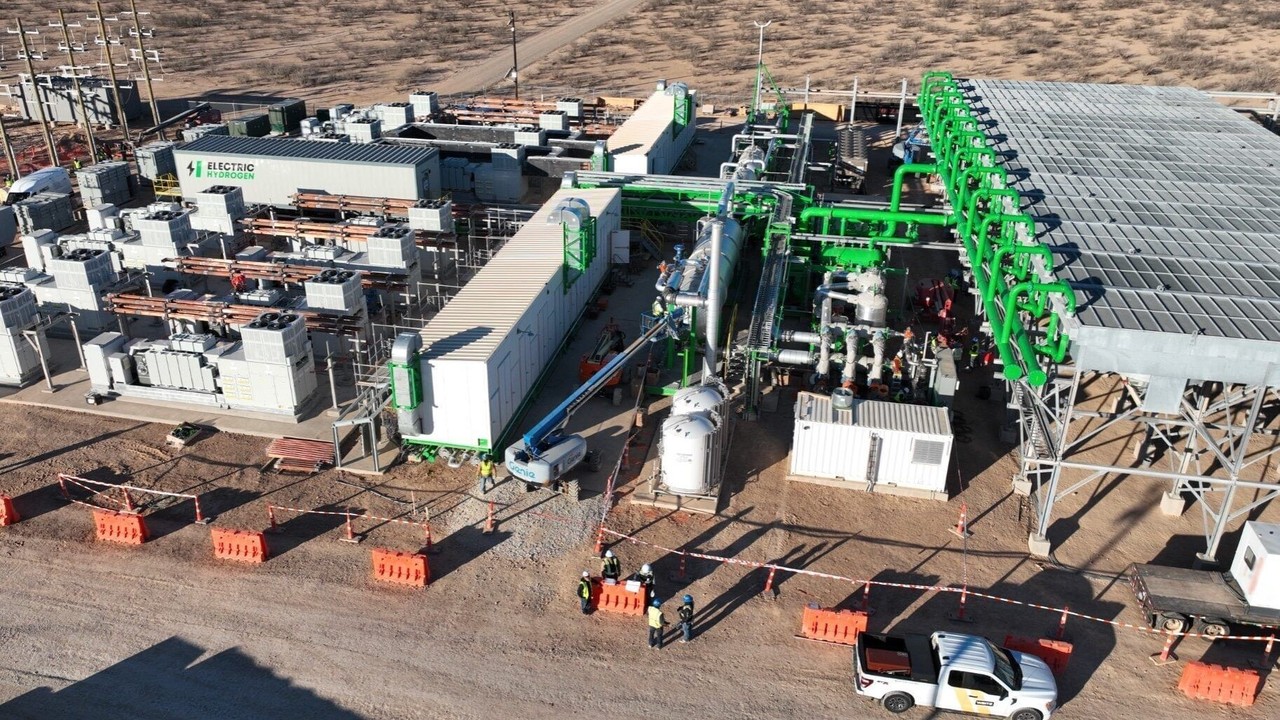



Transformation of Pollution into Products
The study proposes an innovative process to produce ethoxylated alcohol (AE7), a key ingredient in liquid detergents, and low to medium distillate fuel. Traditionally, AE7 is produced from fossil-based or partially biological materials.
In this new method, however, CO₂ captured from the combustion gases of paper and steel industries was repurposed.
The technique uses Fischer-Tropsch (FT) synthesis, converting CO₂ into syngas, which then transforms into alkanes and ultimately into AE7. This approach creates a more sustainable alternative to conventional surfactant production and also generates fuel as a byproduct.
The yields varied by industry. For paper mills, the results showed 3.7% AE7 and 3.4% fuel. For steel mills, the figures were higher: 8.0% for AE7 and 9.5% for fuel.
Conversion of Waste Gases: Positive Environmental Impact
The life cycle assessment conducted by the researchers revealed significant environmental benefits when replacing traditional processes with this new method of converting waste gases.
According to Professor Xi, Associate Vice President for Research and Innovation at the university, converting residual CO₂ helps create a circular carbon economy, where waste becomes inputs for new products and fuels.
The energy needed to power these reactions comes from renewable sources, such as wind. To process one kilogram of combustion gas from the paper industry, 13.4 kWh is consumed. In the steel industry, this value rises to 33.3 kWh.
The use of clean energy prevents the environmental gains from being offset by fossil fuel consumption.
The results indicate that this technology can significantly reduce the global warming potential. For paper mills, the reduction reaches 82%. For steel mills, the decline is nearly 50%, compared to traditional fossil fuel-based surfactant production.
A unique feature of the system applied to paper mills is that the generated CO₂ is biogenic, meaning it occurs naturally. In the steel industry, however, the CO₂ is fossil-based, impacting the environmental outcomes.
Challenges and High Costs
Despite the advancements, large-scale implementation faces obstacles. A techno-economic analysis indicated that converting waste gases into surfactants has high costs. Additionally, the supply of hydrogen, essential for the process, is limited.
Another challenge is the high energy demand. The study emphasizes the need for investments in renewable energy infrastructure to make this technology viable in the long run.
According to Xi, fossil fuels have been the backbone of manufacturing for decades, not just as an energy source but also as an essential component of everyday products. However, this dependency comes at a high environmental cost.
A parallel study by the University of Surrey estimated that capturing CO₂ costs US$ 8 per kilogram. In comparison, fossil fuel-based sources have a lower cost of US$ 3.75 per kilogram.
The research paves the way for a more sustainable future by suggesting new ways to repurpose industrial waste gases. The technology still faces economic and technical challenges, but it represents a promising advancement in the search for solutions to reduce the environmental impact of industry.
Information from Interesting Engineering.




