Portuguese
  Spanish


An Australian strategy against feral cats combines science, technology, and environmental control in remote areas, while reigniting the debate on biodiversity, invasive species, and the limits of actions used to protect threatened native animals.
Australia uses toxic baits in the form of small meat sausages as one of the control tools against feral cats, invasive animals that live and reproduce in the wild.
The measure is part of a national strategy to reduce the pressure of these predators on native species, especially in extensive and hard-to-manage areas, where traps, fences, and field teams have limited reach.
The case gained international attention in April 2019, when CBS News reported the use of poisoned baits dropped in remote regions to combat the feral cat population.
-
NASA Rover Captures “Tired Face” on Mars, Highlighting Human Brain’s Tendency to See Faces in Rock Formations

-
Ancient Stone City in the Desert, Once Home to 30,000, Puzzles Scientists with Nabateans’ Water Mastery 2,000 Years Ago

-
Ancient Creature Thought Extinct Since Dinosaur Era Reappears, Baffling Scientists
-
India Deploys Giant Fabric Tubes Filled with Sand to Combat Coastal Erosion and Rebuild Disappearing Beaches





In 2026, the topic received new updates from official sources: the Feral Cat Taskforce page, the group that coordinates actions against feral cats in Australia, was updated on June 3rd, and the Tasmanian government reported in the same month that Little Dog Island was declared free of these predators after an eradication and environmental monitoring project.
According to the Department of Climate Change, Energy, the Environment and Water of Australia, feral cats kill more than 1.5 billion native mammals, birds, reptiles, and frogs per year.
The agency also estimates the annual death of 1.1 billion invertebrates and recognizes predation by these felines as a threat to more than 200 threatened national species and 37 listed migratory species.
The same department states that feral cats have contributed to the extinction of more than 20 species of Australian mammals.
Among the affected groups are threatened terrestrial animals, such as bilbies, bandicoots, bettongs, and numbats, cited in official documents as examples of species pressured by the presence of these predators.
How the baits against feral cats work in Australia
The Curiosity® bait was developed as a small meat sausage with a rigid plastic pellet inside.
This pellet encapsulates a toxin and was designed to exploit differences in the way cats and some native animals consume food.
According to the Australian government, the proposal is to reduce the risk of poisoning non-target species, as many native animals tend to chew and reject hard parts of the bait.
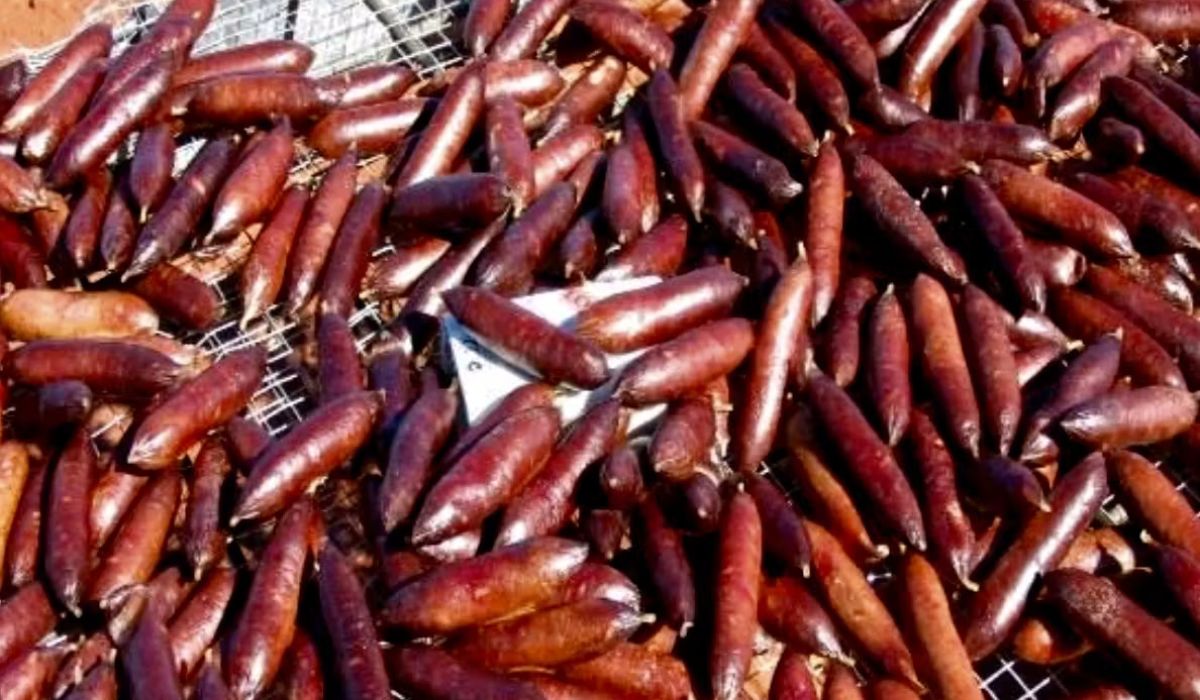
The toxin used in Curiosity® is PAPP, an acronym for para-aminopropiophenone.
In simple terms, the substance interferes with the transport of oxygen through the blood.
The product, according to official information, requires environmental assessment, usage authorization, and application within defined rules for controlling invasive species.
There is also Eradicat®, a bait used in Western Australia.
The product has a similar shape but uses 1080, a synthetic toxin related to compounds that naturally occur in some plants in the region.
As part of the local fauna has greater tolerance to this substance, its use can be considered in specific contexts, although the government warns that toxic baits may pose a risk to non-target species in certain areas.
Why feral cats threaten native fauna
Feral cats are the same species as domestic cats but live without relying on humans, hunt to survive, and occupy different environments.
In Australia, they appear in forests, fields, wetlands, arid regions, and coastal zones, which makes control more complex and expensive.
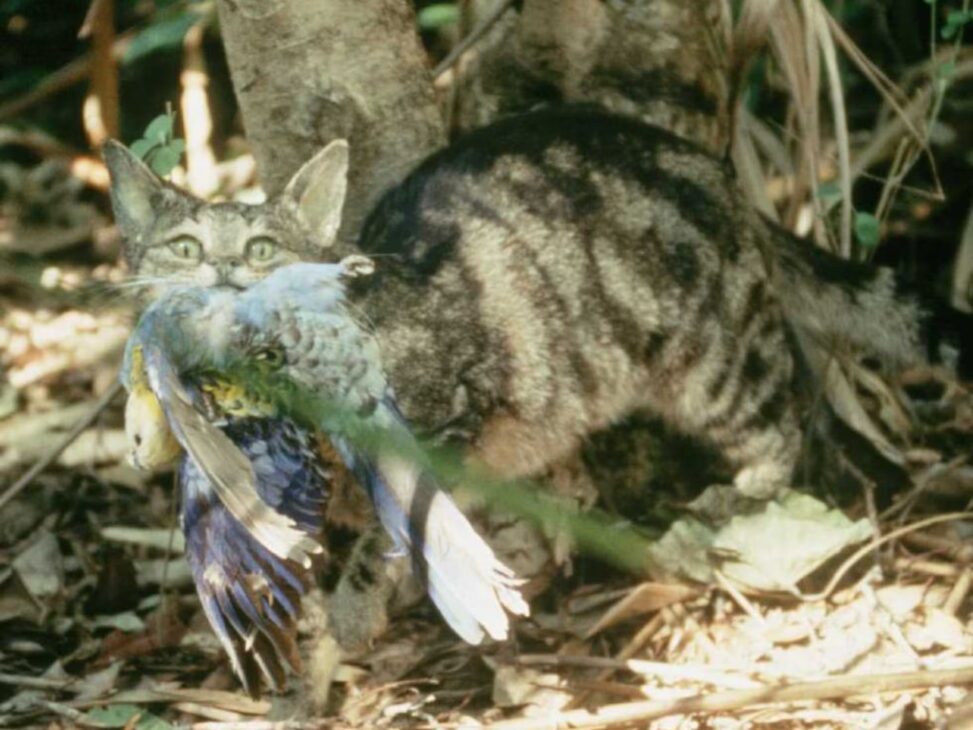
The difficulty is not just in the number of animals.
Feral cats tend to be solitary, mainly active at night, and found in low densities spread over large areas.
This combination reduces the efficiency of methods such as manual capture and direct search, according to the Australian government.
The environmental impact occurs because many Australian native species evolved without contact with feline predators.
Small mammals, ground-nesting birds, reptiles, and amphibians may be more vulnerable to hunting.
Additionally, feral cats can transmit infectious diseases to native animals, domestic livestock, and humans, according to the Australian environmental department.
In federal legislation, predation by feral cats is classified as a key threatening process.
This category, provided for in the Environmental Protection and Biodiversity Conservation Act of 1999, allows for the development of national plans to reduce threats to the survival, abundance, or evolution of native species and ecological communities.
National plan coordinates actions against invasive species
The 2024 Threat Abatement Plan for predation by feral cats replaced the 2015 version and began to guide the national response to the problem.
The document was developed based on a review of the previous plan, recent scientific evidence, and a public consultation conducted between September and December 2023, which received 1,628 responses.
For the first time, such a plan was produced jointly by the federal government and states and territories.
New South Wales, Tasmania, Western Australia, Victoria, South Australia, Northern Territory, and Australian Capital Territory joined the initiative, according to the federal department.
The policy also includes the Feral Cat Taskforce, created to support the coordination of actions, share information, and promote good management practices.
The task force’s official page was updated on June 3, 2026, and states that the group supports the Threatened Species Commissioner, Australian governments, and organizations involved in biodiversity protection.
Control does not rely solely on baits.
The tools cited by the government include traps, shooting, predator-proof fences, refuge areas for threatened species, island eradication, and automated equipment.
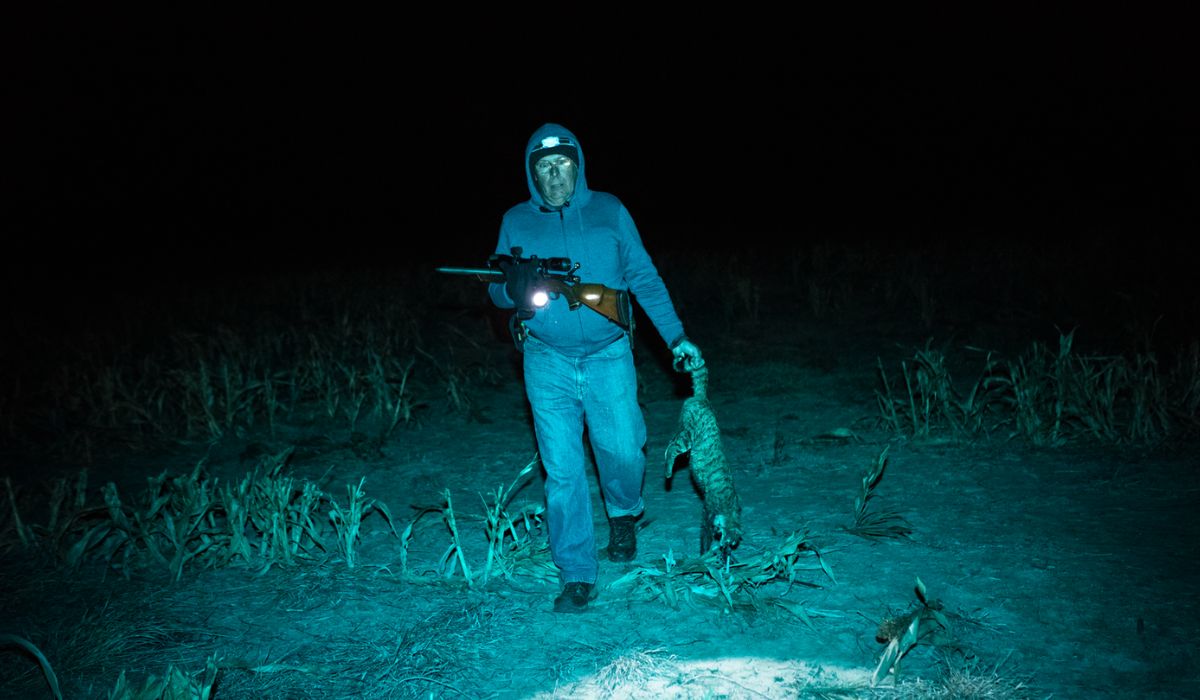
In large areas, bait poisoning is described by the environmental agency as the most effective form of control, provided it is applied according to rules and risk assessments.


Little Dog Island shows results of environmental management
A significant update occurred on Little Dog Island, an 83-hectare island in the Bass Strait, northeast of Tasmania.
The Tasmanian government reported in June 2026 that the project to eradicate feral cats from the island was considered successful.
The area is part of the Furneaux group and hosts colonies of seabirds, including shearwaters and returning little penguins.
Control actions took place during the winters of 2022 and 2023.
After the removal of the animals, teams conducted monitoring with motion sensor cameras, sniffer dogs, field searches, night lighting, and thermal imaging by drones.
After more than two years without records of feral cats, the island was declared free of these predators.
To ABC News, biologist Sue Robinson from Biosecurity Tasmania stated that 21 cats were captured and humanely euthanized during the control period.
“In 83 hectares, that’s a lot of cats,” she said.
The researcher also declared that the animals likely caused significant damage to the local fauna, an assessment based on the density of cats found on the island.
The case of Little Dog Island helps to understand why islands receive attention in management programs.
In these environments, the removal of invasive predators can be monitored more precisely than in open continental areas.
Even so, operations of this type depend on subsequent monitoring, as recolonization by invasive species and changes in the local balance need to be evaluated over time.
Technology applied to the control of invasive cats
The image of toxic sausages draws attention because it summarizes a management choice considered sensitive due to the involvement of culling invasive animals.
From the perspective of Australian authorities, the measure seeks to reduce the mortality of threatened native species.
Animal protection entities, on the other hand, often question methods with poison and advocate for alternatives considered less lethal.
The development of the baits also shows the attempt to make control more selective.
In the case of Curiosity®, the rigid capsule was designed to reduce ingestion by native animals.
The Felixer™, another piece of equipment mentioned by the Australian government, uses automated identification to recognize cats and foxes before releasing a measured dose of toxic gel.
The management of feral cats, therefore, brings together environmental data, legislation, technology, and public debate.
Australia treats these felines as an established threat to biodiversity and maintains actions to reduce their impacts, but the topic remains surrounded by controversies over animal welfare, the effectiveness of methods, and the protection of native species.