Portuguese
  Spanish


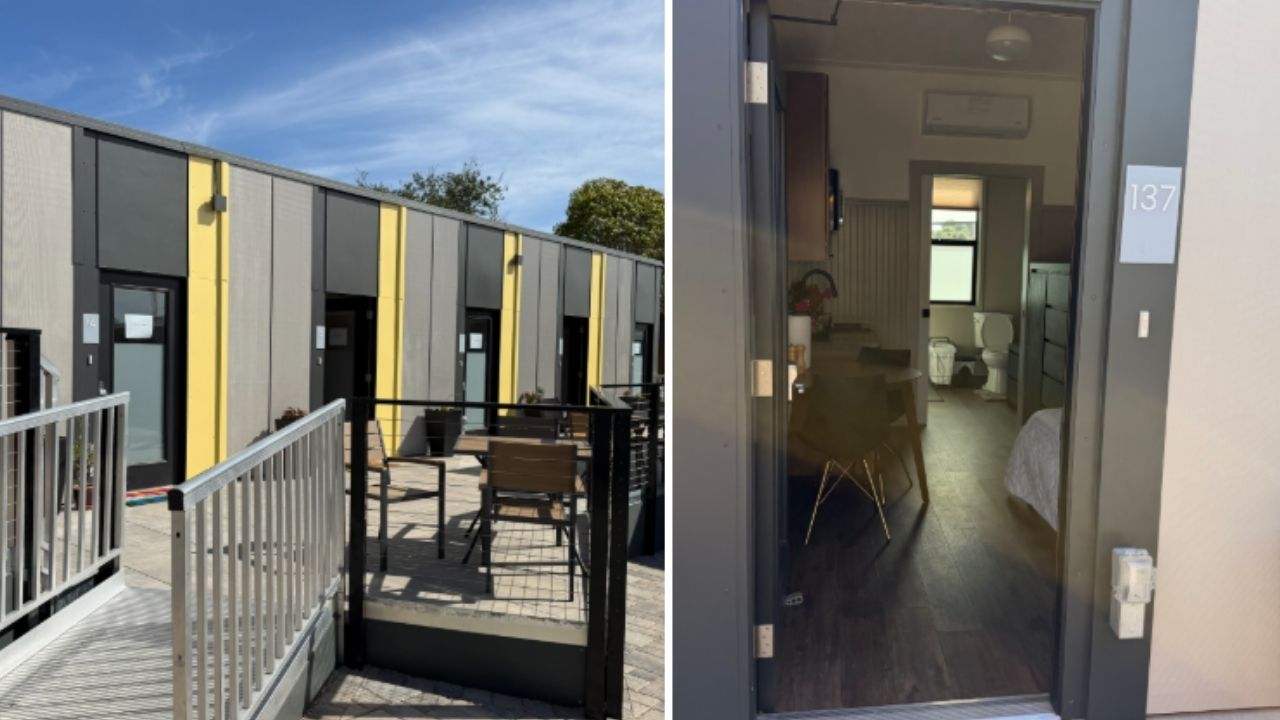

Report from The US Sun published on 06/11/2026, shows 3D printed micro homes at Welcome Home Village in San Luis Obispo, with 40 permanent units, 14 temporary, construction in 10 months, financing of $13.3 million, and modules of about 180 square feet with private bathroom and compact kitchen.
The 3D printed micro homes at Welcome Home Village were inaugurated on the central coast of California, in San Luis Obispo, within the County Health Agency Campus. The project includes 40 permanent supportive housing units and 14 temporary units, with the capacity to accommodate up to 54 people.
The report from The US Sun, published on June 11, 2026, states that the village was built after three years of development and had its construction period reduced to 10 months. The most relevant point is the combination of off-site 3D printing, simultaneous site preparation, and compact units with their own housing structure.
Micro homes were printed off-site while the land was being prepared
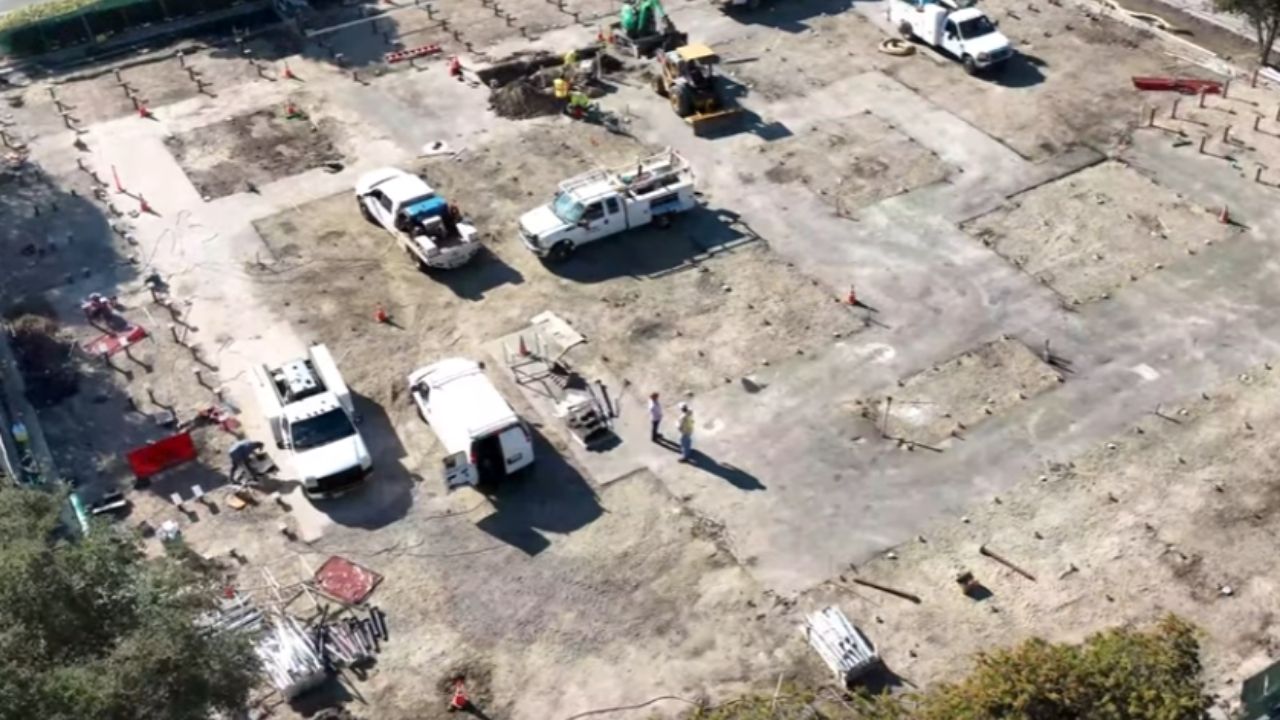
The project draws attention because the micro homes were printed off-site while the site preparation was advancing. According to Margaret Shepard-Moore, program manager of Welcome Home Village, this model helped shorten the construction schedule to 10 months.
-
Flushing Toilet Paper in Brazil Could Gradually Damage Home Plumbing, Experts Warn

-
Meet the Fascinating Cassowary: The Bird That Resembles a Dinosaur, Runs Like an Athlete, Crosses Rivers with Ease, and Plays a Crucial Role in Tropical Forests
-
Brazil Deploys Water-Landing Ambulance Planes in the Amazon, Cutting Travel Time from 3 Hours to 12 Minutes to Reach Isolated Communities

-
Early Commercial Flights Used Wicker Chairs Without Seatbelts to Save Weight Before Modern Safety Standards Transformed Air Travel


This logic changes the traditional construction dynamics. Instead of waiting for all stages to happen one after the other on the same site, part of the unit production occurs in parallel, reducing the time needed to deliver the completed village.
Village combines 40 permanent units and 14 temporary
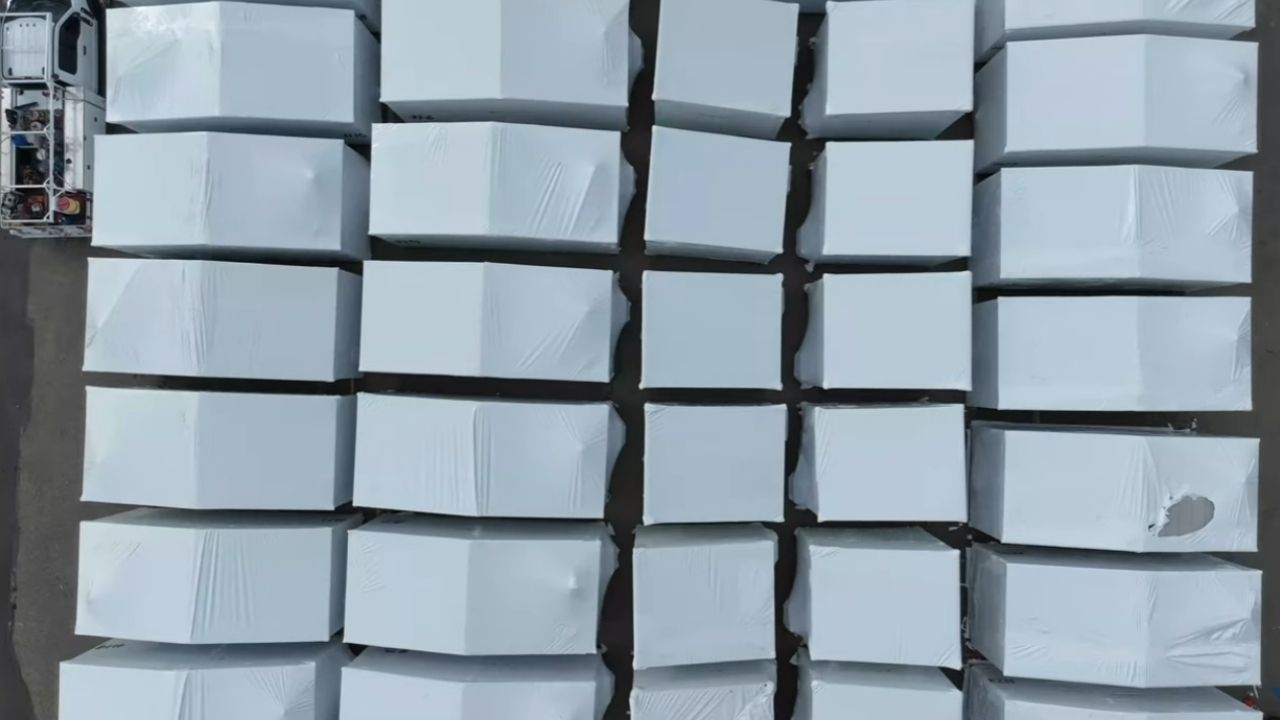
The Welcome Home Village was planned with two types of compact housing. The first part consists of 40 permanent microhouses, intended for indefinite stay, as long as residents follow the program’s guidelines.
The second part includes 14 temporary units, which serve as an intermediate stage until permanent vacancies become available. This organization creates a village with internal circulation between housing phases, instead of a single set of identical units.
Permanent units have private bathroom and compact kitchen
The permanent microhouses are about 180 square feet, approximately 16.7 square meters. According to the source, they feature a private bathroom and compact kitchen, two important elements to differentiate the unit from a collective shelter.
The units also include a bed, storage space, microwave, mini-fridge, built-in heating and air conditioning, as well as furniture. The proposal is to offer a small but autonomous dwelling, with basic functions concentrated in a reduced space.
Temporary units use shared areas
The 14 temporary units follow a different logic. Those living in these modules use communal bathrooms, showers, and kitchens while awaiting potential transfer to a permanent microhouse as availability arises.
This arrangement shows that the project combines compact housing with collective infrastructure. The village does not rely solely on the size of the houses, but also on shared areas that reduce duplications and organize the use of space.
Funding came from a state fund of US$ 13.3 million


The Welcome Home Village was funded by a US$ 13.3 million grant from the Encampment Resolution Fund, linked to the California Interagency Council on Homelessness. The source does not provide the individual cost of each unit, so the most reliable data is the total funding amount mentioned.
This value covers a project that goes beyond the microhouses. The village includes infrastructure, common areas, support services, private offices, and community spaces. Therefore, it is not correct to divide the total funding by the units as if it were just the construction price of each house.
Project was designed not to look institutional
Margaret Shepard-Moore stated to the New Times, as quoted by The US Sun, that the design of the space sought to create a welcoming feeling and avoid an institutional appearance. She even mentioned the height of the fence as part of the concern to ensure the place did not look like a “compound,” that is, a closed complex with a rigid aspect.
This decision falls within the field of architecture and urbanism. In microhouse projects, the design of the surroundings weighs as much as the unit itself, because circulation, open areas, visual scale, and common spaces influence how the village is used daily.
Common areas expand the function of microhouses
In addition to the units, the Welcome Home Village offers a laundry, community dining areas, a room for group activities and training, outdoor social spaces, and a pet area. These elements complement the microhouses and help compensate for the reduced size of the modules.
The village also includes study and work areas, as well as private offices for meetings with case managers and service professionals. The model relies on a combination of compact units and collective structure, and not just the construction of houses in 3D.
Social care is part of the village’s operation
Although the construction focus is on 3D-printed microhouses, the project also includes on-site care. According to information from San Luis Obispo County cited in the report, residents will have individualized case management, mental health assessments, support for substance abuse treatment, access to medical care, job preparation, and housing support.
The source reports that potential residents were identified by outreach teams after months of contact with people living along the Bob Jones Trail. This point should be handled carefully: the central issue is not to dramatize individual stories, but to explain how the village was structured to offer compact housing and integrated services.
Microhouses enter the debate on rapid construction
The case of California shows why 3D printed micro-houses have attracted attention in housing projects. They allow standardized production, faster assembly, and the use of small units with a bathroom, compact kitchen, and basic furniture.
Still, the source does not provide details such as cost per module, exact printing method, or the company responsible for manufacturing the units. What is confirmed is the 10-month timeframe, the use of 3D printed modules off-site, and the delivery of a village with 54 permanent and temporary units.
What this village reveals about the future of compact housing
The micro-houses of Welcome Home Village show an attempt to combine accelerated construction, small modules, collective infrastructure, and service on the same site. The project does not solve the housing shortage in California alone, but it presents a concrete model of a compact village built with 3D printing.
The question remains whether this type of solution should grow in other cities: can 3D printed micro-houses become a real path to accelerate compact housing, or do they still depend too much on public funding, available land, and continuous social management? Leave your opinion in the comments.