






 Portuguese
  Spanish


Under The Sahara, Scientists Identified An Underground Ocean Of Fossil Water Untouched For 40 Thousand Years, Capable Of Transforming Deserts Into Fertile Lands.
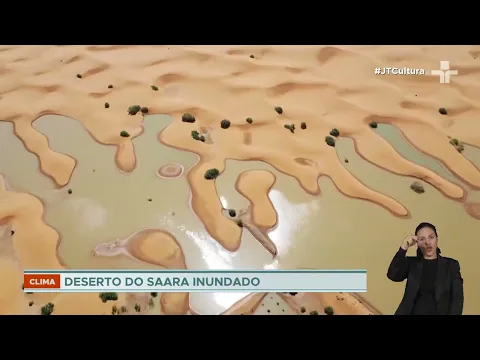
When talking about the Sahara, the immediate image is that of an immense, inhospitable, and arid desert, where life seems to survive by miracle. But beneath this vastness of sand, covering 9 million km², lies a colossal secret: the Nubian Aquifer System, an underground reservoir that stores fossil water trapped for tens of thousands of years. Untouched for up to 40 millennia, this invisible ocean could hold the key to transforming unproductive land into fertile areas and supplying millions of people in one of the driest regions of the planet.
Hidden Oasis Beneath The Sahara
The underground aquifer extends across four countries — Egypt, Libya, Sudan, and Chad — forming one of the largest freshwater deposits in the world. There are billions of cubic meters of water stored in deep sandy rocks, a legacy from past eras when the Sahara was green, covered by forests and lakes.
For scientists, it is a true “fossil underground ocean” because the water is not replenished on a human scale. It was accumulated during wet periods when the region’s climate was radically different from today’s.
-
Tourist Discovers Forgotten Joaquín Sorolla Painting Worth Up to 60,000 Euros While Strolling in Seville

-
Brazil’s Fernando de Noronha Boasts World’s Most Beautiful Beach, Accessible Only by Descending 208 Cliffside Steps and With No Food Vendors Allowed

-
Wave Rock: Australia’s Giant Granite Wave Stands 15 Meters Tall, Spans 110 Meters, and Showcases 2.7 Billion Years of Erosion in the Australian Desert
-
How to Unclog Showerhead Holes Blocked by Limescale and Hard Water Without Replacing or Hiring a Technician


Fossil Water With Transformative Potential
Studies indicate that this aquifer has enough volume to supply populations for centuries. In theory, its exploration could transform deserts into arable areas, creating green belts amid aridity.
There are already projects seeking to utilize this reserve, such as the Great Man-Made River in Libya, a network of pipes and channels that pumps underground water to irrigate desert regions.
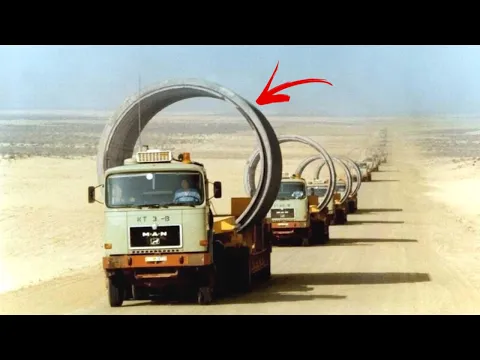

The numbers are impressive: the Libyan project transports more than 6 million cubic meters of water per day. Still, the scale of use is small compared to the vastness of the reservoir.
Strategic Wealth Amid Scarcity
In the 21st century, water has become a strategic resource as valuable as oil or gas. In a world threatened by climate change, extreme droughts, and population growth, having access to giant fossil water reserves is a geopolitical advantage.
The subterranean sea of the Sahara represents not only hope for millions of people suffering from scarcity but also a future point of tension, as the aquifer is shared by four countries with distinct interests.
Challenges And Risks Of Exploration
Despite the transformative potential, experts warn of the risks of exploiting a fossil aquifer. As it is not replenished at a significant pace, it is a finite resource.
If used intensively, it could be depleted in just a few decades. Additionally, accelerated extraction could cause geological imbalances, ground subsidence, and even contamination from minerals present in deeper layers.
The central issue, therefore, is not only technological but also about management. Using this water to transform the Sahara into fertile land requires long-term planning, international cooperation, and sustainable policies.
The Sahara As The Frontier Of Future Agriculture
Still, the existence of a hidden ocean beneath the desert sparks imagination and reignites dreams of transforming the Sahara into an agricultural powerhouse.
In times when desertification threatens productive areas around the world, reversing the logic and “making water spring from the desert” is a tempting possibility.
Irrigation projects, when well-managed, have already shown promising results in pilot areas. Scientists believe that by combining this water with modern irrigation technologies and sustainable agriculture, it would be possible to create agricultural hubs that supply millions of people and reduce pressure on other already burdened regions.
The Last Frontier Of Freshwater?
Under the scorching dunes of the Sahara, there is not only sand and silence. There is an invisible treasure that defies the logic of the desert: a subterranean sea of fossil water, preserved since times when the region was lush.
This reservoir serves as a powerful reminder that the Earth still holds secrets capable of changing the course of humanity.
The lingering question is whether we will be able to use this resource wisely — or whether we will repeat the history of unbounded exploitation until we exhaust one of the last frontiers of freshwater.




Se levarmos em consideração a **** e a cupidez humana, é muito provável que esse recurso seja utilizado de forma ambiciosamente desenfreada com sua finitude acelerada pela ganância! Espero estar errado!
Peguem a experiência da agricultura sintropica que transformou uma área desértica no sertão da Bahia em floresta fabricante de água
Como a natureza é sábia . Tudo no mundo vem da natureza. Somente o homem a destrói.
Então façamos o certo para podermos viver com mais tranquilidade. Pensemos nas futura geração.