






 Portuguese
  Spanish


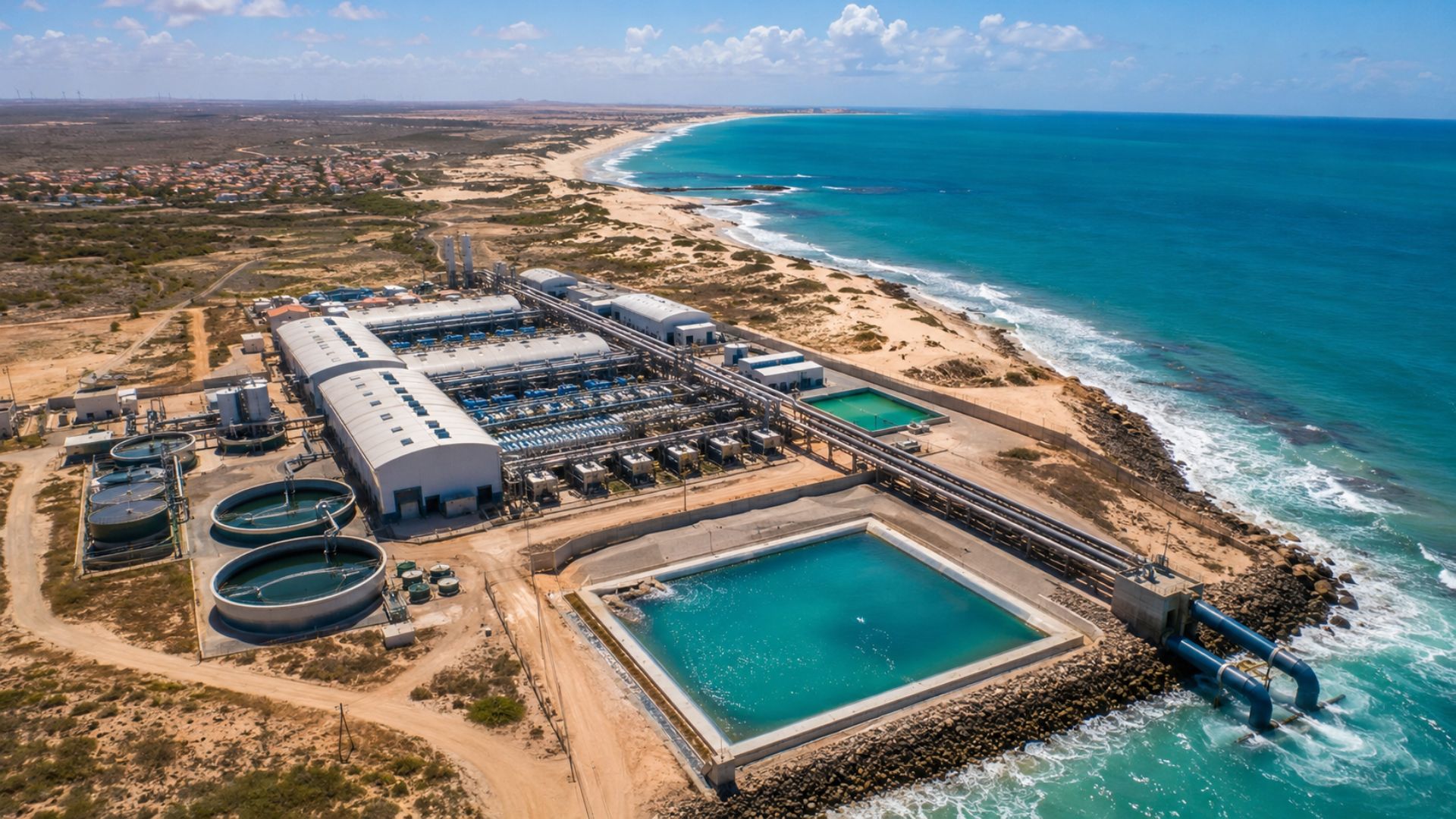
The technology captures water from wells near the sea and transforms it into drinkable water, bringing relief to a city that has depended on buying water for more than six decades. For now, Piauí has only observed closely: the arrival of the solution to the Piauí coast is a future possibility, still without a confirmed date or project.
An unprecedented system that transforms seawater into potable water, implemented in Galinhos, Rio Grande do Norte, was closely examined by technicians from Piauí and may, in the future, supply municipalities on the Piauí coast that suffer from a lack of fresh water. The technology is part of the Água Doce Program, from the federal government, and was presented during a national training that brought together teams from various states in the Northeast.
The technical visit took place between May 27 and 29, 2026, during the X National Training Meeting of the Água Doce Program, held in Natal, Rio Grande do Norte. It is important to clarify, however, that the arrival of this solution to Piauí is, for now, a future prospect, and not a confirmed project: the Piauí technicians went to learn about the system’s operation, and the state may only be included later, as the federal government makes the model available to the northeastern states.
How the system transforms seawater into potable water

The system captures water through wells drilled near the sea and subjects it to a desalination process, which removes the salt and excess minerals, transforming the salty water into potable water, suitable for human consumption, before distributing it to the city’s population.
-
Cuba Implements Sweeping Economic Reforms, Legalizes Holdings and Corporations, Allows Foreign Investment in Private Companies, and Lifts Employee Limits After Over 60 Years

-
8-Year-Old Entrepreneur from Brazil Builds Poultry Business with 80 Birds, Aspires to Study Agronomy at Leading University
-
Couple Transforms School Bus into Mobile Home with Full Bathroom Using YouTube Tutorials, Invests $50,000

-
Chester County, USA, Achieves “Functional Zero” in Chronic Homelessness by 2026 with Housing First, Reducing Shelter Use by 52%




This solution is especially valuable for coastal municipalities that, paradoxically, are surrounded by water but suffer from a scarcity of fresh water.
In Galinhos, the equipment responsible for desalination was imported from Spain and required a complex logistical operation to reach the city, which is located on a hard-to-access peninsula surrounded by moving dunes.
This is a robust technology, designed to tackle a historical problem.
Galinhos: a peninsula thirsty for over 60 years
The choice of Galinhos as a pioneer is not by chance.
Located on a peninsula surrounded by ocean waters, the municipality of Rio Grande do Norte has faced historical limitations in accessing fresh water since its emancipation over 60 years ago, and many residents rely on purchasing mineral water for daily consumption, which weighs on family budgets.
With the new system, Galinhos is expected to become the first urban area in Rio Grande do Norte fully supplied with water from the sea.
The forecast is that the structure will benefit about 1,500 people, with the implementation of approximately 10,000 meters of distribution network.
It is worth noting that the system is still in the implementation and testing phase, meaning it is a very promising solution, but it still needs to prove its full functionality in practice.
What changes (or could change) for Piauí
Here, care must be taken not to create expectations beyond what has been announced.
What happened was a technical visit: the Água Doce Program team in Piauí went to learn about the technology in Galinhos, and the state may, in the future, receive similar systems to serve municipalities on its coast, but there is still no confirmed project, date, or work for the Piauí territory.
According to the coordinator of the Água Doce Program in Piauí, Adalberto Nascimento, the Ministry of Integration and Regional Development should make this model available to the states of the Northeast, and Piauí may be included later.
The visit, therefore, serves to train the team and support the development of future projects, an important initial step, but still far from meaning the concrete installation of the system on the state’s coast.
The Água Doce Program and the fight against scarcity in the Northeast
The Galinhos initiative is part of a broader public policy.
The Água Doce Program is considered one of the main actions of the federal government to ensure water supply in regions of the Brazilian semi-arid, especially in rural and coastal communities where access to potable water is still limited, combining technology, sustainability, and community management.
Throughout 2025, the program recorded the delivery of 141 desalination systems in the semi-arid, benefiting several states, with a highlight on Pernambuco.
Most of these systems treat brackish water from wells, and the novelty of Galinhos is precisely in using seawater as a source.
By 2026, new deliveries are planned in states like Ceará, Pernambuco, and Piauí itself, the latter with systems aimed at inland municipalities, showing that the program continues to expand in the region.
Why this technology is so important
Desalination emerges as a concrete response to a problem that tends to worsen.
With climate change and pressure on water resources, ensuring access to drinking water has become one of the greatest challenges of the century, and technologies capable of utilizing seawater or brackish wells emerge as strategic alternatives, especially for a country with an extensive coastline and a populous semi-arid region like Brazil.
For the communities served, the impact is direct and tangible: it means no longer relying on purchasing water, reducing expenses, and gaining more security and dignity in accessing an essential resource for life.
If the program’s expansion is confirmed, regions historically plagued by the lack of fresh water, in Rio Grande do Norte, Piauí, and throughout the Northeast, may see the sea, once a barrier, as a new and valuable source of supply.
The transformation of seawater into drinking water in Galinhos represents a concrete hope for coastal communities that live with scarcity, and the visit of Piauí technicians signals that this solution may, in the future, reach the coast of Piauí.
Even though it is a project in the initial phase in the state, more a possibility than a reality, the advancement of the Programa Água Doce shows that technology can be a powerful ally in combating an old problem.
It remains to be seen if the promise will be fulfilled and bring quality water to those who need it most.
And you, did you know that there is already a system in Brazil capable of transforming seawater into drinking water? Do you think this technology should be urgently brought to more municipalities in the Northeast that suffer from a lack of water? Leave your comment, tell us if you know communities facing this problem, and share the article with those interested in innovation, sustainability, and water security.


Be the first to react!