






 Portuguese
  Spanish


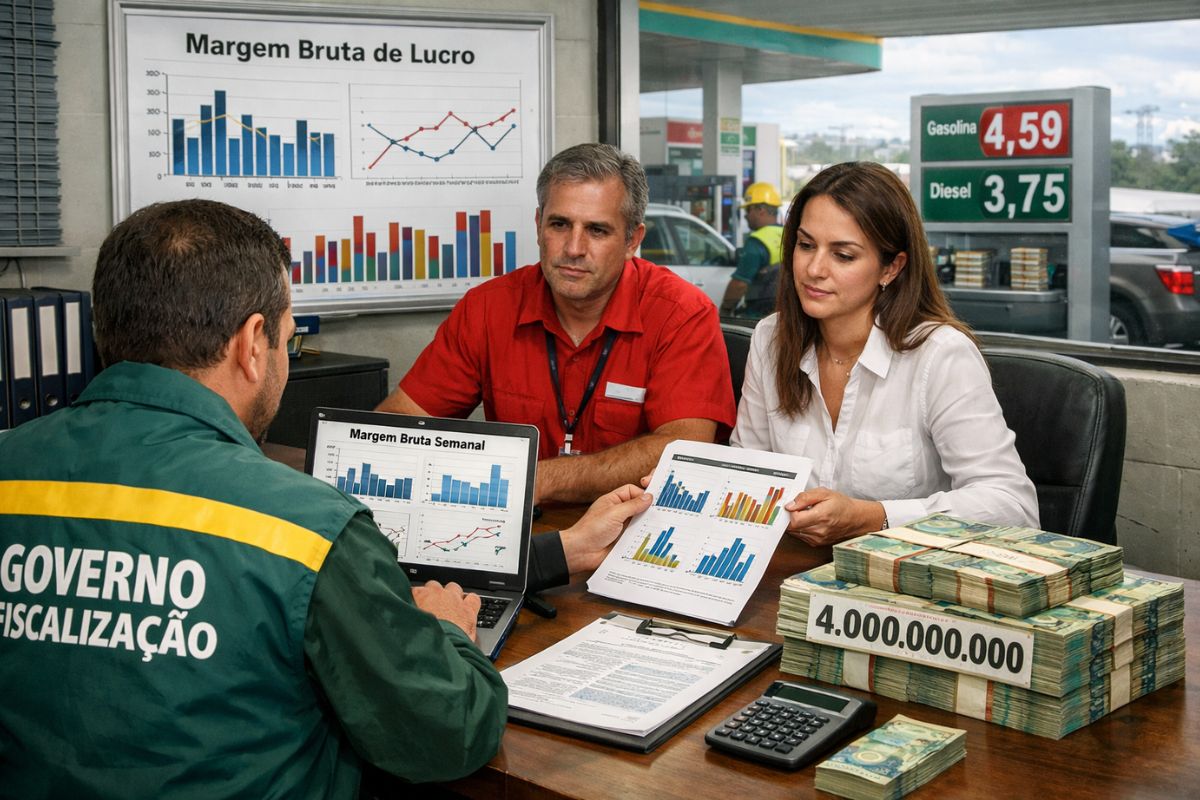

The federal government has begun to require fuel distributors to send weekly reports to ANP on their profits from diesel resale, a mandatory condition to access the subsidy program that already allocates more than R$ 1 per liter in public subsidies and seeks to contain the price at the pump.
The government announced this Tuesday (14) that fuel distributors will have to report weekly to ANP how much they are profiting on each liter of diesel resold to gas stations. The requirement is part of the decree that regulates Provisional Measure 1.349/2026 and serves as a kind of countermeasure: those who wish to purchase diesel or cooking gas with a discount funded by public money must demonstrate that they are not inflating their margin in the middle of the chain. The measure is retroactive and covers all operations carried out since February 22.
In practice, the message is clear. If the government puts billions of reais in subsidies to hold fuel prices during the war in the Middle East, the money needs to show up in the price charged at the pump, and not disappear in the balance sheets of fuel distributors. Those who fail to comply with the rule will be automatically blocked from new purchases of subsidized diesel and LPG. The data will be published by ANP on its portal, open for consultation by any citizen.
How the subsidy works and how much the government is spending
The diesel subsidy package operates on two fronts. Brazilian refineries that join the program receive R$ 0.80 per liter, while importers receive greater support of R$ 1.20 per liter, divided between the Union and state governments.
-
At 14 years old, she worked in a factory in Hong Kong, studied economics abroad, and then entered the Chinese real estate market, which helped change the landscape of Beijing.

-
While NATO secured more than $10 billion in missiles and space surveillance at a single forum, Brazil still spends 1.1% of its GDP on defense and is stalling its own anti-aircraft system.

-
Corn ethanol attracts R$ 23 billion in 21 new plants and prepares for a nearly 50% jump in Brazilian production by 2027, even with high interest rates.
-
A newly opened terminal in the middle of the Amazon has begun transporting soy and corn through Amapá, eyeing the queue of ships that is congesting the ports in the South.


These amounts are added to a previous discount of R$ 0.32 per liter, announced on March 12, raising the total subsidy to R$ 1.12 for those producing in the country and R$ 1.52 for those bringing diesel from abroad.
The decree published this Tuesday also details the rules for cooking gas. The government will allocate R$ 330 million to the LPG subsidy, which represents about R$ 11 off each 13-kilogram cylinder.
In the same press conference, an adjustment in the reference values of the Gás do Povo program was announced, which distributes cylinders for free to more than 15 million families registered in CadÚnico. With the correction, each participating resale will receive an additional transfer of up to R$ 10 per unit sold, which should attract new distribution points in cities still without coverage. The estimated cost of this expansion is R$ 300 million.
The war in the Middle East and the race to contain diesel prices
The pressure on the fuel market in Brazil is a direct consequence of the conflict between the United States, Israel, and Iran, which began at the end of February. The price of oil jumped from around $60 to over $100 in a few weeks, putting pressure on the entire production chain.
Since Brazil still imports about 30% of the diesel it consumes, the effects reached gas stations quickly, especially in regions more dependent on imported products.
The latest survey by ANP, referring to the week ending April 11, indicated diesel at R$ 7.43 on average nationwide, with a decrease of two cents from the previous week. This was the first reduction since the conflict began, which the government interprets as a sign that its measures are starting to produce results.
Gasoline also decreased marginally, to R$ 6.77 per liter. Nevertheless, fuel prices remain well above the levels of January, before the military escalation.
Fuel distributors under scrutiny: record inspection
Alongside the new transparency rules, the government has been conducting an unprecedented inspection offensive.
Since March 9, a national task force has already visited 8,225 gas stations and opened investigations against 378 fuel distributors across the country. The operation brings together state and municipal Procons, Senacon, ANP, the Federal Police, and the Federal Highway Police.
Only ANP, between March 16 and April 10, inspected 947 economic agents among gas stations and fuel distributors. Sixteen distributors, including some of the largest in the sector in Brazil, were fined for signs of abusive price increases.
The penalties for these cases can reach R$ 500 million. In total, more than 5,000 notifications have been issued by the task force, with individual fines reaching R$ 14 million per infraction. The price charged by each company will be compared with the gross margin data that ANP will start receiving weekly.
States have a short deadline to join the program
A second decree released at the press conference organizes the participation of states in the joint subsidy for imported diesel.
Each interested federative unit needs to officially confirm its participation by April 22, next Wednesday. According to the executive secretary of the Ministry of Finance, Rogério Ceron, all 26 states and the Federal District must confirm their participation within the deadline.
State participation is one of the pillars supporting the largest subsidy of the package, which is R$ 1.20 per liter of imported diesel. Without the commitment of the governors, the mechanism loses strength, and the price of imported fuel will continue to pressure the average price that consumers pay at the pump.
In the assessment of Minister Bruno Moretti (Planning), the transparency requirement imposed on fuel distributors is complementary: it is of no use to guarantee a discount at the importer level if the intermediary absorbs the subsidy instead of passing it on.
Supply guaranteed, but permanent monitoring
Minister Alexandre Silveira (Mines and Energy) assured that there is no risk of fuel shortages in the country. For April, the contracted imported diesel already exceeds the national need by 25%, and the contracts signed for May also surpass the projected consumption.
The trend, according to the government, is that the subsidy for imports will further increase this surplus.
Daily monitoring is conducted by a crisis room maintained by the Ministry of Mines and Energy, which gathers representatives from ANP, the Energy Research Company, the Ministry of Justice, and the Civil House.
The monitoring operates with a two-month advance, allowing the government to anticipate fluctuations before they reach fuel prices for the final consumer. In the government’s view, the combination of subsidies, oversight, and forced transparency regarding fuel distributors forms a tripod capable of containing the effects of the war without placing the entire burden on those who fuel their cars or trucks.
And you, do you believe that forcing fuel distributors to show their margins is enough to keep prices at the pump stable, or do you think the government should go further? Leave your opinion in the comments.








