






 Portuguese
  Spanish


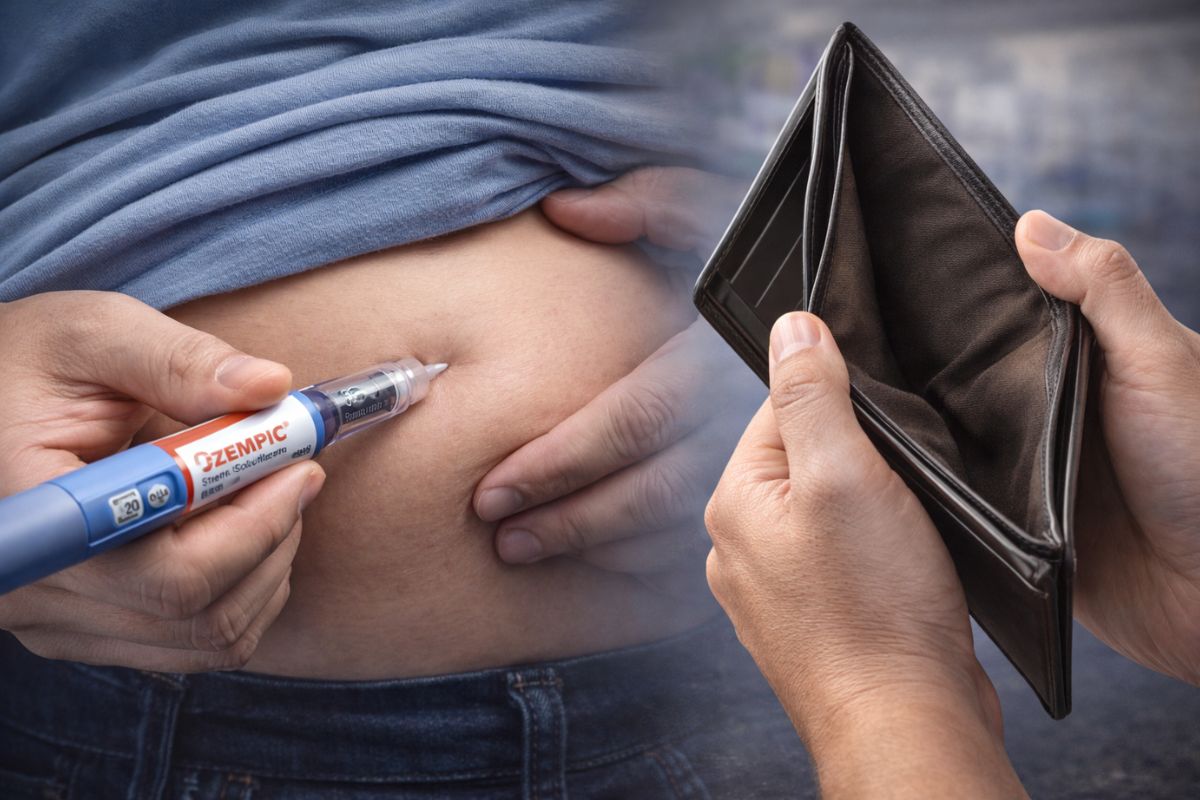

Anvisa denied the registration of three medications based on semaglutide and liraglutide that could serve as more accessible alternatives to Ozempic and Wegovy in Brazil, a decision that maintains the scarcity of competing weight loss pens in the market and prolongs consumers’ dependence on high-cost original products.
Anvisa made public on this Monday (13) the refusal to register three medications intended for the treatment of obesity and type 2 diabetes. The banned products are Plaobes and Lirahyp, manufactured by the Indian company Cipla based on liraglutide, and Embeltah, developed by Dr. Reddy’s from semaglutide. The denial is recorded in Resolution RE No. 1,479 and was published in the Official Gazette of the Union. All three medications aimed to compete with the weight loss pens already circulating in the country.
According to Revista Oeste, the veto comes just as the Brazilian market for weight loss pens is experiencing one of its most tumultuous moments. The patent protection for semaglutide, the substance present in Ozempic and Wegovy, will expire on March 20, 2026, ending twenty years of exclusivity for the Danish company Novo Nordisk. From that date, any laboratory can develop and market medications with the same compound, provided that Anvisa authorizes it. The problem is that, so far, this authorization has not been granted to anyone.
Why Anvisa blocked the three medications
According to the regulatory agency, the laboratories failed to meet the necessary requirements to demonstrate that the medications are safe, work as expected, and have adequate quality.
-
At 14 years old, she worked in a factory in Hong Kong, studied economics abroad, and then entered the Chinese real estate market, which helped change the landscape of Beijing.

-
While NATO secured more than $10 billion in missiles and space surveillance at a single forum, Brazil still spends 1.1% of its GDP on defense and is stalling its own anti-aircraft system.

-
Corn ethanol attracts R$ 23 billion in 21 new plants and prepares for a nearly 50% jump in Brazilian production by 2027, even with high interest rates.
-
A newly opened terminal in the middle of the Amazon has begun transporting soy and corn through Amapá, eyeing the queue of ships that is congesting the ports in the South.


The requests went through the so-called abbreviated registration procedure, in which the company can rely on already published research about the original product instead of conducting all clinical trials from scratch. Still, this shortcut does not exempt the presentation of consistent own evidence.
Anvisa chose not to disclose the technical details that motivated each individual refusal. Regarding semaglutide, the agency had already warned that evaluating synthetic versions of this molecule presents particular difficulties, including the need to ensure the purity of the compound, avoid the formation of molecular aggregates, ensure sterile manufacturing conditions, and control possible adverse immune responses.
None of the major international regulatory agencies have authorized a synthetic analog of semaglutide to date, which helps to understand the heightened caution in Brazil.
The scenario of semaglutide in Brazil: 17 requests and no approvals
Despite the end of patent protection, the path to register new medications with semaglutide in the country remains blocked. There are at least 17 registration requests submitted to Anvisa, and so far all remain unanswered positively.
The majority of the processes are at the stage where the agency sends inquiries to the companies and awaits additional documentation.
The two most advanced cases belong to the pharmaceutical companies EMS and Ávita Care. Anvisa sent technical questions to these laboratories in early March, and the deadline for response is 120 days. In the best-case scenario, a first Brazilian version of injectable semaglutide could reach pharmacy counters between the end of 2026 and the early months of 2027.
EMS has already declared its intention to produce 1 million weight loss pens this year. However, none of this alleviates the immediate pressure, and both Ozempic and Wegovy continue to be practically the only pens with semaglutide available to patients.
The impact on prices: those in need continue to pay dearly
Without competing medications on the shelves, prices remain heavy for consumers.
Currently, a box of Ozempic costs around R$ 825 to just over R$ 1,000, varying according to dosage and point of sale, reflecting a cut of nearly 20% that Novo Nordisk applied in mid-2025, shortly after the entry of the rival Mounjaro from American Eli Lilly. Wegovy, approved specifically for the treatment of obesity, reaches around R$ 2,500 in the 2.4 mg presentation.
For those who depend on these medications due to type 2 diabetes, the reality is even tougher. The growing demand for weight loss has increased the search to the point of causing recurring stock shortages, forcing chronic patients to interrupt their treatments or wander between pharmacies.
Experts point out that the arrival of new manufacturers is the most direct way to increase availability and force a drop in prices, but Anvisa’s denial pushes this horizon further away in the case of the three rejected medications.
Liraglutide: a market with more competition, but still limited
The situation of liraglutide differs from the scenario of semaglutide. There are already five medications authorized in Brazil with this substance, produced by Novo Nordisk and EMS.
At the end of 2024, EMS launched Olire, aimed at obesity, and Lirux, for diabetes, which brought some variety. Even so, the rejection of the two products from Cipla decreases the chances of more intense competition in this niche.
There are still seven more registration requests for liraglutide under evaluation by Anvisa. Although there are already options on the market, liraglutide requires daily injections, unlike semaglutide, which is administered weekly, and this practical difference leads many patients and even doctors to prefer the latter.
This inclination intensifies the pressure on medications like Ozempic and Wegovy, making the approval of semaglutide-based competitors more urgent.
Anvisa tightens oversight on weight loss pens
The rejection of the three medications occurs at the same time that Anvisa is ramping up its regulatory offensive. Days before publishing the refusal, the agency announced that it will review the rules applicable to weight loss pens, with special attention to compounding pharmacies that sell irregular preparations of semaglutide.
Since August 2025, the compounding of this substance has been officially prohibited, although the black market has never completely ceased.
In the first months of 2026, the agency has already conducted eleven inspection operations at establishments linked to the sale of weight loss pens, resulting in eight closures due to technical deviations and quality assurance issues.
Anvisa’s position signals that the rigor in analysis will not be relaxed by the pressure of demand, an approach that protects consumers from products without sufficient proof, but which, in practice, extends the period during which already established medications dominate the market without contest.
What to expect for the remainder of 2026
Projections from UBS BB and IQVIA indicate that the segment of weight loss pens could generate between R$ 15 billion and R$ 20 billion in sales in Brazil throughout 2026.
The pharmaceutical sector is working with the expectation that the first competing versions of semaglutide will receive the green light from Anvisa later this year, however, Monday’s decision makes it clear that no approval will come automatically or quickly. Each process must prove, on its own merit, that the product is safe and effective.
In the short term, the outlook for consumers does not change: expensive medications, few manufacturers, and total dependence on the originals. The end of the patent has opened the door, but it is the regulatory approval that truly clears the way.
While generics and similar products of semaglutide and liraglutide do not obtain their registration, those who need these medications to combat obesity or diabetes remain trapped in a concentrated market with prices that strain the monthly budget.
And you, do you think Anvisa is right to maintain strictness even with high demand for cheaper medications, or should the process be faster to increase access? Leave your opinion in the comments.








