Portuguese
  Spanish


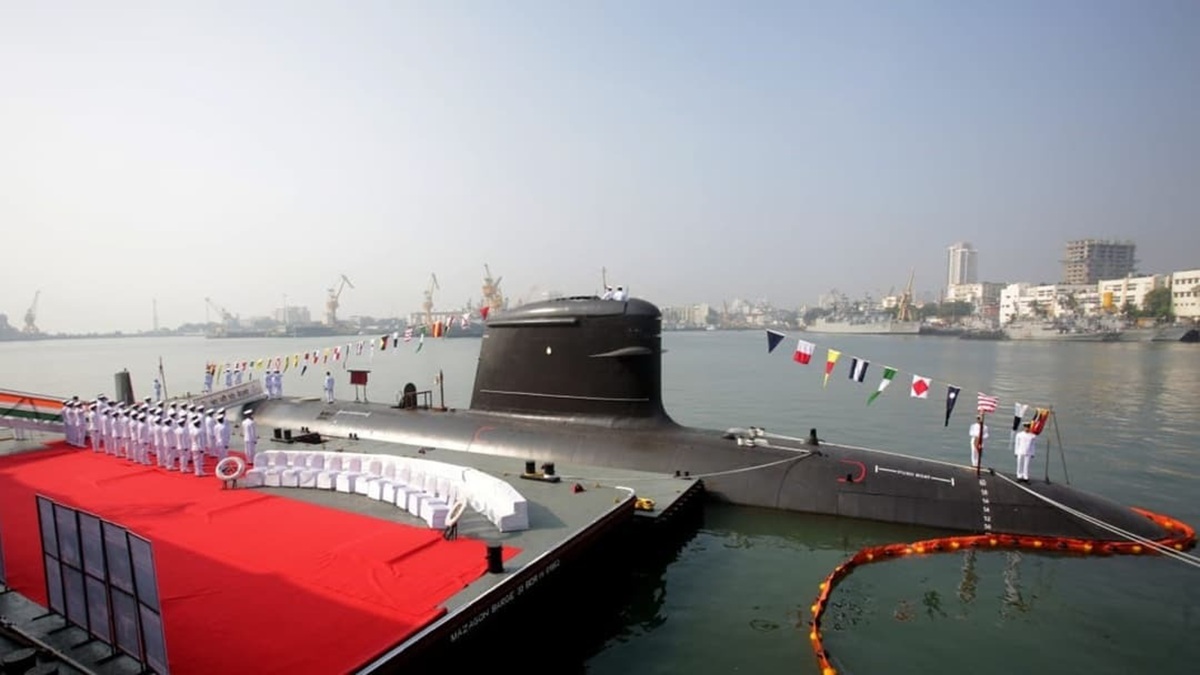


The Indian Nuclear Submarine INS Aridhaman, Weighing About 7,000 Tons and With an Estimated Range of 3,540 Kilometers, Has Entered the Final Phase of Tests Before Incorporation, Strengthening Maritime Deterrence and Expanding India’s Strategic Capacity in the Indian Ocean
The Chief of the Indian Navy reported that the INS Aridhaman nuclear missile submarine, weighing about 7,000 tons and with an estimated range of 3,540 kilometers, has entered final testing before its incorporation, reinforcing the country’s maritime deterrence.
The operational advancement of the Aridhaman expands the Indian ballistic submarine fleet and consolidates the role of these platforms in strengthening the national nuclear triad, as highlighted by the Navy itself during the recent announcement.
INS Aridhaman is set to become the third nuclear-powered ballistic missile submarine constructed independently by India, succeeding INS Arihant and INS Arighaat. According to the Navy, this expansion represents a significant step in enhancing the country’s strategic patrol capability in the Indian Ocean.
-
The Trap of Modern Technology: How Screen Overload and Digital Connections Can Impact Your Mental Health and Well-being

-
Wyoming Couple Grows Tropical Fruits Year-Round in -40°C Using Geothermal Greenhouse, Demonstrating Earth’s Heat Can Produce Oranges and Lemons in Snow Without Traditional Heating

-
Ship Returns from Brazilian Coast with Thirty Newly Discovered Life Forms
-
Nigerian Professor Invents Electricity-Free Refrigerator Using Clay Pots and Wet Sand, Extending Shelf Life of Vegetables to 27 Days; 7,000 Units Distributed in Energy-Deprived Villages



The Arighaat was incorporated in August into the Strategic Forces Command in Visakhapatnam, marking the first time India has two SSBNs simultaneously in operation. The arrival of Aridhaman will allow three units to be available for continuous deterrence missions.
Admiral Dinesh Tripathi stated that the advancements of the new submarine demonstrate India’s industrial and technological evolution in strategic naval platforms. He declared that the vessel is currently in the final testing phase and will soon be incorporated into active service.
The Aridhaman has been designed to carry a larger number of long-range missiles with nuclear warheads than its predecessors, reinforcing India’s doctrine of assured second strike. This expanded configuration supports prolonged and discreet presence in strategic patrols.
The vessel will be able to accommodate additional K4 ballistic missiles, launched from submarines, with an estimated range of approximately 3,500 kilometers. These systems expand the deterrent radius of the Indian nuclear fleet.
A fourth SSBN is under construction and is expected to further enhance India’s ability to maintain a continuous presence in strategic patrol. Both Aridhaman and the next unit are larger than the Arihant-class submarines, offering more space for missiles and greater survivability.
Available specifications indicate that the Aridhaman will have a displacement close to 7,000 tons and a length of about 125 meters. The crew will consist of approximately 95 individuals, operating advanced navigation and underwater surveillance systems.
The submarine will feature the USHUS and Panchendriya sonar systems, designed for surveillance, target location, and underwater communications. The defense package will include disposable broadband countermeasures produced by Rafael, aimed at reducing the risks of torpedo attacks.
Naval Programs and Maritime Diplomacy
Tripathi also highlighted initiatives promoted by the Navy over the past year, emphasizing the cooperative and regional nature of these actions. According to him, such programs strengthen interaction and interoperability with partner nations in the Indo-Pacific and the African continent.
He mentioned the Indian Ocean Ship Sagar, on which INS Sunayna embarked with 44 crew members from nine countries for a month-long deployment starting in April. The mission included stops at five ports and aimed to enhance cooperation and joint training.
Another cited program was the Key Maritime Engagement Africa India, called Samanvaya, conducted with the participation of nine African nations. The exercise was concluded in Dar es Salaam, Tanzania, with the presence of the Indian Defense Minister and his Tanzanian counterpart.
Tripathi stated that both initiatives were well received by the participants and reinforce India’s role in regional maritime security. He highlighted that the country is working to enhance dialogue, interoperability, and stability in the Indian Ocean space.
Consolidation of the Indian Nuclear Triad
The introduction of the Aridhaman represents another step toward India’s goal of maintaining a credible nuclear triad, allowing the launch of weapons from land, air, and sea. SSBNs are considered the most resilient component of this structure.
The ability to operate stealthily for long periods ensures that at least one nuclear submarine remains on constant patrol, something seen as essential for guaranteeing a second strike. Currently, India already has two operational SSBNs.
The exact date of the Aridhaman’s entry into service has not yet been disclosed, but authorities report that the vessel is undergoing final evaluations before delivery. The expectation is that the submarine will be incorporated within a relatively short time frame.
Regional Impact and Strategic Balance
The growth of the Indian nuclear fleet also influences dynamics in the Strait of Malacca, through which over 60 percent of Chinese maritime trade and nearly 80 percent of the oil imported by China pass.
Although designed for nuclear deterrence and not for engaging other ships, the Aridhaman will be able to remain submerged for long periods in the eastern Indian Ocean. This feature enhances India’s strategic presence in this sensitive area.
In crisis scenarios, nuclear-powered submarines operating stealthily, supported by attack units and surface forces, could raise the cost of any Chinese attempt to project power in the Indian Ocean, complicating access to the Strait of Malacca.
This latent advantage increases New Delhi’s strategic influence and reinforces its position in discussions on stability and regional planning. Ongoing development of the SSBN fleet sustains this expanded role in maritime security.