






 Portuguese
  Spanish


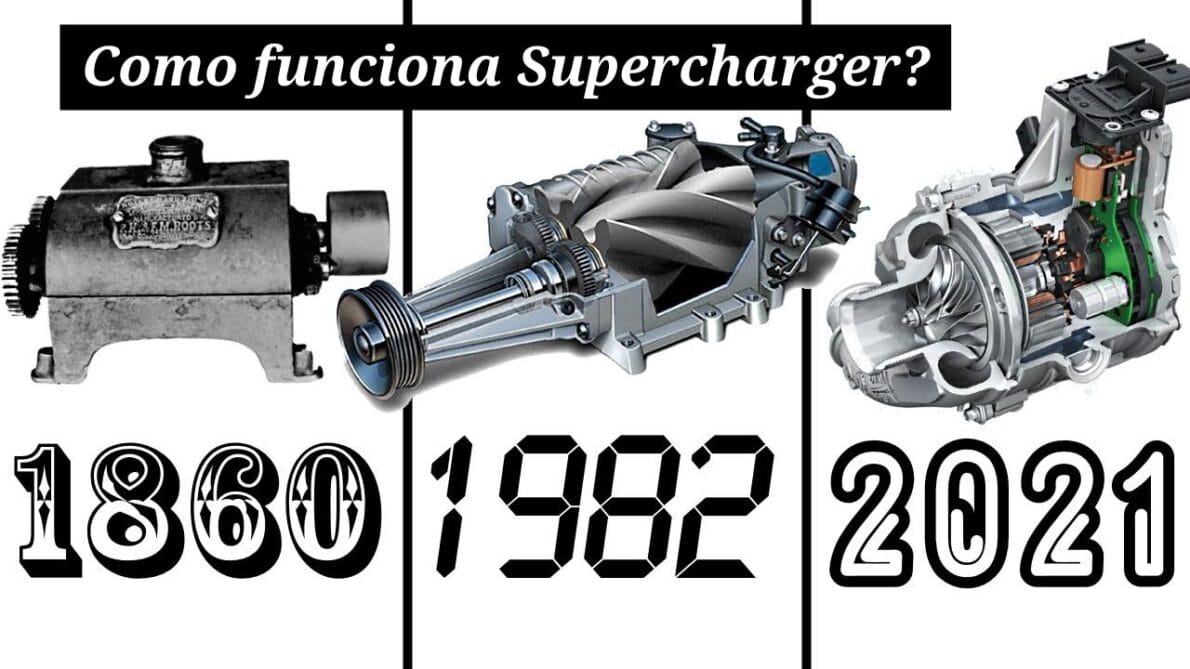


The Supercharger, Also Known as Blower or Supercharger, Emerged Even Before the Invention of the Four-Stroke Engine Created Initially to Blow forges and Boilers. However, Some Time Later, They Discovered Its Capacity to Increase Engine Power!
The supercharger, also known as blower or supercharger, is one of the most fascinating inventions in the automotive world. Although it may seem like a modern technology, its origins date back to the 19th century, even before the creation of the four-stroke internal combustion engine. Surprisingly, this device, initially designed to blow air into forges, ended up being the key to increasing engine power in vehicles and other machines. But how exactly does this system work and why is it not as popular as the famous turbocharger? Let’s understand this story full of innovations and breakthroughs.
How Was the Supercharger Born?
The history of the supercharger began in the small town of Connersville, Indiana, in the United States. Two brothers, Philander and Francis Roots, were facing a challenge: their waterwheel-powered machines were not as efficient as they had hoped.
In search of a solution, they created a wooden device with two rollers that, when spun, blew air with such force that it would blow the hats off anyone nearby! This system gained so much notoriety that it was patented in 1860, more than a decade before the invention of the four-stroke internal combustion engine.
-
US Mayor Goes Undercover as Homeless for a Week to Understand Rising Homelessness, Sparking Debate in His City

-
Teen from Brazil Turns School Snack Sales into Million-Dollar Confectionery Business Projected to Earn Nearly $1.9 Million in 2024

-
Why Do Electrical Outlets and Switches Turn Yellow? Understanding the Impact of Light, Temperature, and Materials on Color Change
-
Former Brazilian laborer and ice cream vendor turns struggling company into $16.5 billion giant with 90,000 employees.


The Supercharger in the Automotive World
Fast forward to the time, the supercharger began to be used in car engines, especially to improve performance on the tracks. The supercharger works by forcing air into the cylinders, increasing the concentration of oxygen, which improves combustion and, as a result, engine power. In the 1920s, Mercedes-Benz vehicles, for example, were already using this system to create supercharged engines, making them faster and more powerful.
Mechanical specialist Marcos Vinícius, consulted by CPG, explains that the supercharger became crucial for motorsport competitions in Europe. “In the 1930s, brands like Mercedes-Benz and Auto Union began to dominate the races with cars equipped with blowers. The Bentley Blower, for instance, was one of the most iconic cars of that era“, reported Marcos.
The Difference Between Supercharger and Turbocharger
A common question among motor enthusiasts is the difference between supercharger and turbocharger. Both serve to increase engine power, but the supercharger has a specific advantage: it delivers power instantaneously. This occurs because it is driven directly by the engine, unlike the turbocharger, which relies on exhaust gases to start functioning. This feature avoids the infamous “turbo lag”, that delay between acceleration and power gain.
On the other hand, the supercharger consumes part of the engine’s own energy to operate, which can slightly decrease its efficiency. “The parasitic loss is one of the downsides of the supercharger, but it is still highly regarded in drag racing, where immediate power delivery is essential”, adds Marcos Vinícius.
Beyond the Tracks
Beyond the racetracks, the supercharger also made its mark in airplanes, especially during World War II. For aircraft to fly at higher altitudes, it was necessary to increase the amount of oxygen in the engines. The supercharger was the perfect solution, ensuring that combat aircraft were faster and more efficient. This advancement was so significant that even today the technology continues to be used in some aviation engines.
Today
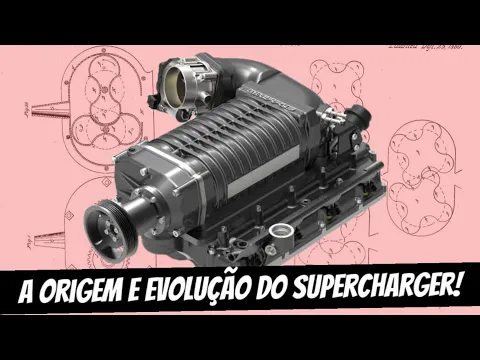

Today, although the turbocharger is more common in mass-produced vehicles, the supercharger is still used in high-performance models. Brands like Ford, Dodge, and Jaguar continue to equip their engines with this system to cater to performance enthusiasts. The Ford Mustang Shelby, for example, can reach over 800 horsepower with the help of this device. The question remains: with all these advancements, will the supercharger still have more space in the future of engines?
What is your opinion? Do you prefer the supercharger or the turbocharger to increase engine power?


