






 Portuguese
  Spanish


Built in just two days by about ten volunteers from Teto Brasil, the certified wood emergency house is 18 m² and is donated for free. In Curitiba, it took Daniele do Rossil away from insects and cold, and in 2026 the NGO has already delivered 43 homes across the country.
To understand the magnitude of this transformation, just listen to those who have lived both realities. “In the old house, many bugs and insects appeared. Now there’s no more of that. There are no more mosquitoes and it’s warmer,” said Daniele do Rossil, a resident of the Tiradentes community in Curitiba. The house that changed her routine didn’t take months to be ready. It was built in two days, assembled by volunteers from Teto Brasil, and delivered at no cost. The story was shared by Teto Brasil itself.
The detail that impresses is the combination of speed, simplicity, and dignity. In one weekend, a family living in a precarious structure receives an emergency wooden house, enclosed, insulated from the cold, and protected from bugs. And 2026 is the year this pace has accelerated. By May alone, Teto Brasil had already delivered 43 of these homes, with plans to exceed 340 throughout the year, bringing dignified housing to families in Paraná, São Paulo, Rio de Janeiro, and Rio Grande do Sul.
Two days, ten volunteers and the house stands
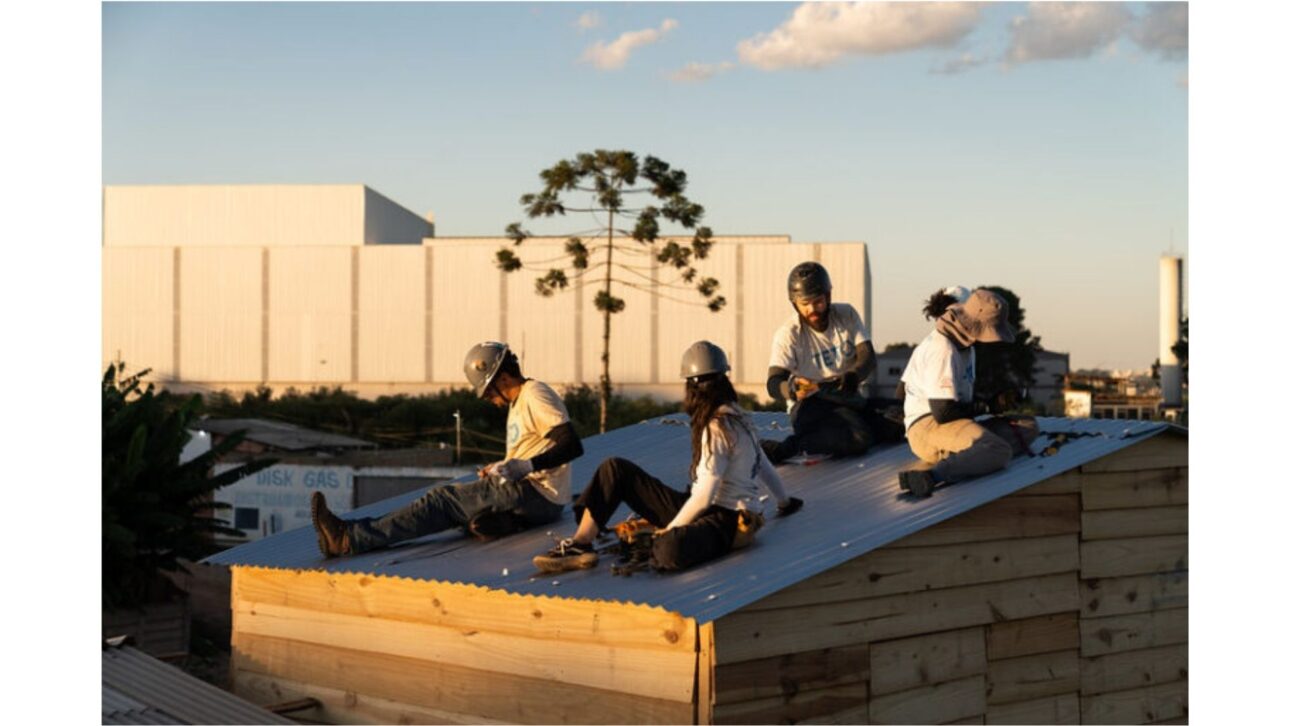
The magic of speed has a technical explanation. The Teto emergency house is not built brick by brick, but rather assembled from prefabricated wooden panels. These panels are produced by Mart Madeiras, a supplier of certified and sustainable wood, a long-time partner of the NGO. Together, Teto and Mart have already erected more than 4,000 emergency houses across the country.
-
China to Drill 90 Kilometers Under the Sea to Connect Two Cities Currently Linked Only by Ferry

-
$134.7 Million Project in São Paulo Installs Over 5 Kilometers of Pipes, Creates New Underwater Crossing to Boost Water Supply for Over 450,000 People

-
At 61, Former Homeless Wheelchair User Receives Key to Container Home in Brazil, Declares Independence
-
São Paulo Highway to Receive Over $260 Million in Upgrades, Including 90 Kilometers of Service Roads and New Infrastructure, by 2027



On the construction day, human strength comes into play. A team of at least ten volunteers, working side by side with the community’s own residents, raises the structure in just two days. There’s no need to be an engineer or experienced builder, because the system is designed to be assembled by ordinary people willing to help. This is where much of the impact lies: the construction also becomes a meeting between volunteers and those who will live there.
The wooden house is designed for the harsh climate of the communities. The structure is suspended on twelve wooden stakes, which prevents the entry of rainwater, humidity, and venomous animals. It has windows, doors, a roof capable of withstanding heavy rains and even hail, as well as thermal insulation. Every detail addresses a real problem for those who previously lived in an improvised structure.
Free and Dignified: Teto Brasil’s Model
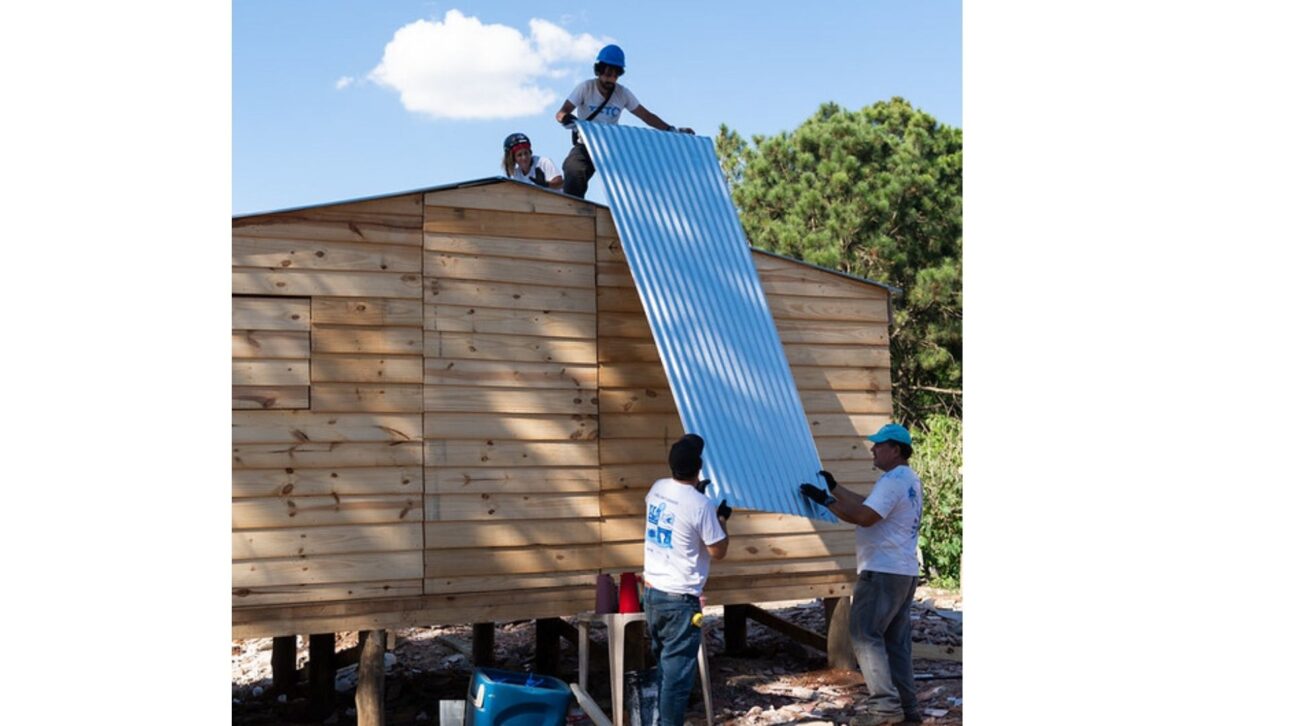
It’s important to clarify what differentiates this project. It’s not about a family building their own wooden house alone, nor a standardized collective shelter. The emergency house from Teto Brasil is donated for free, built by volunteers in a joint effort, and delivered to families living in vulnerable situations in the country’s favelas and communities. The organization’s name sums up the mission: to guarantee a roof, the first step towards dignified housing.
Teto Brasil, linked to the Latin American network Techo, has been operating in the country since 2006, totaling about 20 years of work. Throughout this journey, it has mobilized more than 100,000 volunteers and impacted over 5,000 families with emergency housing solutions. In Paraná, where Curitiba is located, the NGO has been operating since 2015 and has already delivered hundreds of homes.
The logic behind it is urgency combined with dignity. While the permanent house doesn’t come, whether due to lack of resources, documentation, or public policy reaching that family, the emergency house offers a safe, dry, and dignified place to live now. It’s not the end of the line, it’s a new beginning, and Teto Brasil treats this as a starting point, not an endpoint.
15 or 18 m²: What’s Inside
Teto houses come in two sizes, 15 m² and 18 m², always in the pre-molded wooden model. It may seem small, but for those coming from a shack without sealing, this enclosed and organized space represents a huge leap in quality of life. What matters is not just the size, but what it starts to guarantee.
Inside each wooden house, the family finds walls that actually insulate, a floor elevated from the damp ground, a roof that doesn’t let rain in, and insulation that retains heat on cold nights. These are basic things, but they were completely missing in the previous housing. Daniele’s talk about the cold that disappeared and the insects that vanished translates, in practice, what each of these elements means in daily life.
It’s this sum of details that transforms four wooden walls into dignified housing. The emergency house doesn’t promise luxury, it promises the essential fulfilled with seriousness. And, for the families served by Teto Brasil, the essential is exactly what was missing.
Daniele’s Turnaround in the Tiradentes Community
The case of Daniele do Rossil gives a face to this entire mechanism. A resident of the Tiradentes community in Curitiba, she is part of a group of families assisted in the capital of Paraná in 2026. In the city, the houses were built by volunteers along with the residents in the communities of Tiradentes, Dona Cida, and Nova Primavera, with the support of partner companies like Infobip, Cupola, and Azul.
Her testimony is short and direct, and for that very reason, powerful. “In the old house, there were many bugs and insects. Now there are no more of those. There are no more mosquitoes, and it’s warmer,” summarized Daniele. In two sentences, she describes the difference between living with mosquitoes and humidity and finally having a house that protects. The mosquito that disappeared is not a detail: in exposed communities, insects mean disease, sleepless nights, and a real health risk.
This is the kind of change that the speed of Teto Brasil makes possible. Instead of waiting years for a solution that might never come, Daniele saw her own dignified home being built in a weekend, by the hands of volunteers she didn’t even know before. The warmth inside the house and the absence of bugs became, for her, synonymous with a new beginning.
43 houses in 2026 and the goal to exceed 340
The case of Curitiba is not isolated; it is part of a national surge. In 2026, Teto Brasil picked up the pace: 43 emergency houses were delivered just by May, with the forecast of surpassing 340 constructions throughout the year. The work spreads across four states, Paraná, São Paulo, Rio de Janeiro, and Rio Grande do Sul, always following the same logic of volunteering and donation.
This momentum depends on those who fund it. At a recent charity dinner, the organization secured resources to build dozens of new homes still this year, showing how the mechanism of Teto Brasil mixes volunteers, donors, and partner companies. Each house delivered is, at the same time, a shelter for a family and proof that the model works and can grow.
Even with the numbers on the rise, no one pretends the problem is solved. The deficit of dignified housing in Brazil is enormous, and 340 houses don’t cover everything. But each emergency house built in two days is one less family in the cold, and a concrete demonstration that a quick and dignified solution is not incompatible.
Why this story matters
The work of Teto Brasil challenges an idea that often holds many people back: that dignified housing needs to be expensive, slow, and complicated. The wooden house assembled in two days proves otherwise. With the right method, volunteers, and materials, it is possible to deliver dignity quickly, and for free, to those who need it most.
There is also a lesson about the power of collective effort. Each emergency house is raised by volunteers who donate their weekend and by residents who build their own future with their own hands. This encounter transforms both sides, and it is what gives Teto Brasil a strength that goes beyond the number of houses. The construction ends, but the bond remains.
In the end, what the story of Daniele and the other 42 families served in 2026 shows is simple. A good house doesn’t need to be big or luxurious to change a life. It needs to be dry, safe, warm, and dignified. And sometimes, it can be ready even before the weekend is over.
And you, what do you think of this model?
The emergency house by Teto Brasil shows that volunteering, donation, and a good wooden house project can deliver dignified housing at a speed that bureaucracy rarely achieves. Daniele escaped the insects and the cold in two days, and hundreds of other families are expected to experience the same in 2026.
And you, have you participated or would you participate in a volunteer effort to build someone’s house? Share in the comments what touched you the most about this story and if you think this model should receive more support in Brazil.


