Portuguese
  Spanish


To understand why the homeless situation was growing, the mayor Mike Coffman, of Aurora, Colorado, did something radical: a mayor disguises himself as a homeless person and spends seven days and seven nights in shelters and sidewalks in the cold, and the experience divided the city.
Imagine the mayor of your city trading his suit for an old backpack and disappearing into the cold for a week, without money, without food, sleeping on the ground next to those who live on the streets. This is what Mike Coffman, mayor of Aurora, in the American state of Colorado, did. At the end of 2020, he decided that the only way to understand the explosion of the homeless situation in the city was to experience it firsthand.
The story was revealed by CBS Colorado in January 2021 and became a national phenomenon. For seven days and seven nights, a mayor disguises himself as a homeless person and dives into a world he governed from afar. What he saw and, most importantly, the conclusions he drew, turned the endeavor into one of the most heated debates about the homeless population in the United States. For some, it was an act of courage. For others, pure theatrics.
Why a mayor disguises himself as a homeless person
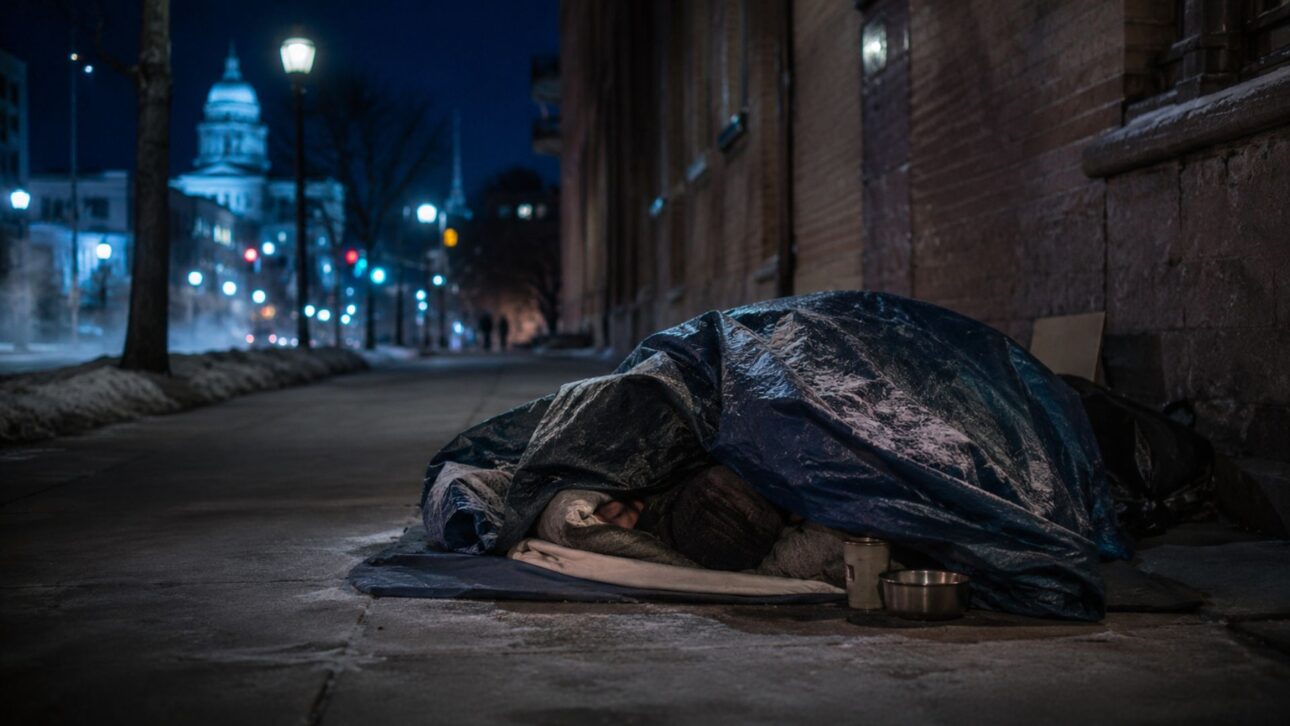
“I think this is a very difficult problem, and I don’t think many policymakers like me understand it,” the mayor told CBS. Instead of only listening to technicians and activists, he wanted to hear the street itself, without intermediaries and without an agenda.
-
Teen from Brazil Turns School Snack Sales into Million-Dollar Confectionery Business Projected to Earn Nearly $1.9 Million in 2024

-
Why Do Electrical Outlets and Switches Turn Yellow? Understanding the Impact of Light, Temperature, and Materials on Color Change
-
Former Brazilian laborer and ice cream vendor turns struggling company into $16.5 billion giant with 90,000 employees.

-
New Cyclone Expected to Hit Brazil, Changing Weather Within 72 Hours


The profile of those who embraced the idea helps to understand the boldness. Coffman is a veteran of the Marine Corps and has been a federal deputy, treasurer, and Secretary of State of Colorado before becoming the mayor of Aurora. He is not a newcomer to politics nor someone with nothing to lose. Even so, he decided that a mayor disguises himself as a homeless person to see the homeless situation from within, not from above.
The preparation was minimal and intentional. He left the day after Christmas carrying only a backpack, a cap, a mask, and worn military clothes, without money, food, or any protection. In his pocket, only an ID, in case he got hurt. The rule he imposed on himself was simple: live as those who are in homeless situations do, without a safety net.
Seven days and seven nights in the cold
The immersion was truly tough. For seven days and seven nights, Coffman alternated between shelters and the street. He spent four nights sleeping in shelters in Denver and Aurora and three nights outdoors, two of them in a camp near Speer Boulevard, at the level of Sixth Avenue. The thermometer dropped to nearly 10 degrees Celsius below zero.
Sleeping in that cold, under a tarp, among strangers, is an experience few politicians would agree to. The immersion exposed the mayor to the same fear, hunger, and exhaustion that mark those living on the streets. There was no official car waiting, nor any assistant nearby. For a week, he was just another body trying to survive the cold night in Colorado, anonymous among the homeless population.
The operation was closely followed by reporter Shaun Boyd from CBS4, who documented the behind-the-scenes and nicknamed the mayor “Homeless Mike.” It was this journalistic coverage that gave visibility to the gesture and, at the same time, opened the door for criticism that it was all just a spectacle. After all, a mayor disguises himself as a homeless person with a camera nearby raises suspicion.
What he concluded, and why it went so wrong
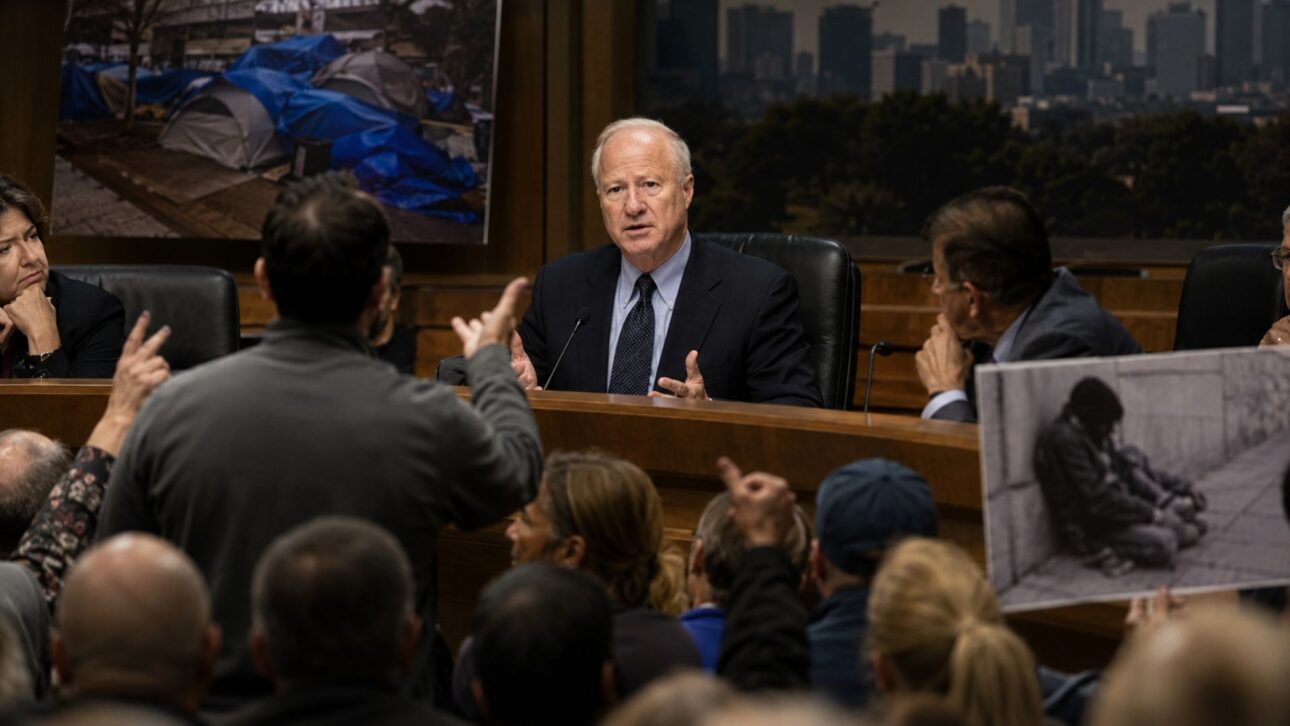
Upon leaving the street, Mike Coffman drew strong and controversial conclusions. For him, the camps he encountered were mainly formed by heavy drug users, and remaining in the homeless situation was, in many cases, a personal decision. “It’s a lifestyle choice, and it’s a very dangerous lifestyle choice,” said the mayor.
This reading hit like a bomb. Reducing the homeless population to a matter of choice and addiction ignores decades of research pointing to much more complex causes. Experts remind us that chronic homelessness often has roots in poverty, trauma, mental disorders, post-traumatic stress, and yes, also chemical dependency, but as part of a broader picture, not as a whim. Treating everything as an individual choice simplifies a problem that is structural.
It’s worth noting that not everything was condemned. Several service providers recognized that Coffman’s interest in the topic was legitimate and that leaving the office was more than most do. The issue wasn’t going to the streets, but rather the conclusion he reached. When a mayor disguises himself as a homeless person and returns saying the problem is people’s choice, the gesture ceases to sound like empathy and starts to sound like justification for harsh policies.
The city was divided: performance or courage
The reaction from homeless advocates was immediate and forceful. Shelley McKittrick, former director of homelessness programs for the city of Aurora, described the mayor’s week as “a superficial and performative exercise,” poorly executed. The central criticism was that seven days do not reveal what years of neglect do to a person.
Other voices echoed this sentiment, according to NewsNation. Aurora councilwoman Crystal Murillo called the action a “publicity stunt” and warned that it could lead to “harmful and terrible” policies. Eva Henry, Adams County commissioner, was direct: “You can’t just dip your toe into poverty or homelessness and pull out. Being on the streets is not a vacation for these people.”
On the other hand, part of the population saw courage where critics saw theater. For this group, any authority willing to sleep in the cold to understand the problem deserves credit, not criticism. The same gesture became, at the same time, a symbol of empathy and a target of accusations of opportunism. It was this divide that turned Coffman’s adventure into a watershed moment in the city.
The policy that followed
The experience did not remain purely symbolic, and this is what matters most to those living in Aurora. Months later, Mike Coffman advocated for the creation of a camping ban in the city, a measure that would clear the tents scattered across the streets. The proposal faced strong resistance from the city council and homeless advocates, who saw it as the criminalization of poverty.
Faced with pressure, the mayor ended up retreating and put the ban on camping on hold. The episode showed that the line between personal experience and good public policy is thin. Having spent seven days and seven nights on the street gave Coffman moral authority in the eyes of some, but did not convince those who understand that the homeless situation is resolved with housing, mental health, and income, not by removing tents.
Curiously, the mayor did not abandon the topic after the uproar. He revealed that he started sleeping in a shelter one night a week for four months, in an attempt to stay in touch with the reality that bothered him so much. It was a gesture that, again, divided opinions between those who saw persistence and those who saw another chapter of personal marketing.
The mirror of a tactic that becomes a trend
The case of Aurora is not unique, and that’s where it becomes interesting. More and more, authorities around the world decide that a mayor disguises as a homeless person, a public transport user, or a hospital patient to feel firsthand what they manage from afar. The idea is seductive: nothing replaces direct experience to burst the bubble of power.
The problem is the dose of theater that almost always accompanies these gestures. When there is a camera, advisory, and political agenda behind it, it becomes difficult to separate the genuine search for understanding from the construction of an image. The same immersion that can generate true empathy can become a platform. The Brazilian public, by the way, is well acquainted with this type of action, with mayors who disguise themselves to test services or oversee their own management.
The difference, in Coffman’s case, was the sour outcome. While many of these actions end in applause and a nice photo, his ended in conflict, because the conclusion about the homeless population directly contradicted those who work with the issue. Going to the street made headlines, but the interpretation of what he saw made enemies.
What this case teaches about empathy and politics
In summary, the story leaves lessons for both sides. On one hand, leaving the office and facing reality has value, and few leaders have the courage to sleep in the cold for it. On the other hand, a week of immersion does not turn anyone into an expert on a problem that has been building over years and has deep causes. Experience and data need to go hand in hand.
The episode of Aurora shows that empathy without listening becomes the opposite of what it intends. Coffman spent seven days and seven nights in the shoes of those who live the homeless situation, but returned listening more to his own interpretation than to the experts and the people themselves being assisted. That’s why the initiative was so divisive: the gesture was powerful, but its interpretation was contested.
The question remains for any city, including Brazilian ones. Does a leader need to disguise themselves to see the obvious, or would it be enough to listen carefully to those who already live and study the problem every day? The homeless population is not a reality show backdrop, they are people, and perhaps this is the point that the Coffman case, with all its controversy, helps to illuminate.
And you, do you think a mayor disguises themselves as a homeless person out of true empathy or for political marketing? Does a leader need to experience the problem firsthand to solve it, or is it just theater? Tell us in the comments what you think about this type of attitude.