Portuguese
  Spanish


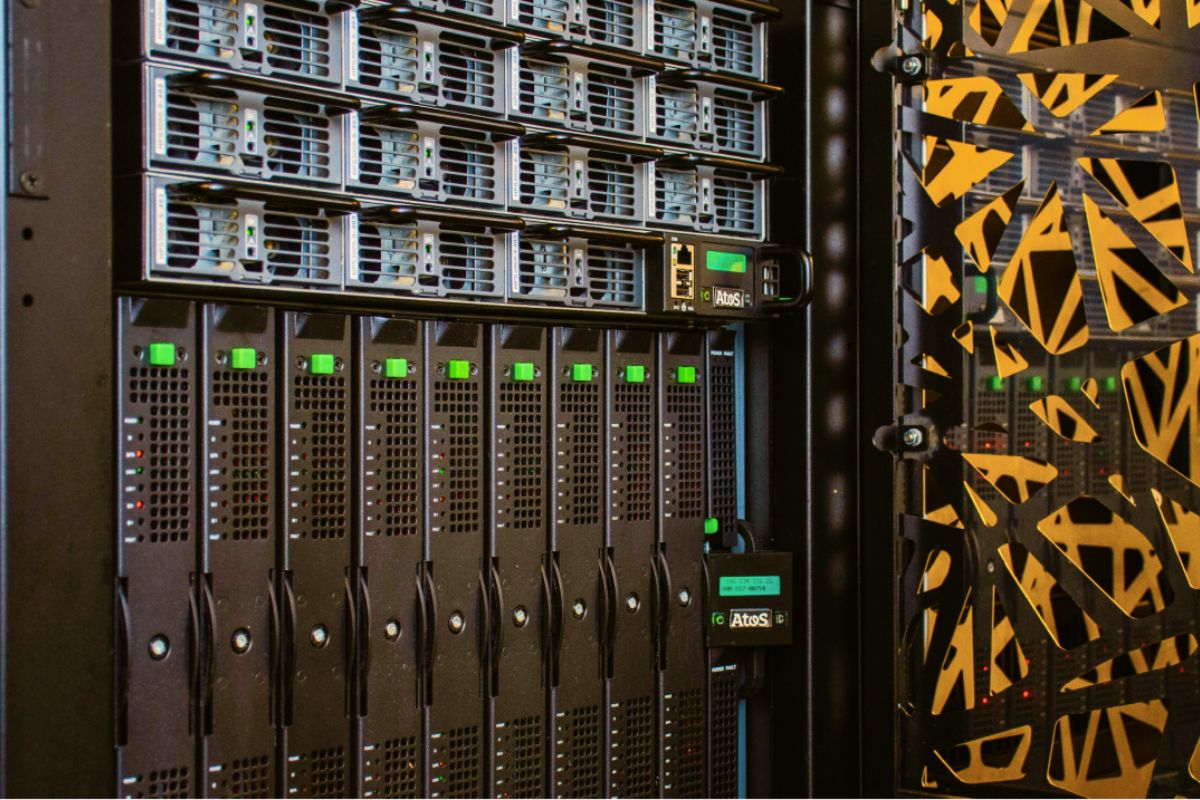

Meet the Santos Dumont Supercomputer, the Most Powerful in Latin America for Scientific Research, Installed at LNCC in Petrópolis (RJ), and How This Extraordinary Machine Drives Discoveries and Innovations in Various Fields in Brazil.
Supercomputing represents the pinnacle of data processing capability, solving complex scientific problems that transcend conventional computers. In Brazil, the National Laboratory for Scientific Computation (LNCC) hosts a jewel of this technology: the Santos Dumont supercomputer, a machine capable of performing what many call “absurd calculations” for national science.
Since its inauguration in 2016, the Santos Dumont supercomputer has been essential in driving Brazilian research. With constant updates, it remains among the most powerful in the world, serving as a vital tool for innovation. Let’s explore the architecture, capacity, and impact of this electronic giant.
The Genesis of the Santos Dumont Supercomputer
The National Laboratory for Scientific Computation (LNCC), in Petrópolis (RJ) and linked to the Ministry of Science, Technology, and Innovation (MCTI), is the guardian of the Santos Dumont supercomputer. Acquired by the Brazilian government in 2015, with an initial investment of R$50 million, the machine was developed in France by Atos/Bull. Its arrival marked a new milestone for research in the country, positioning it as the largest computer in Latin America dedicated to science.
-
The industrial waste that even recyclers didn’t want has gained value in the interior of Bahia: two entrepreneurs invested R$ 2.8 million to transform 350 tons per year of foam, rubber, and plastic into boards that can replace wood and MDF.

-
What is a red flashlight used for, after all? See why it is so commonly used at night.

-
He has never read a line of code, but he already knows how to work: the French company UMA presented in Paris the Northstar, its first AI-powered humanoid robot designed for factories and warehouses, capable of copying tasks just by observing an employee in action.

-
A young Kenyan engineer collects plastic waste from the streets and transforms it into robots that translate physics lessons into sign language in real-time, a machine made with old bottles that teaches what was missing to deaf children left out of science.



The official inauguration in 2016, funded by Finep, was a strategic step for technological sovereignty. The name honors Alberto Santos Dumont, reflecting the ambition to elevate Brazilian science to new heights.
The Impressive Evolution of the Processing Capacity of Santos Dumont
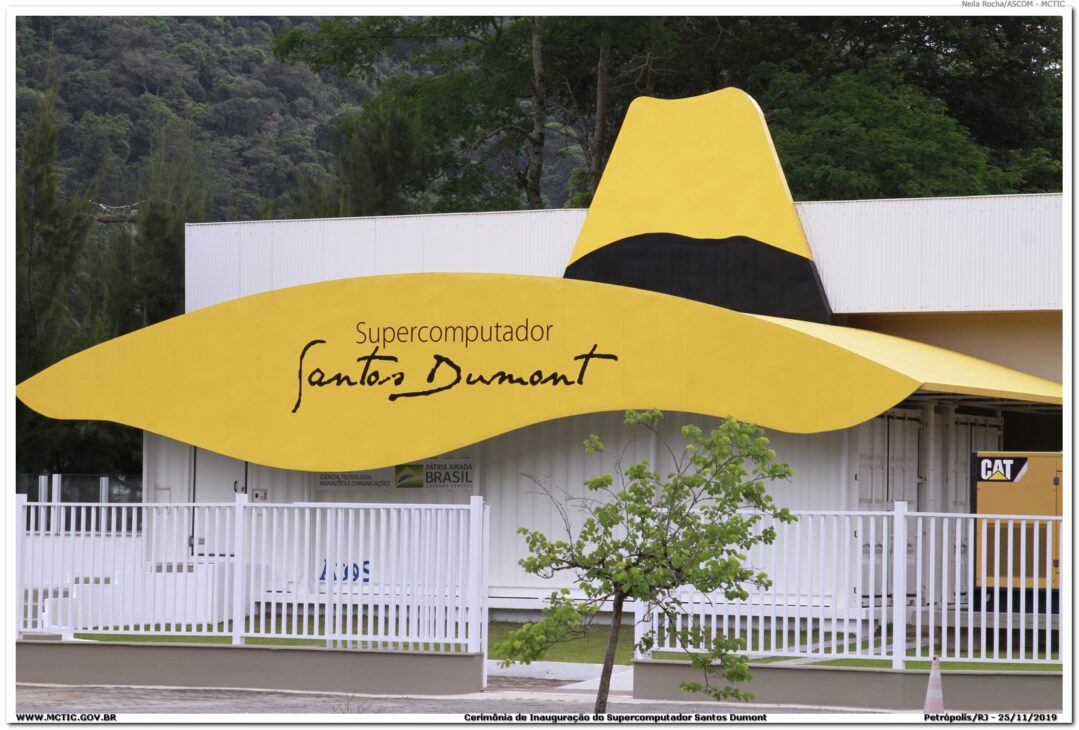
The capacity of the Santos Dumont supercomputer has evolved significantly. It started with 1.1 PetaFLOPS in 2015, jumped to 5.1 PetaFLOPS in 2019 after an expansion with Petrobras, and received a major upgrade in 2024, dubbed “Version III”. This modernization, in partnership with Petrobras and part of the Brazilian Artificial Intelligence Plan (PBIA), added 17 theoretical PetaFLOPS with Eviden’s BullSequana XH3000 technology.
Currently, its most powerful configuration, with NVIDIA Grace Hopper superchips, has achieved 14.29 PetaFLOPS of sustained performance (Rmax) and a theoretical peak of 20.26 PetaFLOPS, ranking 89th on the TOP500 list in November 2024. The architecture includes Intel Sapphire Rapids CPUs, NVIDIA H100 GPUs, and direct liquid cooling, making the Santos Dumont supercomputer a cutting-edge platform.
The Brain Behind the Discoveries
The true value of the Santos Dumont supercomputer lies in its use by science. It supports approximately 170 research projects simultaneously, involving over 2,000 users in 18 major fields of knowledge. During the COVID-19 pandemic, it was crucial for the sequencing of the SARS-CoV-2 virus genome and for the search for treatments.
Petrobras extensively utilizes its resources for oil and gas exploration. The Santos Dumont supercomputer is also vital for research in Artificial Intelligence, climate modeling, materials science (with discoveries such as controlling terahertz waves through vibrations in minerals), renewable energy, drug development, and even agribusiness, supporting the IBGE Agricultural Census. By November 2023, its use resulted in over 900 scientific articles and 11 patents.
How Brazilian Researchers Gain Access to Santos Dumont
Access to the resources of the Santos Dumont supercomputer is managed by LNCC and is open to researchers from Brazilian institutions. There are different allocation programs, such as Premium (large projects), Standard (substantial projects), and Educational Purposes (courses and subjects), ensuring the machine serves different levels of the scientific community.
Proposals are submitted through public calls and evaluated by committees based on technical-scientific merit and the need for high-performance computing (HPC). LNCC offers manuals, training through the “Santos Dumont Supercomputer School,” and technical support to optimize the use of this powerful tool.
Engine of Innovation
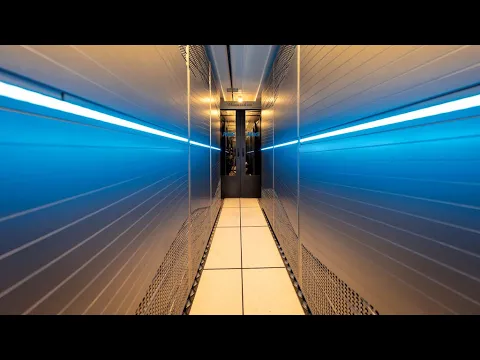

The Santos Dumont supercomputer is more than just a machine; it is a pillar for Brazil’s scientific and technological development. It ensures sovereignty and national competitiveness in strategic areas such as energy (Petrobras), health (COVID-19), and Artificial Intelligence (PBIA).
The collaborative model among the government (MCTI), funding agencies (Finep), companies (Petrobras), LNCC, and academia has been essential for its success. Maintaining continuous investment in the Santos Dumont supercomputer and HPC is essential for Brazil to continue advancing the frontiers of knowledge and developing solutions to its challenges.