Portuguese
  Spanish



Compact or SUV? Understand the Main Differences Between the Two Types of Cars and Discover Which One Fits Your Lifestyle, Routine, and Priorities in Everyday Life
Choosing between a compact car and an SUV remains a common dilemma among Brazilian drivers. Each category has well-defined strengths, and the best option depends on individual lifestyle and routine.
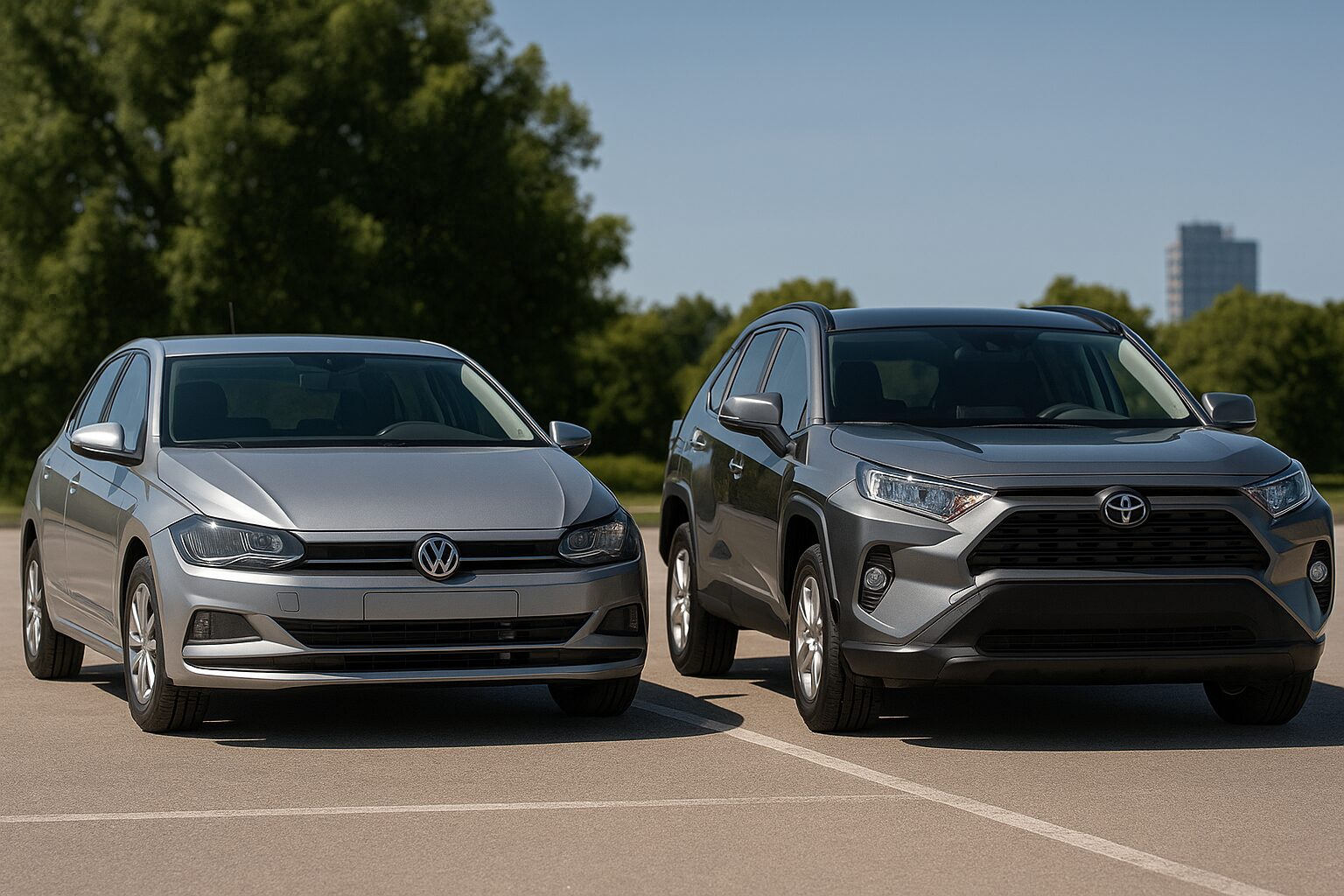
Compact cars, such as the Volkswagen Polo, are smaller and more economical. They adapt better to urban traffic, making parking easy and having lower fuel consumption.
On the other hand, SUVs, like the Toyota Corolla Cross, offer more interior space, comfort, and safety, making them ideal for families or long trips.
-
End of an era in Brazil: beloved sedan by Brazilians is discontinued despite having a 2.0 engine with 151 hp, CVT transmission, 466-liter trunk, and up to 650 km of range.

-
New Law Proposal in Brazil Could Heavily Penalize Drivers: Dangerous Overtaking May Become a Serious Offense with Fines Increased Tenfold and a 12-Month License Suspension; Update on 2026 Progress

-
Electric Revolution: Watts W125 Motorcycle Offers 160 km Range, 90 km/h Speed, and Affordable Price Starting at $3,000
-
General Motors Replaces Over a Thousand Workers with 50 Cobots at Electric Vehicle Plant, UAW Union Criticizes Move Amid Industry’s Automation Push



In terms of performance, compacts provide agility and quick response in short trips. SUVs, on the other hand, have more power and often feature four-wheel drive, improving performance on varied terrain.
In terms of consumption, compacts have the advantage. They are lighter, which contributes to good fuel economy.
Interior space is another important point. SUVs are taller and wider, with larger trunks. This offers comfort for passengers and more capacity for luggage. Compact cars, however, are suitable for those traveling alone or with minimal cargo.
Safety is also a consideration. SUVs typically come with more electronic features, such as stability control and braking assistants. Compacts have improved in this regard but still lag a bit behind.
In maintenance, compacts take the lead. Parts are cheaper, and the mechanics tend to be simpler. SUVs have higher maintenance and insurance costs, which can impact the budget.
For those looking for practicality, economy, and using the car in everyday urban settings, the compact is the most recommended. For those who value space, comfort, and safety on trips, the SUV may be the better choice. The final decision depends on what is most important to the driver.
With information from Monitor do Mercado.