






 Portuguese
  Spanish
  5 min of reading
  0 comments


Noida International Airport inaugurates Phase 1 in Jewar with an investment of US$ 1.35 billion, capacity for 12 million passengers, and expansion until 2050.
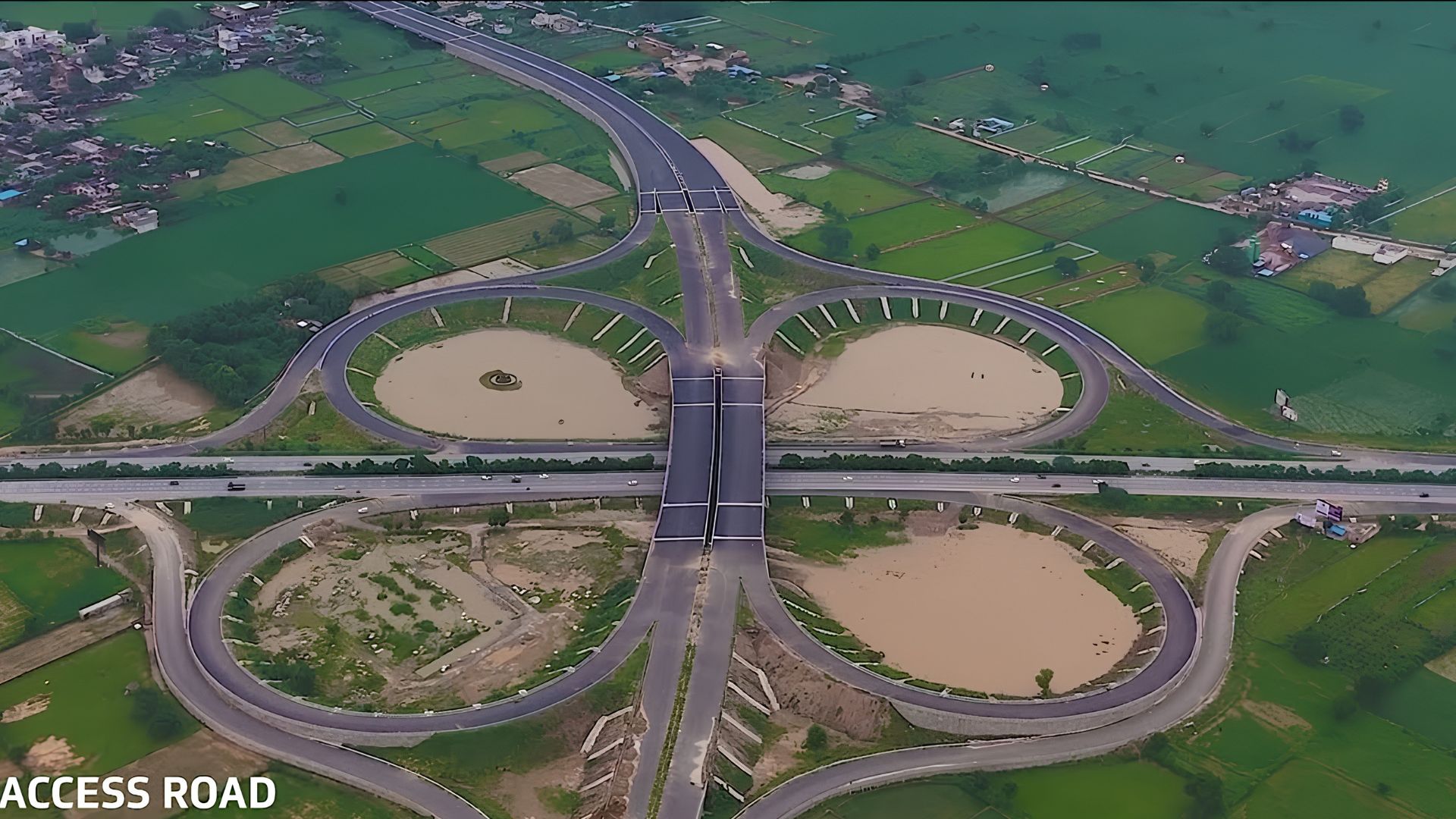
According to News on Air, Prime Minister Narendra Modi inaugurated on March 28, 2026 the Phase 1 of Noida International Airport in Jewar, in the district of Gautam Buddha Nagar, in Uttar Pradesh. The airport was built from scratch in an area that until 2021 was occupied by agricultural fields and is located 72 km from New Delhi.
The project was developed by Yamuna International Airport Private Limited, a wholly-owned subsidiary of Zurich Airport International AG, with civil construction by Tata Projects Limited. Phase 1 received an investment of about Rs. 11,200 crore, approximately US$ 1.35 billion, and was designed to be India’s first net zero airport facility, with solar energy, energy efficiency, and environmental solutions incorporated from the conception.
Noida International Airport is already born as a complete airport with the capacity to grow until 2050
The Phase 1 of Jewar is not a partial or symbolic structure. The airport is already operational as a complete facility, designed to handle 12 million passengers per year, with infrastructure prepared for expansion in the following stages.
-
Bolivian Female Construction Workers Form Association to Combat Discrimination and 38% Pay Gap in the Industry

-
Near Amsterdam, residents buy land and discover they must also build streets, manage drainage, handle waste, and grow food on half their plot.
-
Brazil’s WEG to Open New Factory in China by 2027, Expanding Production of Large Rotating Electric Machines and Low to Medium Voltage Motors in Rugao

-
Chinese Shipyard Secures $1 Billion in Orders for Low-Carbon Container Ships Amid Global Fleet Renewal Efforts




The passenger terminal covers 90 thousand square meters, equivalent to almost ten football fields in built area.
The infrastructure is classified as Code E, which allows receiving large aircraft such as Airbus A380, Boeing 747, and Boeing 777. The runway is 3,900 meters long and has a CAT III lighting system, a standard that allows operations in low visibility, including dense fog and low clouds.
The control tower, navigation systems, and ground equipment were commissioned before the inauguration.
The cargo terminal is already starting with an initial capacity for 250 thousand tons per year, with the possibility of expansion to 1.8 million tons in future phases. At the same ceremony, the cornerstone of a 40-acre MRO was also laid, a strategic infrastructure to reduce India’s dependence on overseas aircraft maintenance.
Zurich Airport won a 40-year concession to develop the new Jewar airport
The selection of Zurich Airport International to lead India’s largest airport project in decades shows how the country is structuring its expansion in civil aviation.
The Swiss company won the concession in a competitive process in 2019 and formalized the 40-year contract in October 2021, adopting the public-private partnership model to finance, build, and operate the airport.
In this model, the private operator assumes the construction and demand risk in exchange for the revenue generated by passengers, cargo, and services throughout the concession. For Zurich Airport, the project relies on a market that is already showing strong expansion. Indian aviation has more than doubled since 2014, growing from less than 80 million to over 160 million domestic passengers by 2025.
The scenario helps explain why Jewar is not a speculative bet. The airport emerges to absorb a demand that already exists, especially given the operational saturation of the main air terminal in the Indian capital.
New Jewar airport was created to relieve congestion at Delhi airport
The Indira Gandhi Airport in New Delhi operates at or above its capacity, with ground delays, apron congestion, and take-off queues affecting the punctuality of the air network.
The Noida International Airport was designed precisely to share this pressure and absorb the growth of the metropolis’s air demand.

The distance of 72 km between the two airports is greater than that of some ideal metropolitan systems, but the logic follows models already used in major global centers.
Planned connectivity is a central part of this strategy. The future Delhi Varanasi high-speed train is expected to connect Jewar to the center of Delhi in 21 minutes. Until that happens, the Yamuna Expressway connects the airport to Noida and from there to the capital’s metro system.
Jewar Airport debuts unprecedented concepts in Indian aviation
Phase 1 of Jewar introduces two concepts that the Indian government itself considers unprecedented in the country. The first is the swing aircraft stand, a model of aircraft position that allows alternating use between domestic and international flights without moving the aircraft, only reconfiguring the passenger flow within the terminal.
In practice, this reduces ground time and increases the operational flexibility of airlines. In conventional airports, each position is usually dedicated to one type of operation, because boarding, disembarking, immigration, and customs require separate flows. The Jewar system was designed to solve this bottleneck with integrated architecture and operation.
The second concept is the Multi Modal Cargo Hub, developed in partnership with Air India SATS. The proposal integrates air cargo with trucks, trains, and future dedicated logistics connections, creating a platform that can change the supply chain for exporters in Uttar Pradesh in sectors such as textiles, leather, handicrafts, and electronic components.
Expansion plan until 2050 could transform Jewar into an airport giant of Asia
Phase 1, inaugurated in March 2026, is just the first of four stages. Phase 2 is expected to add a second runway and increase capacity to something between 30 and 40 million passengers per year.
Phases 3 and 4 are expected to expand the complex to six runways and a total estimated capacity between 70 and 152 million passengers per year, depending on the source considered in the project.
The plan also includes a Ground Transportation Centre, integrating metro, high-speed train, taxis, buses, and private parking in a single complex.
The goal is for passengers to be able to reach the airport from different points in the Delhi metropolitan area without necessarily relying on private cars.

The Minister of Civil Aviation, Ram Mohan Naidu, stated in March 2026 that Jewar will have the largest airport area in Asia. The projection is based on the development plan published for the complex.
What began with a 3,900-meter runway in a former agricultural area of Uttar Pradesh could transform, by 2050, into one of the largest airport hubs on the continent.





-

-

2 people reacted to this.