Portuguese
  Spanish


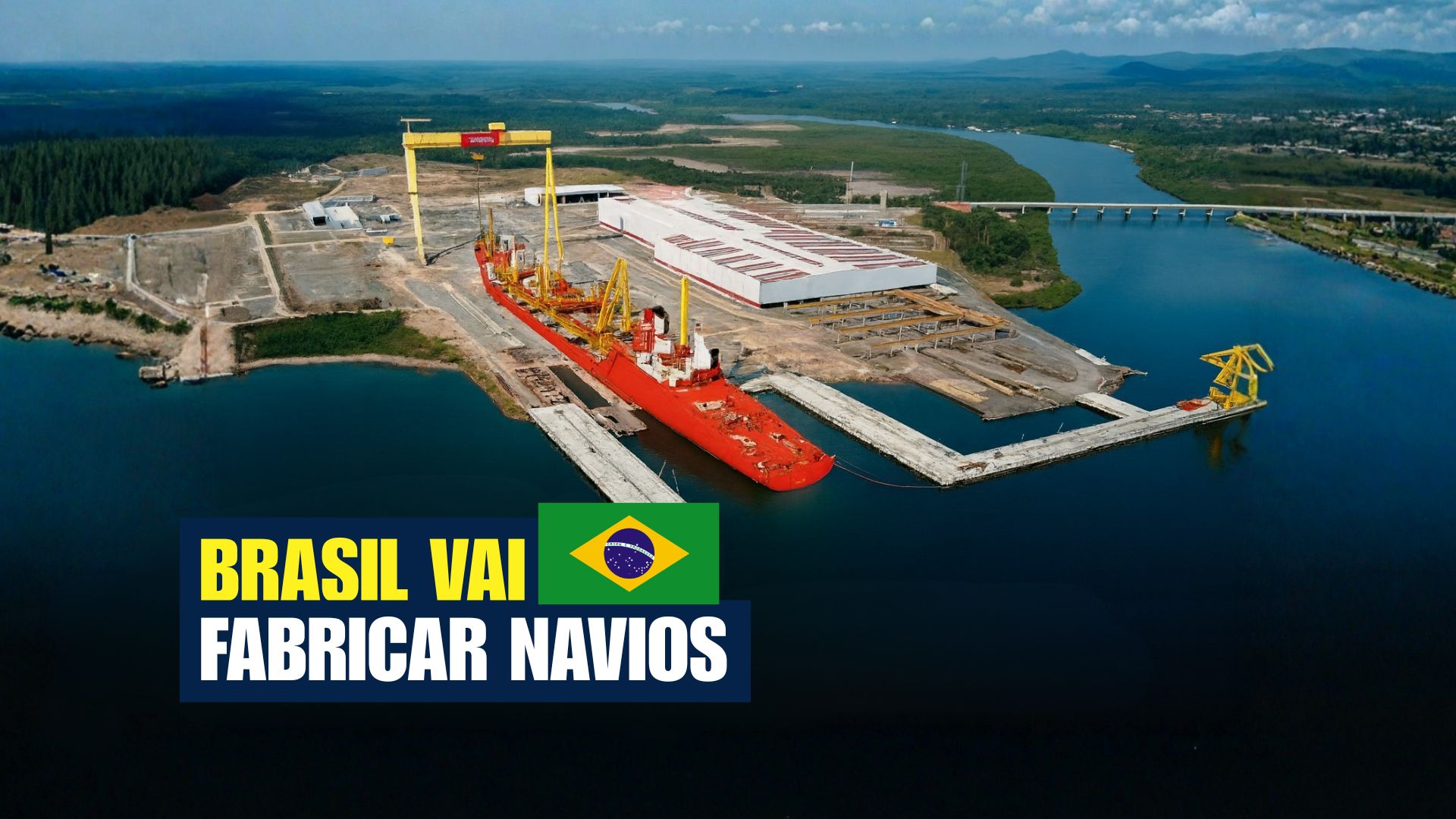

In Maragogipe, Bahia, One of the Largest Shipyards in Latin America Resumes Operations with Support from Petrobras. The Project Promises to Boost the Naval Industry and Generate Thousands of Jobs in a New Phase of Boat Production in the Country.
Petrobras confirmed the hiring of six ORSV-type vessels for oil spill response, with an estimated investment of R$ 2.58 billion.
The vessels will be built at the Enseada Shipyard in Maragogipe (BA), under a four-year construction period and 12 years of operation per unit, with chartering by CMM Offshore Brasil.
According to the company, the contracts include 40% local content requirement and the projection of 5,400 direct and indirect jobs, numbers cited by federal authorities and confirmed in recent statements.
-
France Revamps 530 Social Housing Units with Large Balconies and Glass Facades Without Demolishing Existing Buildings

-
10-Year-Old Max Makes History with Paris Fashion Show, Launches Own Brand, Hires Staff, and Sets World Record as Youngest Runway Designer

-
Bolivian Female Construction Workers Form Association to Combat Discrimination and 38% Pay Gap in the Industry
-
Near Amsterdam, residents buy land and discover they must also build streets, manage drainage, handle waste, and grow food on half their plot.




Located along the Paraguaçu River, approximately 130 km from Salvador, Enseada features an industrial park of about 1.6 million m², with modular yards, cutting and welding workshops, and integration docks.
According to a report published by Construction Time, the complex was designed to meet large-scale projects in the oil and gas chain, with a manufacturing arrangement focused on shipbuilding and offshore module integration.
Project Origin and Operational Hiatus
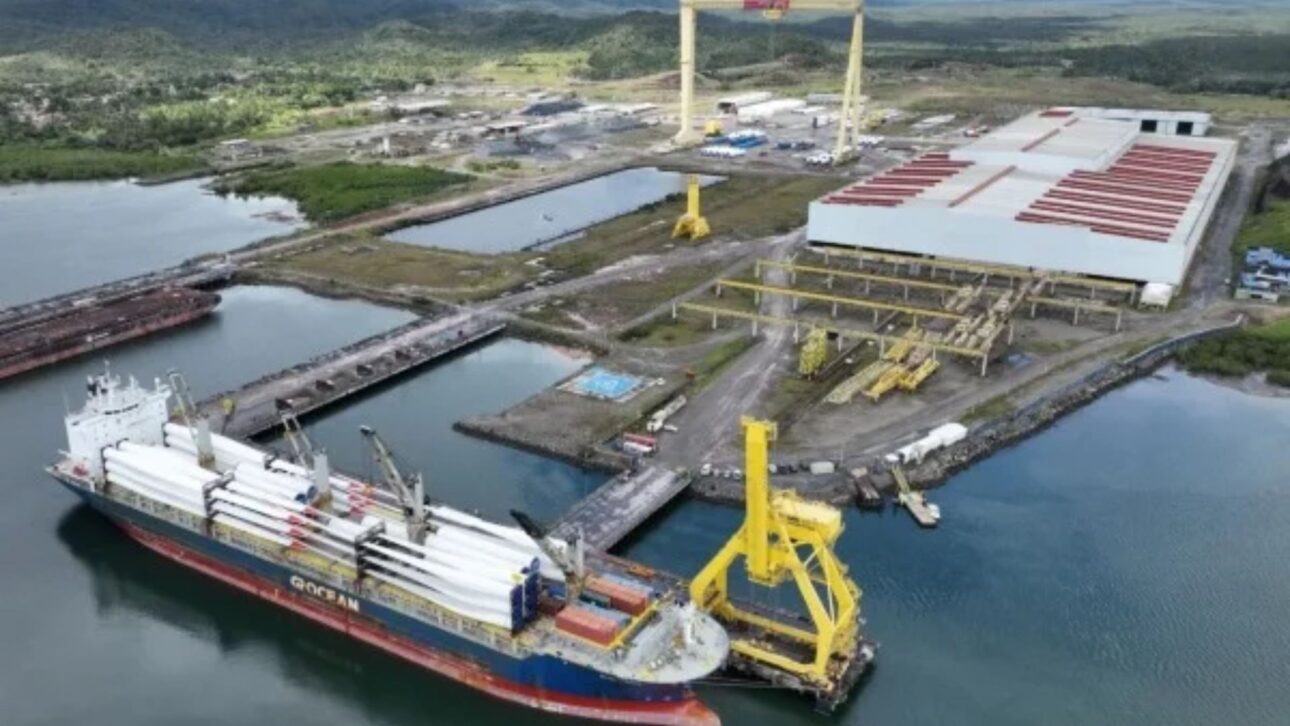
The shipyard was born during the expansion cycle of the pre-salt in the early 2010s, when it was structured as Enseada do Paraguaçu Shipyard (EEP) by a consortium that included Odebrecht/Novonor, OAS, UTC Engenharia, and technological partnership with Kawasaki Heavy Industries.
According to investigations by Construction Time, the initial planning aimed to fulfill orders linked to Sete Brasil, with contracts for six drill ships intended for Petrobras operations.
The trajectory was interrupted by the economic crisis, the drop in oil prices, and the effects of Operation Lava Jato, which affected consortium companies and Sete Brasil itself.
Contracts were suspended, and the pace of construction slowed, leaving the plant underutilized for several years.
Experts recall that the experience exposed risks of high-complexity contractual and financial projects when there is no stability in demand and financing.
Resumption Focused on Offshore Support
The new portfolio prioritizes support vessels instead of drill ships.
As highlighted by Construction Time, this strategy is considered by analysts to be more aligned with Petrobras’ continuous operational demand and the current capabilities of the local supply chain.
The ORSVs are vessels specialized in containment and collection of oil at sea, part of the company’s environmental safety system.
The contracts foresee production at the Enseada itself, chartering by CMM Offshore Brasil, and clauses of minimum local content of 40%.
According to industry sources, the standardization of the scope reduces industrial uncertainties, improves schedule predictability, and facilitates the formation of suppliers, points frequently cited in studies on reindustrialization.
Installed Capacity and Structure of the Shipyard
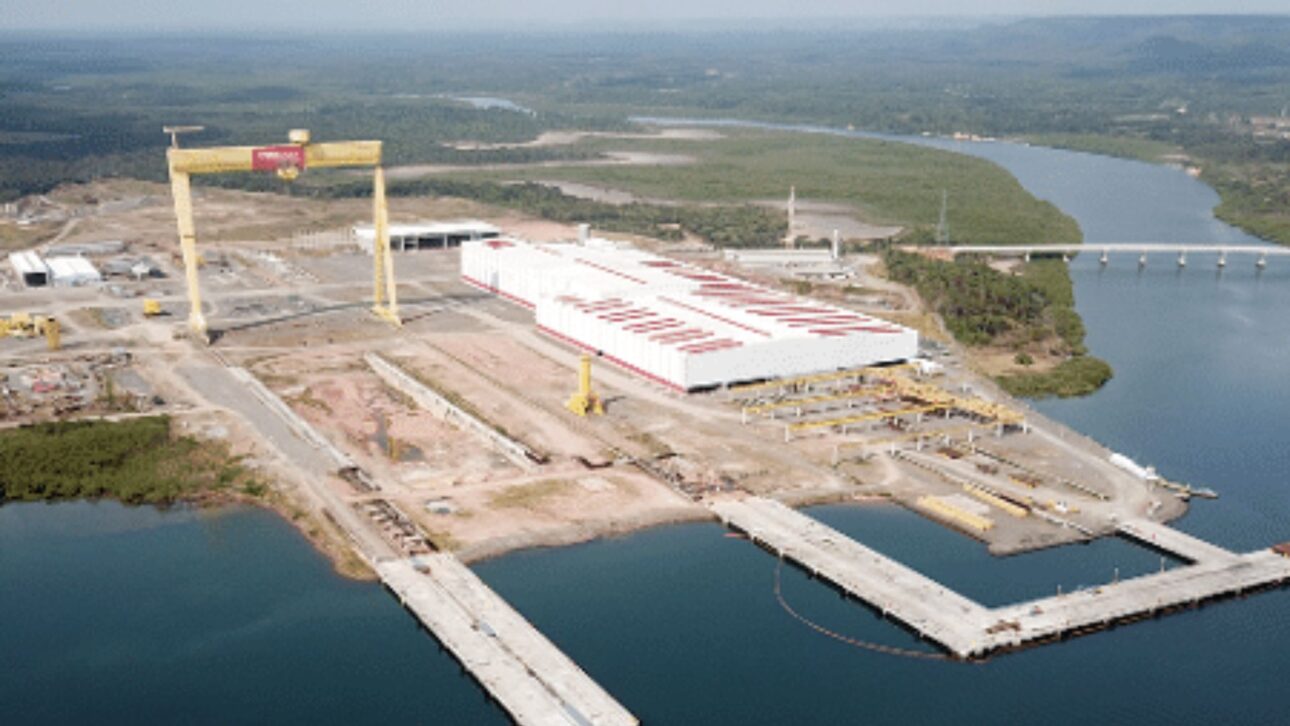
The Enseada park combines simultaneous manufacturing yards for blocks, automated workshops, and integration and finishing areas with dimensions suitable for series of support vessels and modules for platforms.
Consulted engineers emphasize that the manufacturing arrangement allows sequencing of stages and productivity gains, an aspect seen as crucial for costs and timelines.
There are public mentions of a large dry dock in the original shipyard project; however, updated detailed specifications are not consensus among available documents.
For caution, this text does not reproduce dimensions without recent technical backing.
The Construction Time channel also pointed out this feature in contextual materials, without fixing numbers in the current configuration.
Diversification and Economic Effects
Before the new maritime support portfolio, the shipyard sought industrial diversification.
In 2024 and 2025, the plant began to manufacture metal barges for logistics projects, in consortium with Tenenge, with a forecast of dozens of units and public investments related to sector financing.
According to specialists, this front helped reoccupy capacity, maintain labor, and preserve certifications, while oil and gas demand recovers.


For the stage of the six ORSVs, the expectation of 5,400 direct and indirect jobs includes hires at the shipyard and at supplier companies of steel, valves, cables, electrical systems, industrial painting, piping, automation, and testing.
Industry technicians assess that the requirement for local content tends to stimulate certifications, training, and density of the supplier base in the Recôncavo region.
Relationship with Petrobras and Lessons from the Previous Cycle
The current order represents a reconnection between Petrobras and the naval industry in the country, focusing on support vessels of moderate technical complexity and direct use in offshore routines.
According to naval industry analysts, the emphasis on standardized series reduces financial exposure and improves the learning curve.
In reference materials, Construction Time also pointed out that the shipyard is capable of operating as an integration base for oil and gas demands and renewable energies, depending on new portfolios.
Experts observe that continuity after the ORSVs will depend on additional pipeline and contractual governance, as well as competitive financing.
The recent public agenda includes local content targets for support vessels, which may enhance demand predictability and encourage investments in supplier qualification.