Portuguese
  Spanish


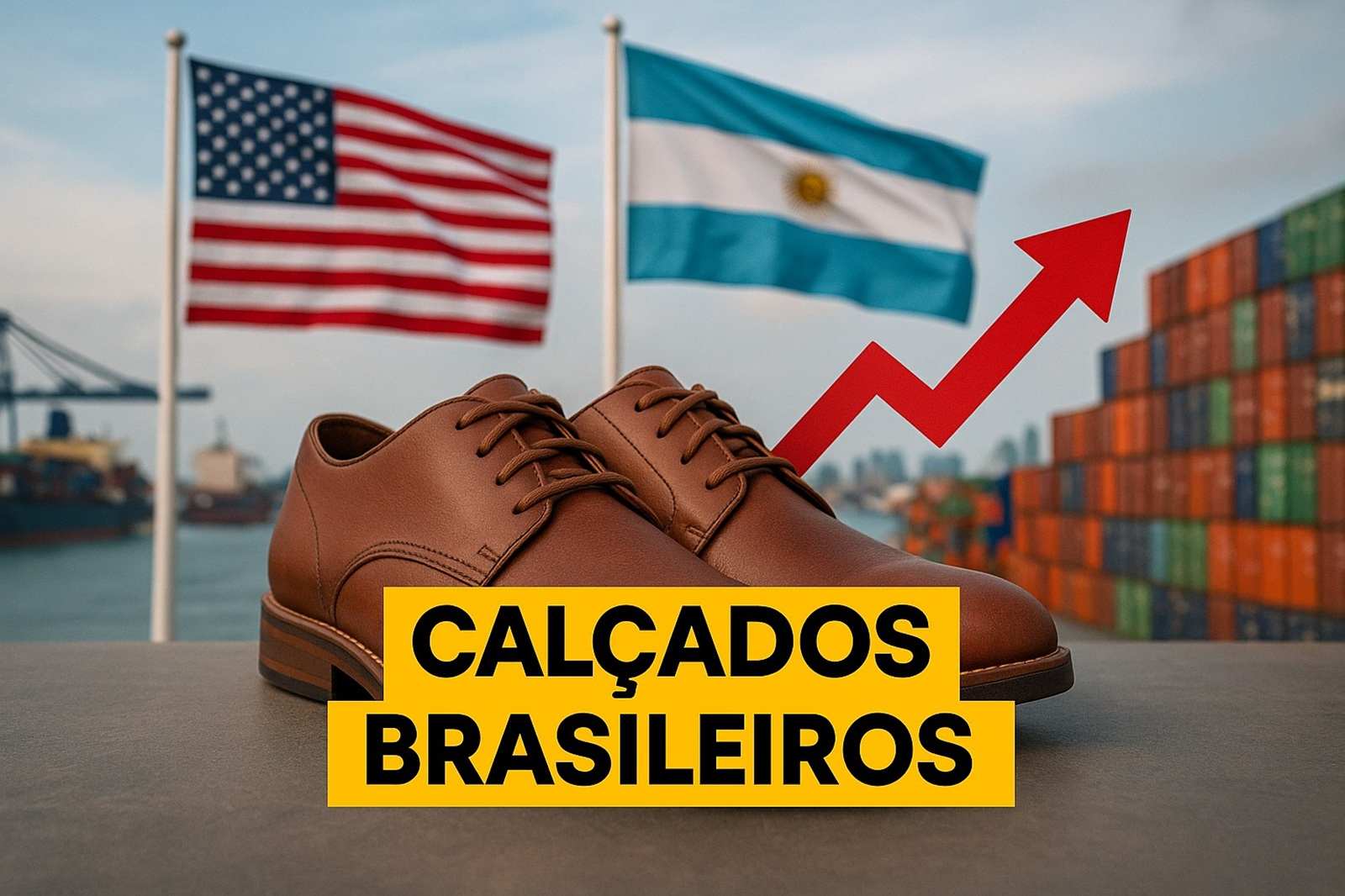


While the United States Impose Tariffs of 50% That Crush Brazilian Exports, South American Neighbors Increase Their Purchases and Alleviate Sector Losses.
Data released by the Brazilian Association of Footwear Industries (Abicalçados) in August reveals a challenging scenario for the sector.
Brazilian exports continue to decline, while imports are increasing, mainly those from China, exacerbating competition in the domestic market.
In August, exports totaled 7.64 million pairs, generating US$ 77 million. The figures represent a decrease of 0.5% in volume and 9.1% in revenue compared to the same month last year.
-
At 14 years old, she worked in a factory in Hong Kong, studied economics abroad, and then entered the Chinese real estate market, which helped change the landscape of Beijing.

-
While NATO secured more than $10 billion in missiles and space surveillance at a single forum, Brazil still spends 1.1% of its GDP on defense and is stalling its own anti-aircraft system.

-
Corn ethanol attracts R$ 23 billion in 21 new plants and prepares for a nearly 50% jump in Brazilian production by 2027, even with high interest rates.
-
A newly opened terminal in the middle of the Amazon has begun transporting soy and corn through Amapá, eyeing the queue of ships that is congesting the ports in the South.


In the first eight months of 2025, the sector shipped 67.52 million pairs, with revenue of US$ 651.1 million. There was a 5.7% increase in volume, but a 0.6% decrease in revenue compared to the same period in 2024.
Impact of US Tariffs
The performance in August was mainly affected by the US market, the primary international destination for Brazilian footwear.
In the month, 803.7 thousand pairs were exported for US$ 21.4 million, declines of 17.6% in volume and 1.4% in revenue compared to August 2024.
Even with this negative result for the month, the accumulated year still shows growth. A total of the US received 7.7 million pairs, which generated US$ 156.3 million, an increase of 10.7% in volume and 5.8% in revenue compared to the same period last year.
“The tariff imposed by the United States, which accounts for more than 20% of the total generated by Brazilian footwear exports, was already felt in August. In September, when we will have a full month of the additional tariff in effect, this setback is expected to be even greater,” says the executive president of Abicalçados, Haroldo Ferreira.
According to him, the applied tariffs make Brazilian exports “practically unviable” in light of the strong competition from Asian producers, especially the Chinese, in the North American market.
Argentina and Paraguay in Focus
While the US records a decline, other destinations showed growth. Argentina, the second-largest buyer, imported 1.63 million pairs of Brazilian footwear in August, spending US$ 18.44 million, increases of 68% and 11.6%, respectively, compared to August 2024.
In the accumulated year, Argentinians purchased 9.35 million pairs for US$ 135.68 million, a growth of 37.4% in volume and 5.3% in revenue over the same period last year.
Paraguay ranks third among the destinations. In August, it imported 876.9 thousand pairs of Brazilian footwear for US$ 4.3 million, an increase of 41.4% in volume and 23.5% in revenue compared to the same month last year.
From January to August, Paraguayans bought 5.95 million pairs, paying US$ 27.7 million, a result that represents an increase of 8.7% in volume and a decrease of 1.7% in revenue compared to the same interval in 2024.
Performance of Exporting States
The data from Abicalçados also detail the results by exporting state. Rio Grande do Sul leads, with 21.4 million pairs exported and revenue of US$ 315 million in the accumulated year, a growth of 1.1% in volume and a decrease of 4% in revenue.
Next is Ceará, with 21.33 million pairs and US$ 127.73 million, an increase of 8.4% in volume and a decrease of 5% in revenue compared to the same period last year.
São Paulo occupies the third position, with 4.73 million pairs sent abroad and revenue of US$ 68.2 million, a growth of 26.5% in volume and 18.6% in revenue compared to the accumulated figures of 2024.
Imports Surge and Pressure Domestic Market
While exports face difficulties, imports continue to rise, generating concern in the sector. The influx of Chinese footwear is cited by Abicalçados as a factor disrupting the domestic market.
“With the tariff imposed by the United States on Chinese products, producers in that country have been offloading their surpluses into other markets, including Brazil, at very low prices,” explains Ferreira. According to him, this practice causes losses to the domestic industry.
In August, 492 thousand pairs from China arrived in Brazil, for which US$ 3.7 million was paid. The figures represent a growth of 41.5% in volume and 67.2% in revenue compared to August 2024.
In the accumulated year, imports of Chinese footwear totaled 8.45 million pairs and US$ 31.18 million, with increases of 9% and 14.1%, respectively, compared to the same period last year.
In total, Brazil imported 3.55 million pairs in August, with expenditures of US$ 49.27 million, increases of 23% in volume and 18.4% in revenue compared to the same month in 2024.
From January to August, imports accumulated 30.13 million pairs, totaling US$ 387 million, a growth of 26.9% in volume and 28.8% in revenue compared to the same period last year.