






 Portuguese
  Spanish


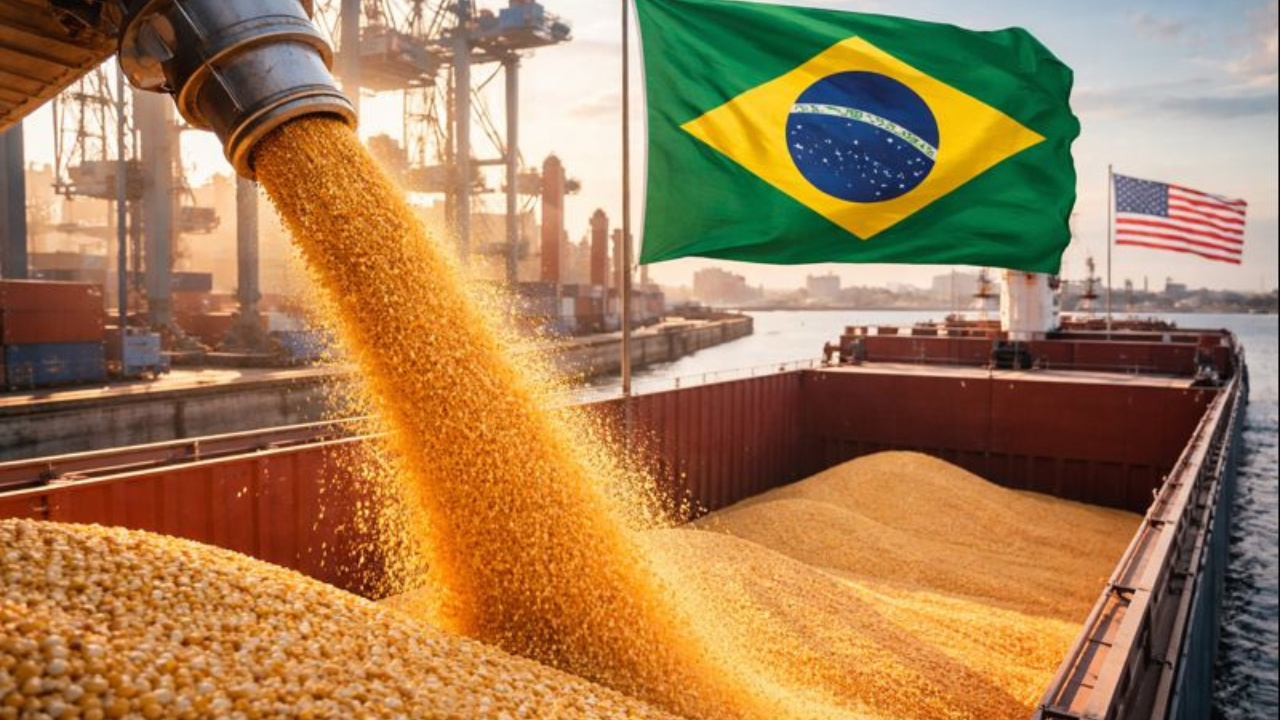


U.S. Tariff Threat Creates Uncertainty in Brazilian Agriculture, Affects Corn Exports, and Puts Brazil-Iran Trade Under Scrutiny.
The possibility of new U.S. tariffs on countries that maintain trade relations with Iran has raised alarm bells in Brazilian agriculture, especially in the corn export sector.
The risk involves decisions announced by U.S. President Donald Trump, who is considering imposing a 25% tax on nations that negotiate with Tehran.
If implemented, this measure could directly affect Brazil-Iran trade, alter global grain flows, and create indirect impacts on strategic inputs such as nitrogen fertilizers.
-
Producer receives news and had to cull almost the entire herd, bounced back with the help of compensation, and is now producing 450 liters of milk per day in SC.

-
Quail Eggs Reveal a “Secret Code” on Their Shells Explaining Unique Patterns and Colors

-
Rare Tropical Fruit Canistel, with Egg Yolk Color and Caramel Flavor, Gains Interest from Researchers and Small Producers in Brazil
-
Brazilian Farmers Develop Wheeled Metal Lever to Ease Cassava Harvesting Without Heavy Machinery


Tariff Threat Reignites Fear of New Tariff Hikes
Trump’s announcement triggered uncertainty in the international market and brought to mind previous episodes of tariffs imposed by the United States against trading partners.
Although there is still no formal definition, analysts believe that the mere discourse is already influencing logistical and commercial decisions, especially in sensitive markets like agriculture.
In 2025, Brazil exported nearly US$ 3 billion in agricultural products to Iran.
Within that amount, corn played a central role, making the Middle Eastern country one of the main destinations for Brazilian cereal.
Corn Exports Gain Prominence in Brazil-Iran Trade
Data from the Ministry of Agriculture shows that Iran was the largest buyer of Brazilian corn in 2025. Approximately 9 million tons were shipped, more than double the volume recorded in the previous year.
This number represents about 23% of total Brazilian corn exports for the period.
According to Vlamir Brandalizze from Brandalizze Consulting, despite the political rhetoric, it is unlikely that food will be directly included in a sanctions list.
“It’s still too soon to say how this announcement affects corn trade.
Trump stated he would tax those who do business with Iran, but I don’t envision him prohibiting corn or food trade in general, given that the Iranian population is already in a complicated social situation,” he said.
Corn Destinations and Market Alternatives
The Brazilian corn imported by Iran is primarily directed to the local poultry production industry, considered the fourth largest on the Asian continent.
This reinforces the strategic nature of the cereal for Iranian food security.
Analysts believe that even in the face of restrictions, Brazil would be able to redirect part of this volume to other markets.
According to Tiago Medeiros, director of the trading company Czarnikow, global trade tends to adjust.
“Iranians won’t stop eating,” he summarized.
Willian Hernandes, a partner at consulting firm FG/A, notes that difficulties would only arise if U.S. tariffs were prolonged for an extended period.
In the short term, he states, there would be room for storage or reallocation of excess corn.
Market Reacts and Calculates Amid U.S. Tariffs
In a recent report, analyst Ronaldo Fernandes from Royal Rural highlighted that the market is already starting to price in different scenarios.
“The market is starting to do the math. If Brazil maintains this flow with Iran, it enters the radar for U.S. tariffs. If it decreases, there will be corn left here.”
Despite this, Fernandes assesses that the threat may not advance, mainly due to its collateral effects on China.
The Asian country is Iran’s largest trading partner and maintains strategic negotiations with the United States.
Trump even indicated a tariff truce with the Chinese until November, which reduces the likelihood of new tensions at this moment.
Limited Impact in the Short Term
Another factor that reduces immediate pressure is the Iranian purchasing calendar.
The peak of corn imports traditionally occurs in June, allowing the market to observe political developments before making more drastic decisions.
Thus, in the short term, the impact of U.S. tariffs on Brazilian corn tends to be limited, according to industry experts.
Nitrogen Fertilizers Enhance Importance of Brazil-Iran Trade
Iran ranks only 11th among the destinations for Brazilian agricultural exports. Still, its relevance goes beyond grain purchases.
On the import side, the country is a supplier of strategic inputs.
In 2025, Brazil imported US$ 84.5 million in Iranian agricultural products, according to data from Comex Stat, MDIC.
Urea accounted for US$ 66.8 million of that total, being essential for the production of nitrogen fertilizers used in Brazilian fields.
Geopolitical Risk and External Dependence
According to Tomás Pernías, market intelligence analyst at StoneX, Iran is one of the largest global exporters of urea.
Any tension in the Middle East, therefore, raises immediate concerns about the global supply of nitrogen fertilizers.
Although Nigeria, Oman, and Qatar officially lead the supply of urea to Brazil, there are suspicions that Iranian cargos enter the country under other flags due to existing sanctions.
Domestic Production as a Strategic Alternative
For Pernías, the current scenario reinforces a structural fragility in the national agribusiness: the dependence on imported fertilizers.
“If Brazil increases its supply of domestically produced nitrogen fertilizers, it could help alleviate or cushion these impacts to some extent,” he stated.
In the face of geopolitical uncertainties and possible U.S. tariffs, the debate over self-sufficiency in inputs and diversification of markets gains even more strength within Brazilian agribusiness.








