Portuguese
  Spanish


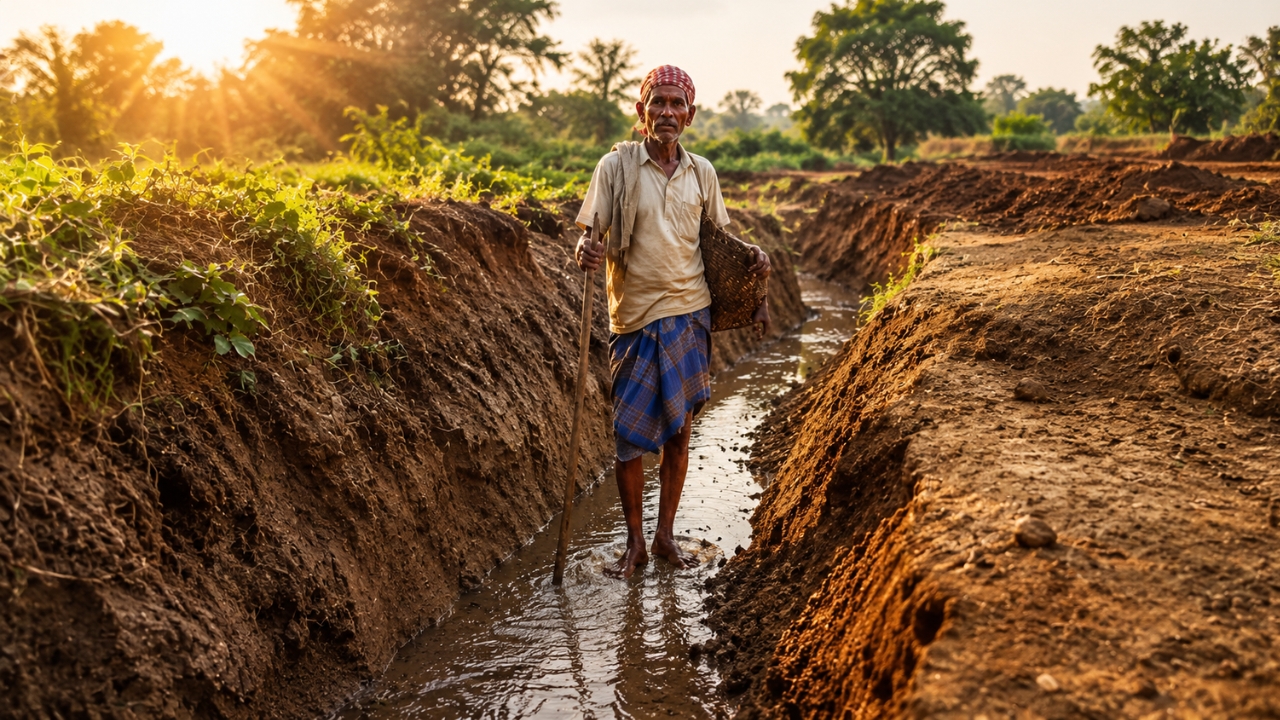

In a rural village in India, the rain existed but did not reach the fields. The solution came from Laungi Bhuiyan, who manually opened a channel to harness the monsoon water and help community farmers.
For years, residents of Kothilwa, in the Gaya district of Bihar, watched the rain descend the hills and make its way to the rivers. The problem was that while the water passed by, the village fields remained dry, dependent on the weather and vulnerable to a lack of irrigation.
It was in this scenario that Laungi Bhuiyan, an Indian farmer described by Outlook India in 2024 as a man of about 70 years, decided to do something unusual: dig a channel by himself to direct the rainwater from the hills to a lake and agricultural areas used by the community. According to information published by NDTV, Hindustan Times, Al Jazeera, and Outlook India, the work took almost 30 years and reached about 3 km in length.
The story gained traction because it combines a hard-to-ignore number, a rural landscape marked by scarcity, and a solution built without machines, major works, or technical teams. What began as an individual attempt to control rainwater ended up revealing a bigger problem: in poor agricultural regions, the lack of infrastructure can turn even rain into a lost resource.
-
Submerged Town Reemerges in São Paulo as Reservoir Levels Drop, Revealing Ruins and Memories of Displaced Families

-
In Northeastern Brazil, 1,200 Residents Face a Silent Nightmare as Giant Sinkholes Threaten Entire Neighborhoods
-
Astronauts Returning from Space Show Altered Gut Bacteria and Loss of Protective Microbes, Highlighting Potential Risks for Mars Missions

-
São Paulo to Convert Historic Downtown Building into Affordable Housing for Low-Income Families


An open channel where water once just passed by
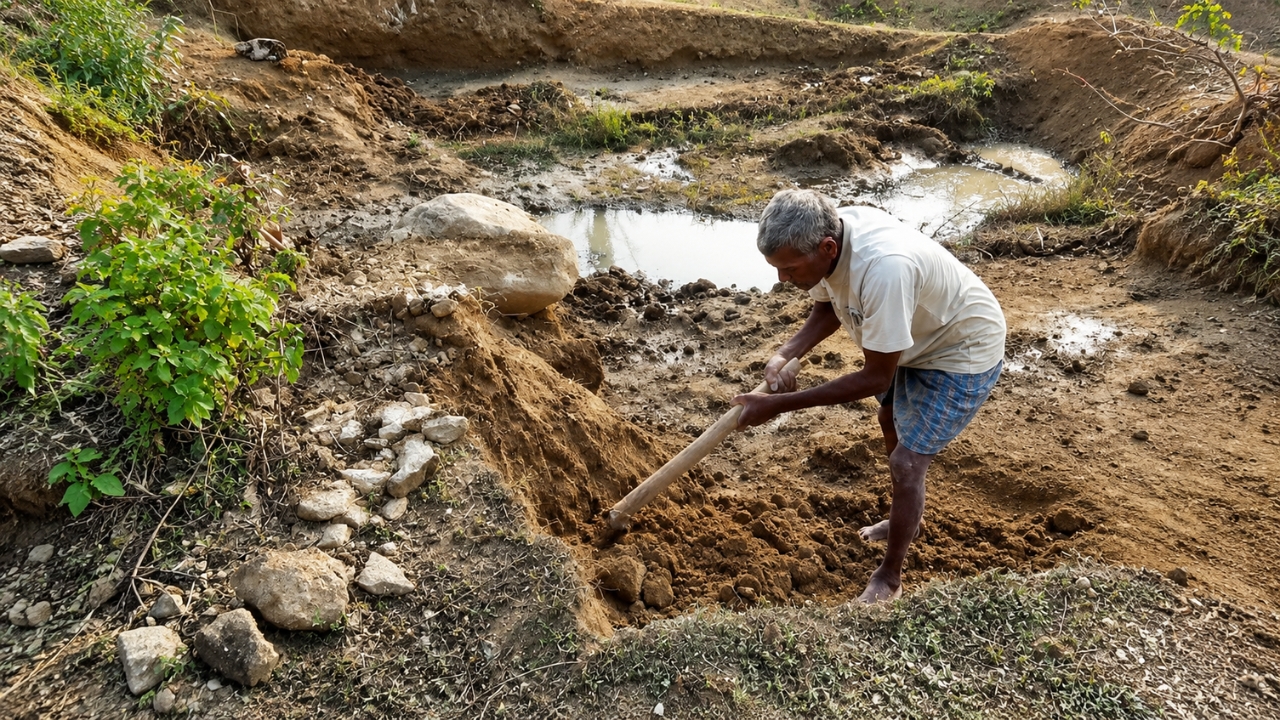
Laungi Bhuiyan lives in Kothilwa, a village described by Indian media as a remote area, surrounded by hills, forests, and difficult terrain. The region is in the Gaya district of Bihar, an Indian state that faces periods of drought and dependence on monsoon rains.
According to NDTV, Bhuiyan’s goal was simple: to prevent rainwater from flowing away unused and to direct it to a local reservoir. From there, it could supply animals, help crops, and improve the lives of residents who depended on agriculture.
The work did not originate from an official project. He dug while tending cattle and continued to make way with simple tools. The work progressed little by little, in a routine repeated for years, until forming a channel capable of directing water from the hills to areas that previously remained dry.
Almost 30 years of work and numbers that vary between sources
The most cited data by the press is nearly 30 years of excavation and about 3 km of canal. This is the version recorded by NDTV, Hindustan Times, Al Jazeera, and Outlook India, which treated Bhuiyan as a symbol of rural persistence in Bihar.
However, there are variations among the reports. The Times of India mentioned 20 years and a 2 km canal. Meanwhile, ABP Live cited a structure 5 feet wide and 3 feet deep, also mentioning a larger extension in later updates about new excavations.
Therefore, the safest way to present the story is to say that, according to the main reports from the Indian and international press, Bhuiyan spent nearly three decades digging a canal of about 3 km, while other local outlets recorded different measurements as they followed the work and its developments.
The village that doubted the idea
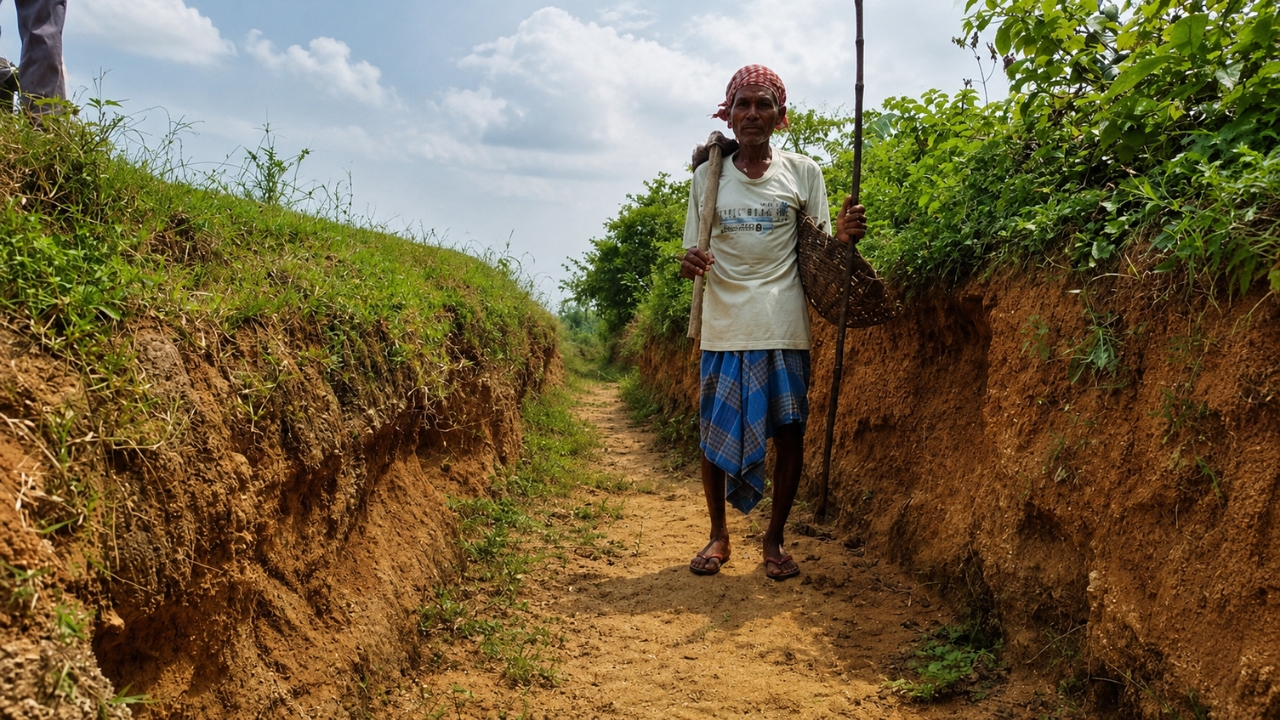
Al Jazeera brought one of the most human points of the story: family members and neighbors came to doubt Bhuiyan’s decision. His wife, Ramrati Devi, and village residents saw the effort as an almost impossible insistence, mainly because the work seemed too great for a single person.
The doubt was not hard to understand. Opening a canal in rural terrain, without heavy machinery and without permanent support, required time, physical strength, and rare conviction. While many residents migrated to cities in search of work, Bhuiyan continued trying to solve a problem that remained in the landscape every year.
The case does not need to be treated as an exaggerated tale of overcoming. The strength of the story lies in the concrete contrast: the water existed but was not utilized; the land needed it, but there was no structure; and a resident tried to connect these two points with his own hands.
The impact reached the fields and drew national attention
With the advancement of the canal, rainwater began to be channeled to reservoirs and agricultural areas. NDTV recorded reports from residents stating that the work was not done just for personal benefit, but for the community.
Al Jazeera reported that, after the case gained attention, the village managed to cultivate wheat that year. Meanwhile, Outlook India, in a later report, stated that the effort helped store water in ponds and bring water resources to nearby arid areas.
Other sources expanded the dimension of the impact. ABP Live cited about 3 villages and approximately 3,000 people benefited. The Times of India, based on local reports, mentioned the possibility of irrigating about 100 acres of land. As the numbers vary, the most responsible use is to attribute each estimate to the outlet that published it.
Recognition came, but the structure remained fragile


The national repercussion brought recognition. According to Al Jazeera and the South Asia Monitor, Anand Mahindra, chairman of the Mahindra Group, decided to gift Bhuiyan a tractor after the story spread. Al Jazeera also recorded a symbolic donation of 100,000 rupees made by Mankind Pharma.
But the recognition did not solve all the problems. Outlook India revisited the case in 2024 and showed an important update: despite the fame, Bhuiyan was still asking for basic support and the canal had not been transformed into a definitive concrete structure.
The same report pointed out that the canal suffered wear from the rains and that public promises still depended on bureaucratic steps, including authorizations related to the Forest Department. The case, therefore, did not end just with applause. It continued to expose the gap between visibility, infrastructure, and public response.
When a manual work reveals a bigger problem
The story of Laungi Bhuiyan draws attention because it seems extraordinary, but it arises from a common need in many rural areas: to store water at the right time and bring it to where it is lacking.
Bihar has traditional rainwater management systems, such as the ahar-pyne, cited by the India Water Portal, which combines reservoirs and channels to face dry periods. Bhuiyan’s canal aligns with this ancient logic, even though it was made individually and improvised.
The case goes beyond a man digging for almost 30 years. It shows how the lack of infrastructure can cause rain to pass through a village without quenching the land’s thirst, and how a manual solution, even if limited, can strongly reveal what public works should address before someone needs to dedicate an entire life to it.