Portuguese
  Spanish


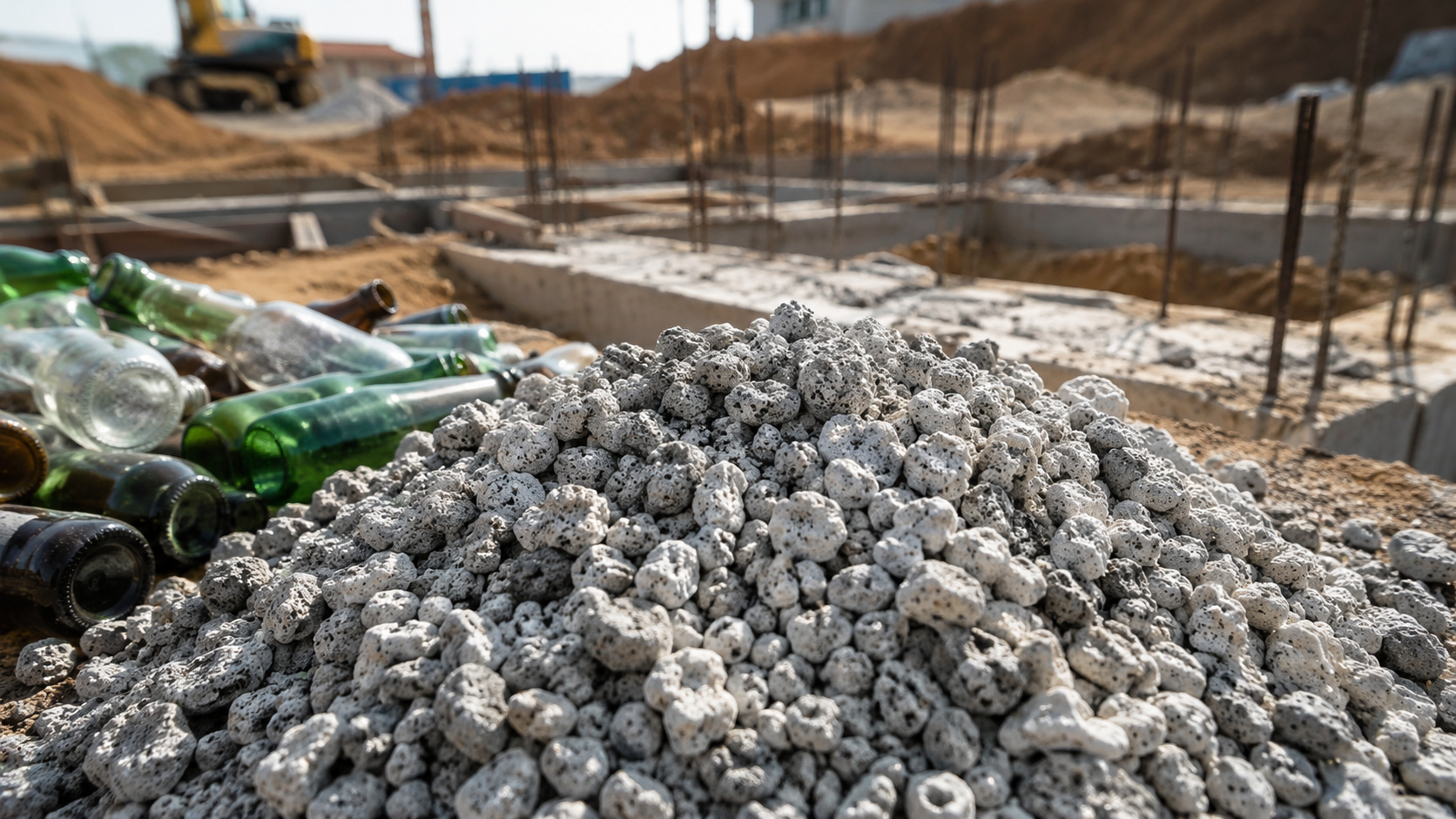

Discover the technology that transforms recycled glass into lightweight aggregate for foundations, infrastructure, and sensitive terrains, with applications already observed in countries like Norway.
A technology aimed at civil construction is drawing attention for giving a new purpose to discarded glass bottles. The material, which previously might only go to traditional recycling or even end up as waste, undergoes an industrial process capable of transforming it into glass foam, a lightweight, strong, and efficient product.
According to information released by technical sources in the sector, the innovation allows recycled glass to be used for more than just making new packaging. Instead, it finds a place as an aggregate for construction, potentially replacing conventional materials like gravel and crushed stone in specific applications.
The solution is already sparking interest in countries like Norway, where lightweight materials are used in infrastructure projects and foundations built on areas considered sensitive. Thus, the technology brings together sustainability, engineering, and waste reuse in a single proposal.
-
28-meter, 156-ton titans traveled 20,000 km from China to the port of Santa Catarina: Portonave received 7 fully electric megacranes, part of a R$ 210 million package, to double container handling.

-
They exchanged the idea of a large house for a 35 m² warehouse, spent US$ 12,000 on the structure, and created a tiny house in Colorado with space to live and work.

-
A newly opened terminal in the middle of the Amazon has begun transporting soy and corn through Amapá, eyeing the queue of ships that is congesting the ports in the South.

-
Goodbye to old tiles: renovation technique without construction transforms bathrooms in a few hours, eliminates debris, and reduces costs with coverings using special paints, high-resistance adhesives, and modern finishes that completely renew the space.



Discover the glass foam made from recycled bottles
When discarded, many glass bottles still have reuse potential. In this process, the collected glass goes through industrial stages that modify its structure and give rise to a porous, rigid, and lightweight material.
This product is called glass foam. In practice, it is an engineering aggregate developed from recycled glass, with characteristics that allow its use in different types of construction.
The main difference lies in the function of the material. While traditional recycling often turns old bottles into new packaging, this technology directs the glass to the construction sector. Thus, the waste gains a structural and technical utility.
Furthermore, glass foam can serve as an alternative to mineral aggregates used on a large scale in civil construction. Among them are gravel, crushed stone, and other materials employed in bases, embankments, foundations, and infrastructure works.
How discarded glass gains a role in civil construction
The industrial process transforms recycled glass into a material with low density and good resistance. Therefore, it can be used in projects that require weight reduction on the ground.
This characteristic is especially relevant in sensitive terrains. In areas where the soil presents limitations, the use of lighter materials can help reduce loads and improve the performance of the construction.
According to Business Norway, Norwegian companies already offer aggregates produced with recycled glass as sustainable solutions for construction and infrastructure. The Norwegian Public Roads Administration also notes the interest in lightweight materials for roadworks and technical projects.
Glass foam, therefore, not only appears as an environmental alternative. It also emerges as an engineering solution for situations where the weight of materials needs to be controlled more carefully.
Among the main uses associated with the material are:
- partial replacement of gravel and crushed stone in specific constructions;
- application in foundations and light fills;
- use in urban and road infrastructure;
- load reduction on sensitive terrains;
- reuse of discarded glass bottles.

Why Norway Became a Reference in This Application
Norway appears as one of the references in the use of lightweight aggregates made with recycled glass. The country already uses such materials in projects that require technical solutions for fragile soils, foundations, and infrastructure works.
This interest is linked to the characteristics of the territory and the engineering requirements in certain constructions. In some situations, conventional materials can generate excessive weight on the terrain, making it necessary to use lighter alternatives.
In this scenario, glass foam stands out for combining lightness, strength, and waste reuse. Moreover, its production gives a new purpose to bottles that could have a less efficient destination.
The technology also broadens the debate on the role of civil construction in the reuse of materials. As the sector consumes large volumes of aggregates, any alternative capable of reducing impacts and utilizing waste gains relevance.
Recycled Glass Ceases to Be Just Packaging and Becomes Construction Input
Currently, the transformation of discarded bottles into glass foam shows how common waste can gain value within engineering. Glass, often seen only as recyclable packaging, becomes part of solutions aimed at civil construction.
The proposal does not eliminate traditional recycling but creates a new route for utilization. In this way, the material can return to the production chain with a different function from that for which it was originally manufactured.
Thus, discarded glass bottles cease to represent just an environmental challenge and become a technical alternative for construction projects. Glass foam reinforces how innovation, sustainability, and civil construction can go hand in hand in more efficient projects.
With application in countries like Norway, the material shows that recycling can go beyond the production of new packaging. Instead, it can help create bases, foundations, and lighter structures, especially on terrains that require careful solutions.