






 Portuguese
  Spanish


Secret Underground Temple in Italy Was Dug in Silence for 20 Years and Surprises with 9 Giant Halls, Considered the Largest Modern Clandestine Work.
Imagine a monumental temple, hidden beneath a mountain, constructed in secret over two decades, with no awareness from authorities or neighbors. This scenario, which seems like a movie script, is real: it is the Temples of Damanhur, clandestinely built in the Piedmont region in northern Italy, and today recognized as one of the largest modern underground works ever accomplished.
With nine interconnected halls, hundreds of sculptures, stained glass, and mosaics, the temple impresses both in size and audacity of construction. For many, it is a true “hidden treasure” of contemporary architecture, which only came to light in the 1990s when Italian authorities discovered its existence.
How the Secret Construction Began
The project was born in 1978, idealized by Oberto Airaudi, also known as Falco Tarassaco. Spiritual leader and founder of the Damanhur community, he gathered followers to erect a temple that would represent values of unity, art, and spirituality.
-
China’s Engineered Bamboo: The “Material of the Future” Stronger Than Steel and a Sustainable Wood Alternative

-
Egypt’s “New Nile”: 170 km Artificial River Aims to Turn Desert into Farmland, but Water Supply Concerns Loom
-
Unable to secure a mortgage as a self-employed single mother, she designed her own floating home from a 20-meter boat and now lives “off-grid” with her two children and solar panels on an English canal.
-
Man Transforms Rusty Shipping Container into Luxury Home with Insulated Walls, Large Windows, and Drywall Finish, Surprising Onlookers


The most surprising detail is that the entire construction was done without government authorization, in complete secrecy.
The excavation began manually, with shovels, pickaxes, and improvised machines, advancing meters into the rocky mountain.
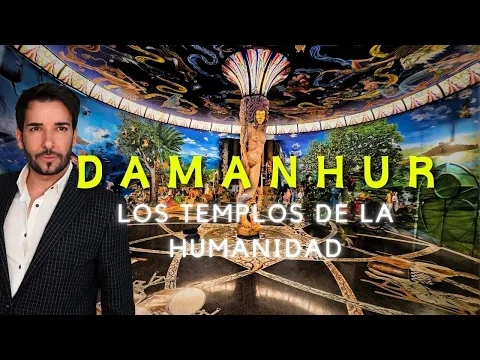

For 20 years, dozens of volunteers worked in silence, organized in shifts, removing tons of stones and earth without drawing attention.
The strategy included transporting debris at night and maintaining disguised entrances to prevent anyone from noticing the grandeur of the work.
The Discovery by Authorities
The work only became public in 1992, when a former member of the community reported the existence of the temple to the Italian authorities.
Surprised, inspectors and engineers went to the site and found something that exceeded all expectations: a subterranean complex comparable in size to a cathedral.
The government even considered the closure and destruction of the structure, citing a lack of permits and risks of collapse.
However, engineers confirmed the solidity of the work, and international pressure caused the authorities to back down. Shortly after, the temple was legalized and recognized as unique artistic and cultural heritage in the world.
The 9 Monumental Halls
The underground complex has nine large halls, each with its own characteristics:
- Hall of Water: dedicated to birth and emotions, with blue mosaics and aquatic sculptures.
- Hall of Earth: filled with columns and paintings representing life and nature.
- Hall of Mirrors: with a glass dome that reflects lights and amplifies the sensation of infinity.
- Hall of Metals: decorated with golden and silver tones, symbolizing technological evolution.
- Hall of the Sphere: considered the spiritual heart of the temple, used for meditations.
Each space is approximately 20 to 30 meters high and walls covered with mosaics, sculptures, and colorful stained glass, making the temple a true collective work of art.
An Unprecedented Work in Modernity
Engineers who analyzed the structure classified it as something impressive for a construction without official support. Excavating nine giant halls in solid rock without causing collapses required advanced engineering and precise planning — all done by volunteers.
Today, many experts consider the Temples of Damanhur to be the largest clandestine work of the modern era, not only because of size, but also due to the complexity and the time they remained hidden.
The Cultural Impact
The Damanhur community asserts that the temples represent a symbol of the union between art, science, and spirituality.
Since its opening to the public, thousands of visitors have explored the site, which is now seen as a tourist attraction and alternative cultural center.
It is estimated that over 50,000 people per year visit the temples, coming from different parts of the world. The structure has also been the subject of documentaries, books, and reports in international media.
Controversies and Criticisms
Despite its grandeur, the temple has not escaped criticism. Italian authorities have accused community leaders of violating urban laws and practicing “illegal architecture.” Some critics also associate the work with esoteric and secret practices.
However, after decades of disputes, the site was regularized and is now officially viewed as cultural heritage. The community presents itself as a peaceful spiritual movement, focusing on ecology, art, and social innovation.
The Legacy for the Modern World
More than a physical work, the Temples of Damanhur represent a message of persistence. Built in secret, without millionaire resources, the temple is proof that collective will can achieve extraordinary feats.
From an architectural point of view, it is a landmark: a modern underground cathedral, made without heavy machinery, but with ambition comparable to the great historical works of humanity.
The Secret Temple That Became World Heritage
The case of the underground temple in Italy shows how a project considered impossible became reality before the eyes of the world.
What began as a clandestine and risky work transformed into a global symbol of cultural resistance and alternative spirituality.
Today, those who visit the site find not only a monumental space but also the story of a group that dared to challenge the impossible.
Amidst secrets, controversies, and fascination, the Temples of Damanhur remain as the largest modern clandestine work, an impressive legacy embedded beneath the Italian mountains.






I have been surfing online more than 3 hours today yet I never found any interesting article like yours It is pretty worth enough for me In my opinion if all web owners and bloggers made good content as you did the web will be much more useful than ever before